Samsung Worker Strikes Could Make the Global Chip Shortage Worse
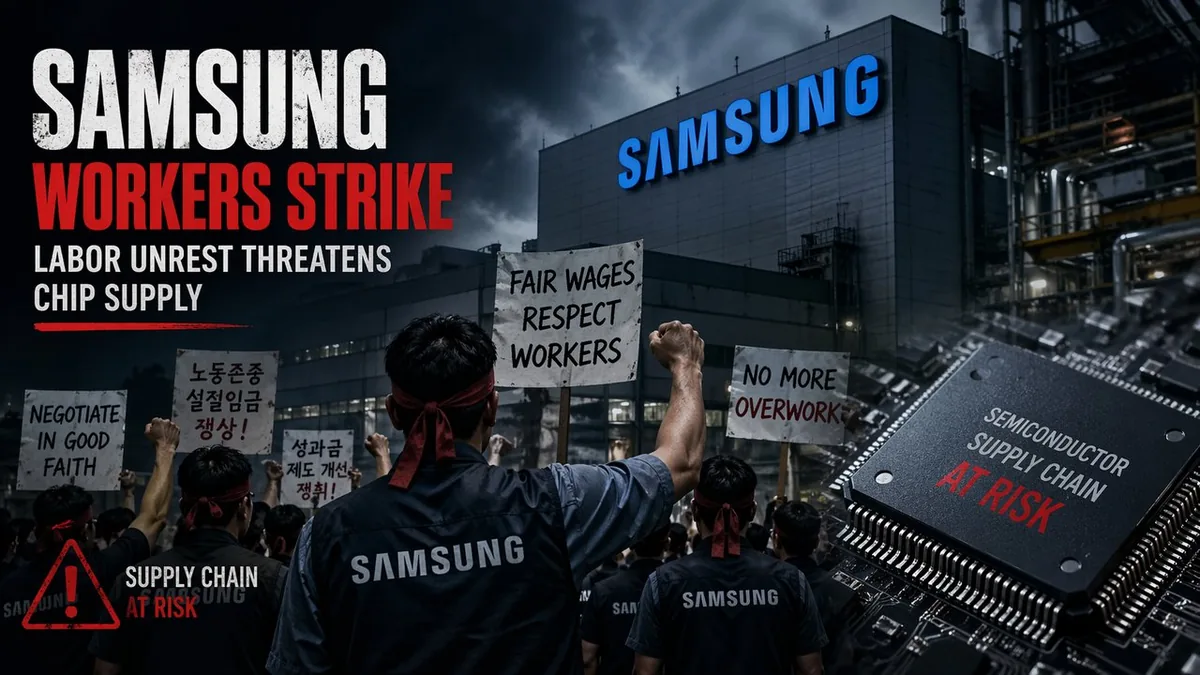
Around 30,000 Samsung workers are rallying for a share of the AI-era profits their labor helped generate. They want 15 percent of operating profits from the chip division — which would amount to over $400,000 per worker in a strong year. The labor unrest comes at a precarious moment: Samsung's memory chip business is already supply-constrained, and a serious strike could worsen shortages across the industry.
What's Actually Happening
The Samsung union representing workers at the company's chip division is demanding profit-sharing tied directly to semiconductor profits. The AI boom has generated enormous revenues for Samsung's HBM (high bandwidth memory) and DRAM divisions — the same memory chips that Nvidia's GPUs depend on. Workers who built and maintain those fabs believe they deserve a direct share of those gains.
Samsung management and the union have been in negotiations, but the gap between demands and offers remains wide. The threat of industrial action — work slowdowns or strikes — is real, and Samsung fabs running at reduced capacity would immediately affect HBM supply chains that are already tight.
Why It Matters
Samsung is the world's largest memory chip manufacturer. Any significant production disruption would ripple through the entire AI hardware supply chain. Nvidia's H100 and H200 GPUs use HBM memory from Samsung (and SK Hynix). If Samsung's output drops, GPU manufacturers face supply constraints on a critical component.
This is not a hypothetical — Samsung had significant strike activity in 2024 that did affect some production schedules. A repeat in 2026, during peak AI hardware demand, would be materially worse. Related: the broader semiconductor supply chain is already being stress-tested by AI infrastructure demand.
My Take
The workers' argument has merit. Samsung's chip division generated record profits largely because of AI demand — and the people who physically build and maintain those fabs contributed to those profits. Profit-sharing is not an unreasonable ask when the company is generating record margins.
The problem is the scale of the demand. 15 percent of operating profits distributed to 30,000 workers is economically significant. Samsung management has to balance that against capital allocation needs — the company needs to invest heavily in next-generation HBM and DRAM capacity to stay competitive with SK Hynix. You cannot pay out profits you need to reinvest.
Frequently Asked Questions
What chips does Samsung make that matter for AI? HBM (high bandwidth memory) and DRAM, both critical components in Nvidia GPUs and other AI accelerators.
Has Samsung had strikes before? Yes — significant labor action occurred in 2024, with some production impact. 2026 action could be more serious given tighter supply conditions.
What would a strike mean for GPU availability? Reduced HBM supply would constrain Nvidia and AMD GPU production, potentially worsening already tight AI hardware availability.
Related Articles
- TSMC Is Building an Advanced Chip Packaging Plant in Arizona
- Google's 8th-Gen TPU Chips Challenge Nvidia