India Smartphone Shipments Hit Six-Year Low in Q1 2026 as Price Hikes Weigh on 80+ Models
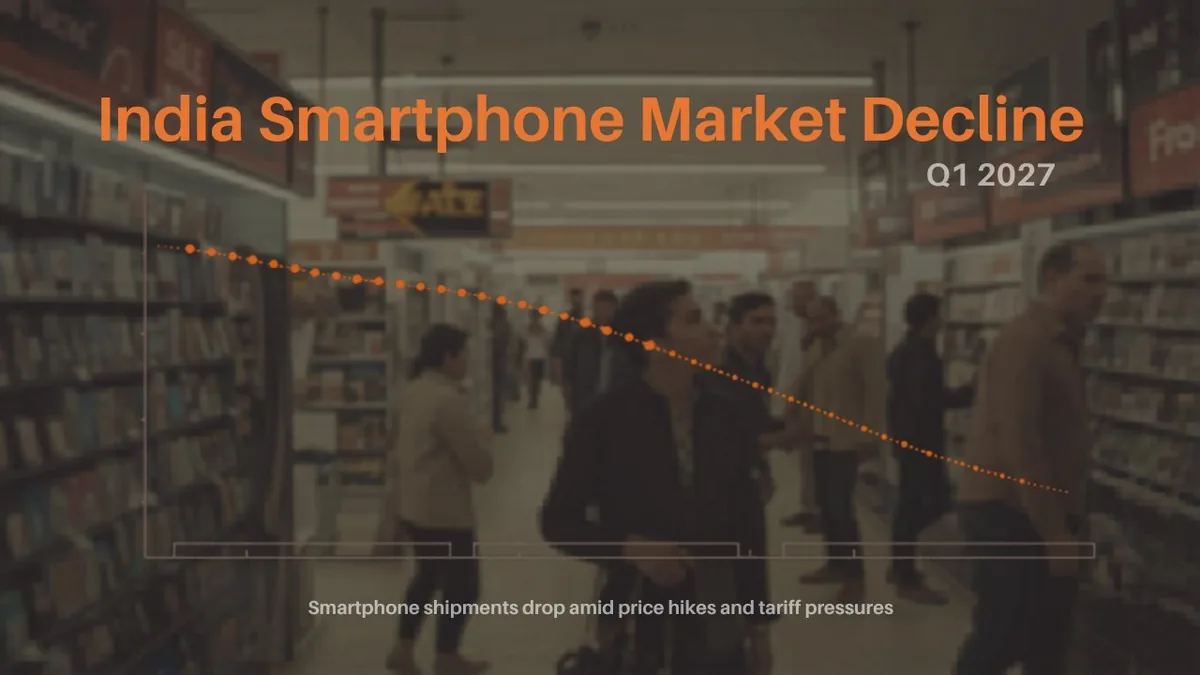
India's smartphone market posted its weakest quarterly performance in six years in Q1 2026, with shipments falling 3 percent year-over-year, according to Counterpoint Research. The decline was driven primarily by price increases, with more than 80 smartphone models seeing price hikes of approximately 15 percent — pressure that has pushed many cost-sensitive consumers out of the upgrade cycle.
What's Driving the Decline
The price increases stem from a combination of factors: global component cost inflation, currency depreciation effects on import-dependent supply chains, and tariff-related cost pass-throughs. India's smartphone market is heavily import-dependent for key components, making it sensitive to global supply chain dynamics and currency movements.
The 15 percent average price hike across 80-plus models represents a significant purchasing power squeeze in a market where the median smartphone selling price is already a substantial portion of monthly income for many consumers. India's price-sensitive mass market — where volume has historically driven growth — is particularly vulnerable to this kind of cost pressure.
Six-Year Context
A six-year low puts Q1 2026 below every comparable quarter since 2020, including the COVID-disrupted quarters. The comparison highlights how unusual this decline is relative to India's long-term smartphone growth trajectory — a market that has been on a structural upswing as smartphone penetration among India's 1.4 billion people continued to deepen.
The slowdown is notable because India has been one of the few large smartphone markets still showing growth, as China and mature Western markets plateaued or declined. If India's growth engine is stalling, it raises questions about where the global smartphone industry finds its next growth catalyst.
Brand-Level Implications
Samsung, Xiaomi, Vivo, and other major brands competing in India's mid-range and budget segments face a particular challenge. These companies have built manufacturing and distribution operations in India partly to serve this high-volume, price-sensitive segment. A sustained downturn in consumer demand puts pressure on the investment thesis for local manufacturing expansion.
The Bottom Line
India's smartphone market hitting a six-year low is a warning sign for an industry that has been counting on emerging markets to sustain global growth. Persistent price pressure is the immediate cause, but the six-year comparison shows how significant the reversal is relative to India's recent trajectory.
Related Articles
- Samsung Quietly Raises US Prices on Galaxy S25, Z Flip 7, and Tab S11 Ultra
- India's 1.5 Million Annual CS Graduates No Longer an Advantage as AI Coding Erodes Scale Edge