GST Invoice Format India: Complete Guide for 2025
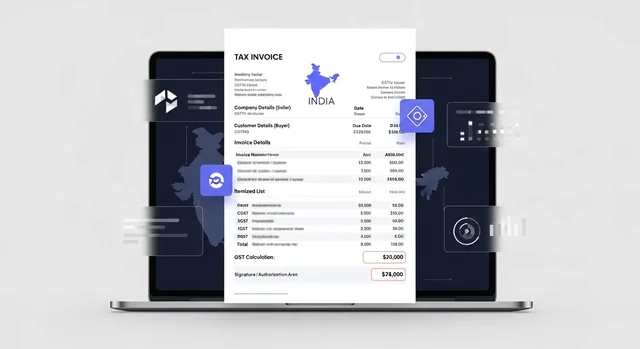
Introduction: Understanding GST Invoice Format in India for 2025
The Goods and Services Tax (GST) system in India has revolutionized business transactions since its implementation. As we move through 2025, understanding the correct GST invoice format remains crucial for businesses of all sizes. A properly formatted GST invoice not only ensures compliance with tax regulations but also facilitates smooth business operations and helps maintain accurate financial records.
Whether you're a small business owner, freelancer, or managing a large enterprise, creating compliant GST invoices is mandatory for claiming input tax credits and maintaining transparency in your business dealings. This comprehensive guide will walk you through everything you need to know about GST invoice formats in India, including mandatory fields, different types of invoices, and best practices to follow in 2025.
The GST invoice format has evolved over the years, with the latest updates ensuring better compliance and reduced errors. Understanding these requirements will help you avoid penalties, streamline your accounting processes, and maintain good relationships with your clients and the tax authorities.
Need to create GST invoices quickly? Use our free GST invoice generator to create compliant invoices with automatic tax calculations. No signup required, instant PDF download.
Types of GST Invoices in India
Before diving into the format details, it's essential to understand the different types of GST invoices recognized under Indian tax law:
Tax Invoice
This is the standard invoice issued for taxable supplies of goods or services. It includes all GST components (CGST, SGST/UTGST, and IGST as applicable) and is used for most business-to-business transactions.
Bill of Supply
Used when supplying exempt goods or services, or when the supplier is not registered under GST but the value of supply exceeds ₹200. This document doesn't include GST charges but serves as proof of supply.
Receipt Voucher
Issued when payment is received in advance before the supply of goods or services. This is particularly common in service industries and advance booking scenarios.
Refund Voucher
Used when returning money to customers for cancelled orders, returned goods, or excess payments. This helps maintain proper financial records and GST compliance.
Mandatory Fields in GST Invoice Format 2025
According to the latest GST regulations for 2025, every tax invoice must contain the following mandatory information:
Supplier Information
- Legal Name: Complete registered business name
- Address: Complete address of the principal place of business
- GSTIN: 15-digit GST identification number
- State Name and Code: As per GST registration
- Contact Details: Phone number and email address
Recipient Information
- Customer Name: Legal name of the buyer
- Billing Address: Complete address with PIN code
- GSTIN: Customer's GST number (if registered)
- State Name and Code: Destination state information
- Place of Supply: Location where goods/services are delivered
Invoice Details
- Invoice Number: Unique sequential number
- Invoice Date: Date of issue
- Due Date: Payment due date (if applicable)
- Reference Number: Purchase order or reference number
Item/Service Information
- Description: Detailed description of goods or services
- HSN/SAC Code: Harmonized System of Nomenclature or Service Accounting Code
- Quantity: Number of units (for goods)
- Unit of Measurement: Pieces, kilograms, liters, etc.
- Rate per Unit: Price per unit before tax
- Discount: Any applicable discounts
- Taxable Value: Amount on which GST is calculated
Tax Information
- GST Rate: Applicable tax percentage (5%, 12%, 18%, or 28%)
- CGST Amount: Central GST amount
- SGST/UTGST Amount: State/Union Territory GST amount
- IGST Amount: Integrated GST (for inter-state supplies)
- Total Tax Amount: Sum of all applicable taxes
- Total Invoice Value: Final amount including all taxes
Step-by-Step Guide to Create GST Invoice
Step 1: Set Up Your Invoice Template
Start by creating a professional invoice template that includes your company logo, brand colors, and all mandatory fields. You can use various tools like:
- Microsoft Excel/Google Sheets: Free options with customizable templates
- Accounting Software: Tally Prime (₹18,000/year), Zoho Books (₹1,500/month), QuickBooks (₹1,800/month)
- Online Invoice Generators: ClearTax, BillDesk, InvoiceGenerator.com
- Specialized GST Software: BUSY (₹15,000/year), Marg ERP (₹12,000/year)
Step 2: Enter Supplier Information
Fill in your business details accurately. Ensure your GSTIN is correct and matches your GST registration certificate. Include your complete registered address and current contact information.
Step 3: Add Customer Details
Enter the customer's information carefully. For B2B transactions, always include the customer's GSTIN. For B2C transactions above ₹50,000, you must include the customer's address and PIN code.
Step 4: Generate Unique Invoice Number
Create a sequential invoice numbering system. A common format is: INV-2025-0001, where:
- INV = Invoice prefix
- 2025 = Financial year
- 0001 = Sequential number
Step 5: Add Item/Service Details
List all items or services with accurate descriptions. Include correct HSN/SAC codes, which you can find on the official GST portal. For 2025, businesses with turnover above ₹5 crores must use 6-digit HSN codes, while others can use 4-digit codes.
Step 6: Calculate Taxes
Apply the correct GST rates based on the HSN/SAC codes. For intra-state supplies, split the tax into CGST and SGST/UTGST (each being half of the total GST rate). For inter-state supplies, apply IGST at the full rate.
Step 7: Review and Finalize
Double-check all calculations, ensure all mandatory fields are filled, and verify that the total amount is correct. Save a copy for your records before sending to the customer.
GST Invoice Format Comparison Table
| Invoice Type | When to Use | GST Applicable | Mandatory Fields |
|---|---|---|---|
| Tax Invoice | Taxable supplies of goods/services | Yes | All mandatory fields including GST details |
| Bill of Supply | Exempt supplies or composition dealers | No | Basic details without GST calculations |
| Receipt Voucher | Advance payments received | Yes (on advance) | Payment details with applicable GST |
| Refund Voucher | Returns and refunds | Reverse calculation | Original invoice reference with refund details |
Best Practices for GST Invoice Management in 2025
Digital Documentation
Maintain digital copies of all invoices with proper backup systems. Cloud storage solutions like Google Drive, Dropbox, or OneDrive ensure your invoices are accessible and secure. The government encourages digital documentation, and it's easier to search and retrieve specific invoices when needed.
Sequential Numbering
Implement a robust invoice numbering system that prevents duplication and ensures continuity. Gaps in invoice numbers can raise red flags during GST audits, so maintain proper documentation if any numbers are cancelled or voided.
Timely Invoice Generation
Generate invoices within the prescribed time limits:
See also: Safe, Not Sorry: Common Warehouse Hazards and Smart Ways to Avoid Them.
- Goods: At the time of supply or removal
- Services: Within 30 days of completion of service
- Continuous Supply: Within 30 days of each payment due date
Regular Reconciliation
Reconcile your invoices with GST returns monthly. Use the GST portal's reconciliation tools to match your sales data with the returns filed. This helps identify discrepancies early and avoid complications during annual filings.
Software Integration
Integrate your invoicing system with accounting software and GST filing tools. Popular combinations in 2025 include:
- Tally Prime + ClearTax: Comprehensive solution for medium businesses
- Zoho Books + Zoho GST: Integrated cloud-based solution
- QuickBooks + GST software: International standard with local compliance
Common Mistakes to Avoid
Incorrect GSTIN Information
Mistake: Using outdated or incorrect GSTIN for customers or suppliers.
Solution: Always verify GSTIN on the official GST portal before creating invoices. Maintain an updated customer database with current GST registration details.
Wrong HSN/SAC Codes
Mistake: Using incorrect or outdated HSN/SAC codes for products or services.
Solution: Regularly update your product master with correct codes from the official GST rate finder tool. When in doubt, consult with a tax professional.
Calculation Errors
Mistake: Manual calculation errors leading to incorrect tax amounts or totals.
Solution: Use automated invoicing software that calculates taxes automatically. Always double-check calculations, especially for complex invoices with multiple items and tax rates.
Missing Mandatory Information
Mistake: Omitting required fields like place of supply, customer address, or tax breakup.
Related: Swapzone for Beginners: Common Mistakes to Avoid.
Solution: Create a checklist of mandatory fields and review each invoice before sending. Use templates that include all required fields by default.
Irregular Invoice Numbering
Mistake: Gaps in invoice sequences or duplicate numbers.
Solution: Implement an automated numbering system through your accounting software. Maintain a log of cancelled or voided invoices with proper documentation.
Delayed Invoice Generation
Mistake: Creating invoices after the prescribed time limits.
Solution: Set up automated reminders for invoice generation. For recurring services, schedule automatic invoice creation on specific dates.
Incorrect Tax Rates
Mistake: Applying wrong GST rates due to misclassification of goods or services.
Solution: Stay updated with GST rate changes through official notifications. Maintain a rate master in your system and update it regularly.
Technology Solutions for GST Invoicing in 2025
Cloud-Based Solutions
Cloud-based invoicing solutions have become increasingly popular in 2025 due to their accessibility and automatic updates. Leading options include:
- Zoho Invoice: Starting at ₹1,200/month, offers GST compliance, automated calculations, and integration with banking systems
- ClearTax GST Software: ₹2,500/month for small businesses, includes invoice generation and GST return filing
- BillDesk: Free for basic features, premium plans at ₹999/month with advanced reporting
Mobile Applications
Mobile invoicing apps have gained traction among small businesses and freelancers:
For more details, check out our guide on Key Steps to Take to Avoid a Bicycle Accident.
- myBillBook: Free app with GST-compliant invoicing, inventory management, and payment tracking
- Vyapar: ₹4,800/year for premium features, includes barcode scanning and multi-language support
- Khatabook: Free for basic invoicing, premium features at ₹1,800/year
Compliance Requirements for 2025
E-Invoicing Mandate
As of 2025, e-invoicing is mandatory for businesses with turnover above ₹5 crores. Key requirements include:
- Generation of invoices through the Invoice Registration Portal (IRP)
- Obtaining IRN (Invoice Reference Number) for each invoice
- QR code inclusion on printed invoices
- Real-time reporting to GST and e-way bill systems
Digital Signature Requirements
For certain categories of businesses and invoice values above ₹50,000, digital signatures may be required. Ensure compliance with the latest digital signature regulations.
Data Retention
Maintain invoice records for at least 6 years from the end of the financial year. Digital storage with proper backup mechanisms is recommended.
Frequently Asked Questions (FAQ)
1. What is the minimum information required on a GST invoice?
A GST invoice must include supplier and recipient details with GSTIN, invoice number and date, description of goods/services, HSN/SAC codes, quantity, rate, taxable value, GST amount (CGST/SGST or IGST), and total value. All fields mentioned in Section 31 of the CGST Act are mandatory.
2. Can I issue a GST invoice without the customer's GSTIN?
Yes, you can issue invoices to unregistered customers (B2C transactions). However, for B2B transactions, the customer's GSTIN is mandatory. For B2C invoices above ₹50,000, you must include the customer's complete address with PIN code.
3. What happens if I make an error in a GST invoice?
If you discover an error after issuing the invoice, you cannot modify the original document. Instead, you must issue a credit note (for reducing the value) or debit note (for increasing the value) to correct the error. Both documents should reference the original invoice number.
4. How long should I retain GST invoices?
GST invoices and related documents must be retained for 72 months (6 years) from the end of the financial year to which they relate. This applies to both physical and digital copies.
5. Is it mandatory to use 6-digit HSN codes in 2025?
Businesses with turnover above ₹5 crores must use 6-digit HSN codes, while those with turnover between ₹1.5 crores and ₹5 crores can use 4-digit codes. Businesses below ₹1.5 crores are not required to mention HSN codes but it's recommended for clarity.
6. Can I issue invoices in regional languages?
While GST law doesn't explicitly prohibit regional languages, it's advisable to issue invoices in English or Hindi to avoid complications during audits or inter-state transactions. If using regional languages, ensure all mandatory information is clearly mentioned and understood.
7. What is the difference between a tax invoice and a bill of supply?
A tax invoice is issued for taxable supplies and includes GST calculations, while a bill of supply is used for exempt supplies or by composition dealers who cannot collect GST. Bills of supply don't include GST amounts but must mention "Bill of Supply" clearly.
8. How do I handle invoices for advance payments?
When receiving advance payments, issue a receipt voucher showing the advance amount and applicable GST. When supplying goods/services, issue a regular tax invoice adjusting the advance amount. Both documents should cross-reference each other.
9. Can I issue invoices with future dates?
No, invoices should not be issued with future dates. The invoice date should be the actual date of supply or when the invoice is generated, whichever is earlier. Future-dated invoices can cause compliance issues and may be rejected by the GST system.
10. What should I do if my invoice numbering sequence has gaps?
Maintain proper documentation for any gaps in invoice numbering, such as cancelled or voided invoices. Keep records showing why certain numbers were not used, and ensure this information is available during audits. Consider using automated systems to minimize such issues.
Conclusion
Creating compliant GST invoices is fundamental to successful business operations in India's current tax environment. As we progress through 2025, staying updated with the latest requirements, leveraging appropriate technology solutions, and maintaining accurate records will help ensure smooth compliance and business growth.
The key to effective GST invoice management lies in understanding the mandatory requirements, implementing robust systems and processes, and regularly updating your knowledge of regulatory changes. Whether you're using simple Excel templates or sophisticated cloud-based solutions, the principles of accuracy, completeness, and timeliness remain constant.
Remember that proper GST invoicing not only helps you comply with legal requirements but also enhances your business credibility, facilitates smoother transactions with customers, and provides valuable data for business analysis and growth planning. Invest time in setting up proper systems initially, and you'll reap the benefits through streamlined operations and reduced compliance risks.
For more details, check out our guide on Top Mistakes to Avoid When Trying a New Social Casino.
Stay informed about regulatory updates, consider professional consultation for complex scenarios, and leverage technology to automate routine tasks. With the right approach and tools, GST invoice management can become a seamless part of your business operations rather than a compliance burden.
Create GST Invoices Instantly - Free Tool
Now that you understand the GST invoice format requirements, create compliant invoices in minutes with our free online GST invoice generator. Features include:
- GST Compliant - Automatically calculates CGST, SGST, and IGST
- No Signup Required - Start creating invoices immediately
- PDF Download - Professional invoices ready to send
- 5 Templates - Choose from Modern, Classic, Minimal, Bold, or Elegant
- 35+ Currencies - INR set as default with support for global currencies
- Invoice History - Access your previous invoices anytime
Whether you're a freelancer, small business owner, or managing a large enterprise, our free invoice generator helps you create GST-compliant invoices that meet all the requirements outlined in this guide.