Google Rolls Out Gemini 3.1 Flash TTS With 70+ Languages and Granular Audio Control for Developers
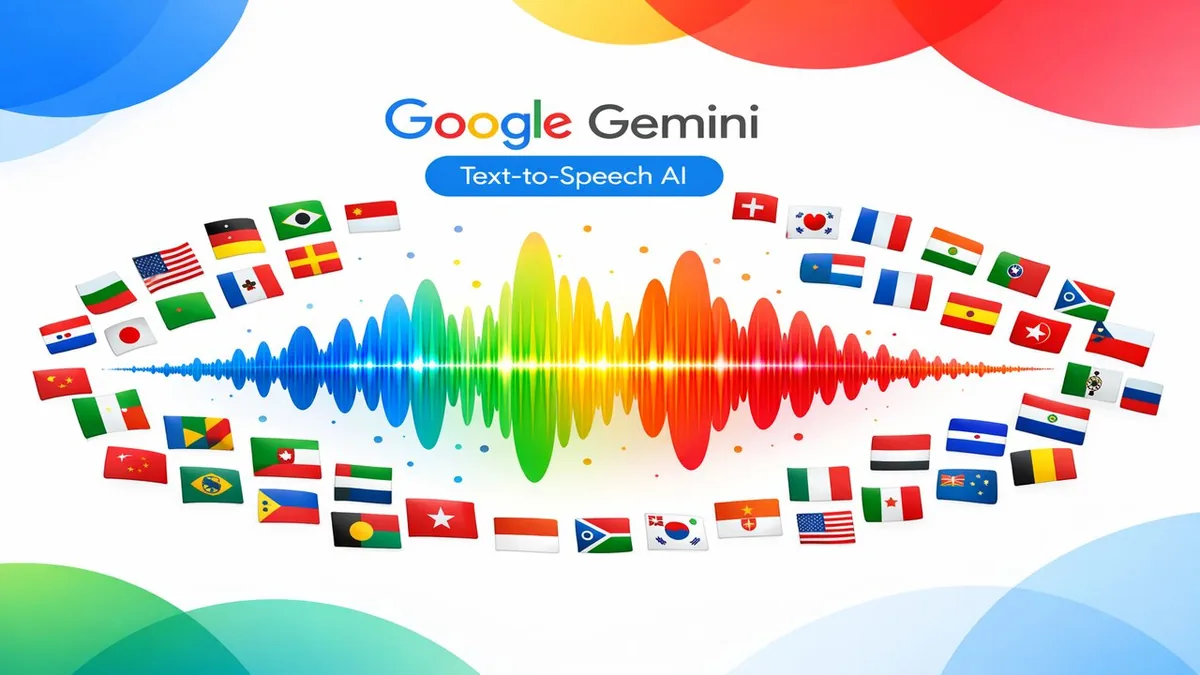
Google has released Gemini 3.1 Flash TTS, a new text-to-speech model built on the Gemini architecture that supports over 70 languages and introduces audio tags — a markup system that gives developers granular control over how synthesized speech is rendered. The model is available via the Google AI Studio and Gemini API, positioned at the intersection of Google's AI platform ambitions and its long-standing leadership in multilingual language technology.
What Audio Tags Enable
The defining feature of Gemini 3.1 Flash TTS is its audio tag system, which allows developers to embed instructions directly into the text input to control speech characteristics at a fine level. Tags can specify: speaking rate at specific points (slow down for emphasis, speed up for lists), emotional tone (calm, excited, concerned), pronunciation stress for ambiguous terms, pause placement for dramatic effect, and language switching within a single utterance for multilingual content.
This level of control has historically required either manual audio editing or expensive custom voice talent. By making it programmable, Google enables developers to produce production-quality speech synthesis without a sound engineer in the loop.
70+ Language Coverage
The 70+ language support is a significant expansion of Google's TTS offering. Previous Google TTS products covered major languages well but had noticeable quality gaps in less-resourced languages. Gemini 3.1 Flash TTS improves coverage across African, Southeast Asian, and Central Asian languages — markets where mobile-first, voice-forward interfaces are increasingly common.
The model's multilingual capabilities also enable seamless code-switching — producing natural-sounding speech that transitions between languages mid-sentence — which is essential for multilingual markets like India, Singapore, and much of Africa.
Developer and Product Implications
For developers building voice interfaces, podcasts, audiobooks, accessibility tools, or localized content at scale, Gemini 3.1 Flash TTS reduces both the cost and complexity of high-quality speech synthesis. The API pricing positions it competitively against ElevenLabs and Amazon Polly, with the audio tags system as the primary differentiation.
The Bottom Line
Gemini 3.1 Flash TTS is a thoughtfully designed developer tool that addresses real limitations in existing TTS offerings: the lack of fine-grained control and patchy multilingual coverage. The audio tags system is genuinely novel and the 70+ language support reflects Google's unique strength in multilingual AI. For developers building voice-forward products in 2026, it is now a serious first option alongside established alternatives.
Related Articles
- Adobe Unveils Firefly AI Assistant for Creative Cloud
- Google Launches Gemini Mac App
- Google DeepMind Unveils Gemini Robotics-ER 1.6