12 Best ETL Tools in 2026 (with Buyer's Guide)
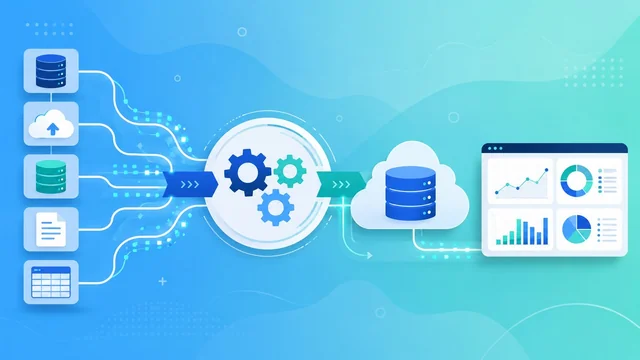
Moving data from dozens of sources into a single place where you can actually analyse it is one of the biggest jobs in any data team — and ETL software is what makes it manageable. ETL (Extract, Transform, Load) tools automate the pipeline that pulls data from your apps and databases, cleans and reshapes it, and loads it into a warehouse or lake for analytics and AI. This guide covers the best ETL and ELT tools in 2026, how they differ, the key features to look for, and how to choose the right one.
What Is ETL Software?
ETL stands for Extract, Transform, Load. ETL software automatically extracts data from sources (databases, SaaS apps, files, APIs), transforms it — cleaning, deduplicating, joining and reformatting — and loads it into a destination such as a data warehouse, lake or BI tool. It replaces brittle, hand-written scripts with reliable, monitored, repeatable pipelines, so analysts and data scientists can trust the numbers they work with. ETL sits at the heart of any modern big data stack.
ETL vs. ELT: What’s the Difference?
You’ll see both terms in 2026. ETL transforms data before loading it — useful when you need to clean or mask data on the way in. ELT (Extract, Load, Transform) loads raw data first and transforms it inside the cloud warehouse, taking advantage of cheap, scalable warehouse compute. Most modern cloud tools (Fivetran, Airbyte, Stitch) are ELT-first, while platforms like Matillion specialise in in-warehouse transformation. The right approach depends on your stack, data volumes and governance needs.
The 12 Best ETL Tools in 2026
From fully-managed pipelines to open-source flexibility and enterprise governance, these are the leading ETL/ELT platforms in 2026.
1. Fivetran — Best Overall (Automated ELT)
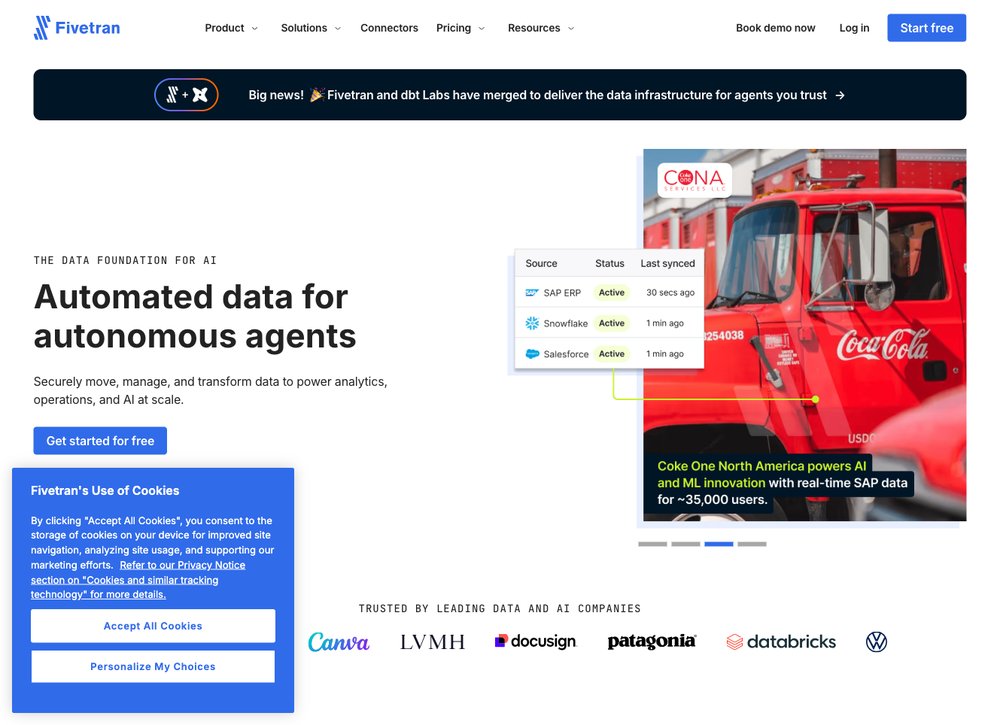
Fivetran is the market leader in fully-managed data movement. Its hundreds of pre-built connectors automatically extract and load data into your warehouse, handle schema changes for you, and need almost no maintenance — making it the go-to for teams that want reliable, hands-off pipelines.
Best for: teams that want dependable, fully-automated pipelines with minimal upkeep.
2. Airbyte — Best Open-Source
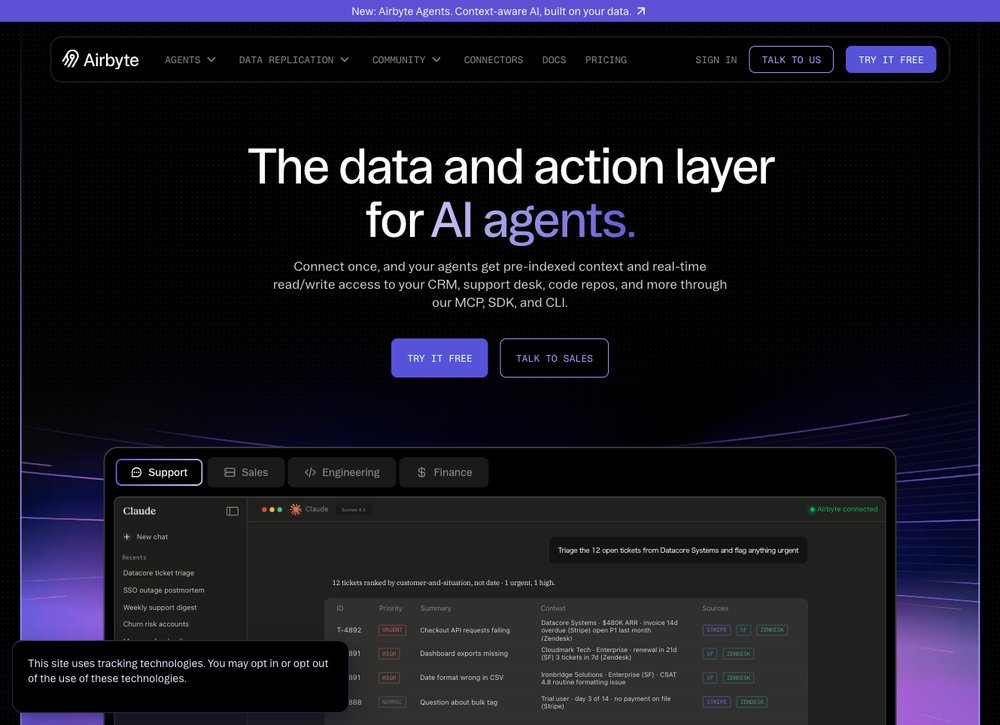
Airbyte is the leading open-source data integration platform, with one of the largest connector catalogs anywhere. You can self-host it for free or use Airbyte Cloud, and its open architecture lets you build custom connectors — increasingly with an eye on feeding data to AI applications.
Best for: teams that want open-source flexibility, custom connectors and control over cost.
3. Qlik Talend — Best for Data Quality & Governance
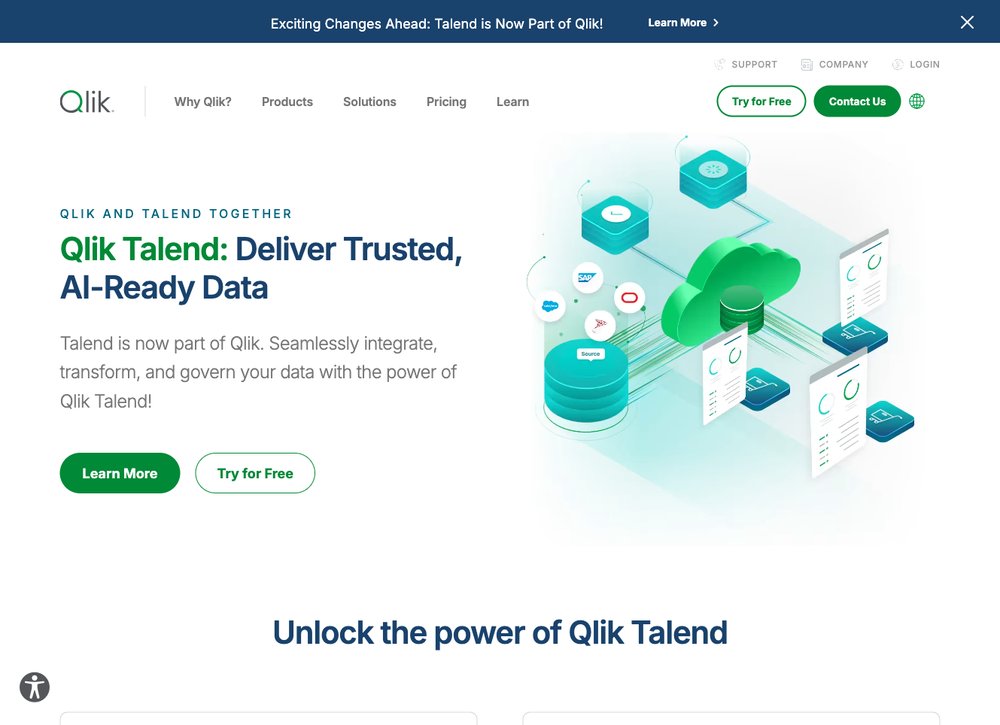
Now part of Qlik, Talend combines data integration with built-in data quality, profiling and governance. It’s designed to deliver trusted, AI-ready data, which makes it a strong fit for organisations where accuracy and compliance matter as much as moving the data.
Best for: enterprises that need integration plus strong data quality and governance.
4. Informatica — Best Enterprise Platform
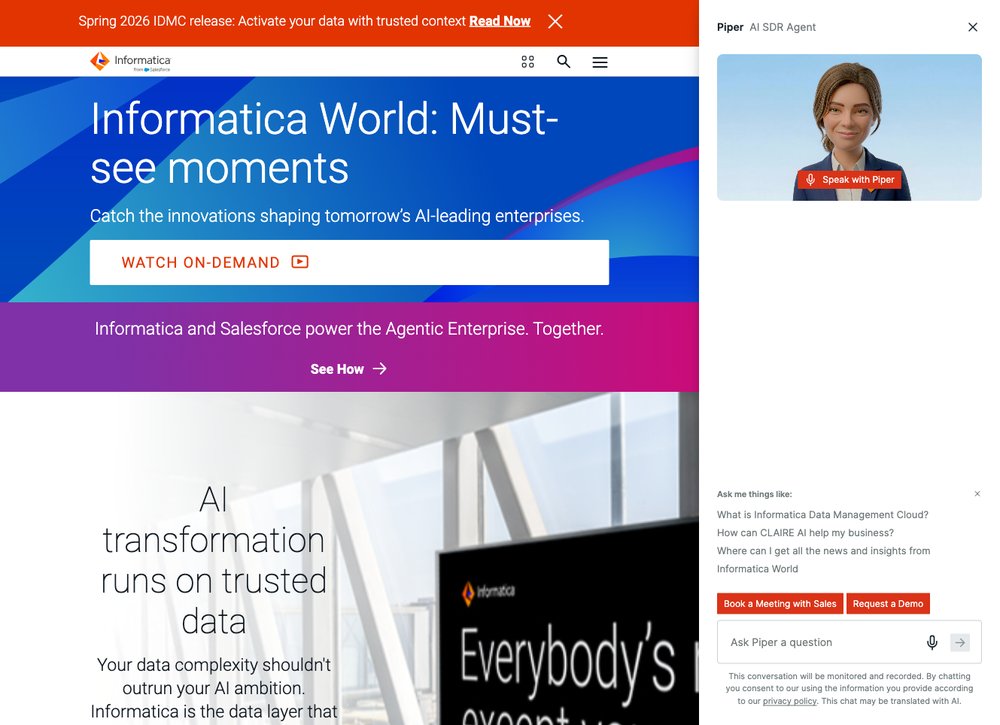
Informatica’s Intelligent Data Management Cloud (IDMC) is a comprehensive, AI-powered (CLAIRE) suite covering integration, quality, cataloging and governance at scale. It’s the heavyweight choice for large enterprises with complex, multi-cloud data estates.
Best for: large enterprises with complex governance and multi-cloud needs.
5. AWS Glue — Best Serverless (AWS-Native)
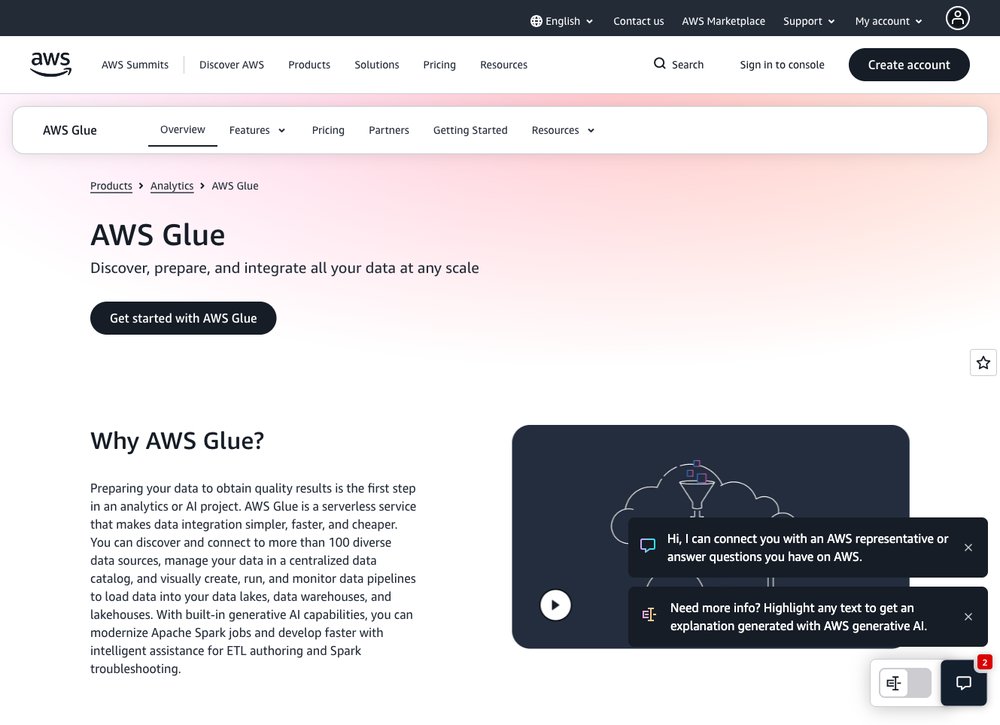
AWS Glue is a serverless data integration service with a built-in data catalog, visual job authoring and Apache Spark under the hood. You pay only for what you run, and it integrates tightly with the rest of AWS — ideal if your stack already lives on Amazon’s cloud.
Best for: AWS-centric teams that want serverless, pay-as-you-go ETL.
6. Matillion — Best Cloud-Warehouse Transformation
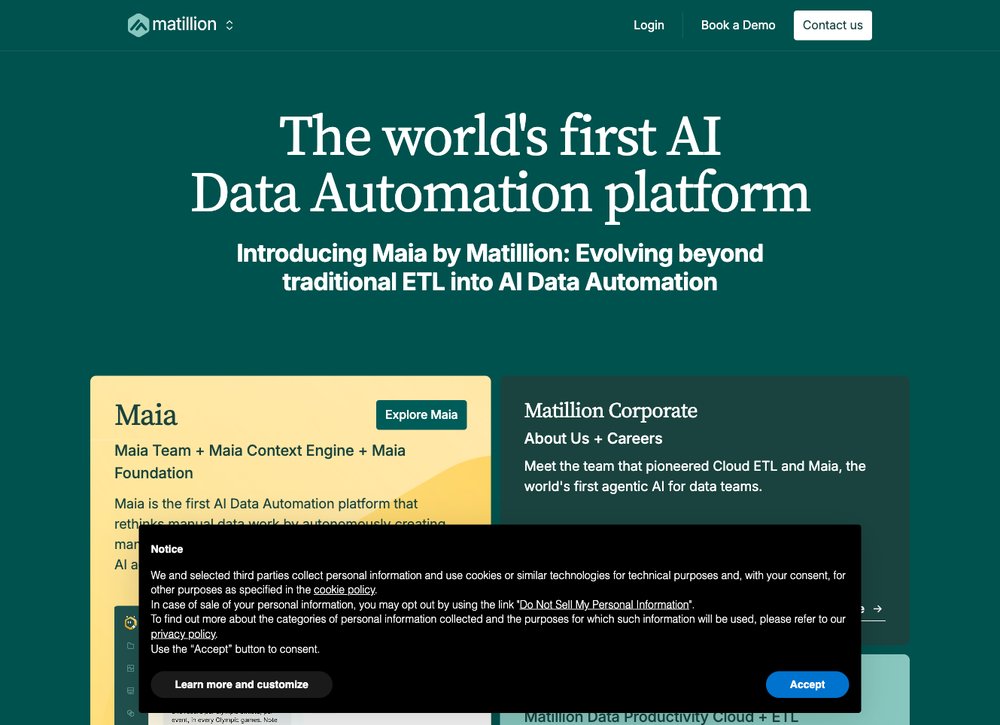
Matillion is built for transforming data inside modern cloud warehouses like Snowflake, Databricks, BigQuery and Redshift, using push-down ELT for speed. With its new AI features, it’s aimed at teams that want a visual, powerful transformation layer on top of their warehouse.
Best for: teams transforming large volumes of data inside a cloud warehouse.
7. Stitch — Best Simple, Low-Cost ELT
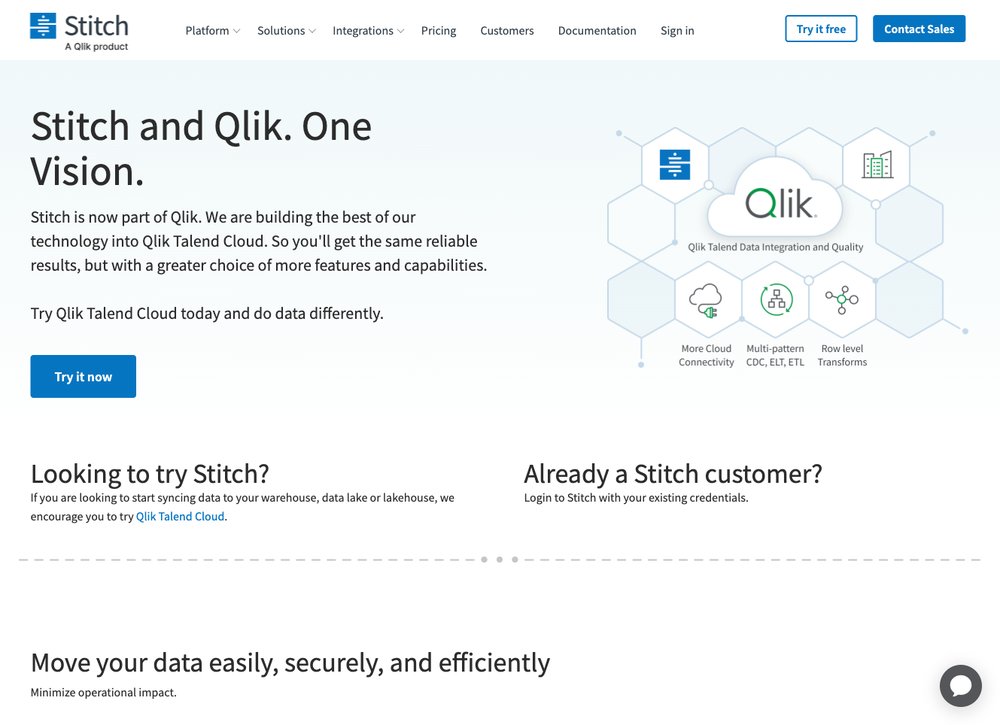
Stitch (also part of Talend) is a lightweight, developer-friendly ELT service for quickly replicating data into a warehouse. It’s simple to set up and affordable, making it a great starting point for small teams and straightforward pipelines.
Best for: small teams and simple, low-cost data replication.
8. dbt — Best SQL Transformation
dbt (now part of Fivetran) is the de facto standard for transforming data inside your warehouse using plain SQL. Rather than moving data, dbt owns the “T” in ELT — letting analysts build tested, version-controlled, documented transformation pipelines. dbt Core is free and open-source, while dbt Cloud adds a managed IDE, scheduling, and team collaboration.
Best for: analytics engineers who want SQL-based, version-controlled transformations.
9. Hevo Data — Best No-Code Real-Time Pipelines
Hevo Data is a no-code, end-to-end ELT platform with 150+ connectors, automated schema mapping, and built-in (dbt-powered) transformations. Its real-time change-data-capture pipelines and transparent, predictable pricing make it popular with teams that want fully-managed pipelines without engineering overhead.
Best for: teams that want no-code, real-time pipelines with transparent pricing.
10. Azure Data Factory — Best for Microsoft & Azure Stacks
Azure Data Factory (ADF) is Microsoft’s cloud ETL and data-integration service, with 90+ connectors, a visual pipeline builder, and deep integration with the Azure ecosystem (Synapse, Fabric, Databricks). Pay-as-you-go pricing and hybrid runtimes make it the natural choice for Microsoft-centric organisations.
Best for: teams already invested in the Microsoft Azure ecosystem.
11. Apache Airflow — Best Open-Source Orchestration
Apache Airflow is the industry-standard open-source workflow orchestrator. You define pipelines as Python DAGs, giving you complete control over scheduling, dependencies, and complex multi-step workflows. It’s free and endlessly flexible — though it takes real engineering effort to deploy, scale, and maintain.
Best for: engineering teams that want full-control, code-first pipeline orchestration.
12. Integrate.io — Best Low-Code with Fixed-Fee Pricing
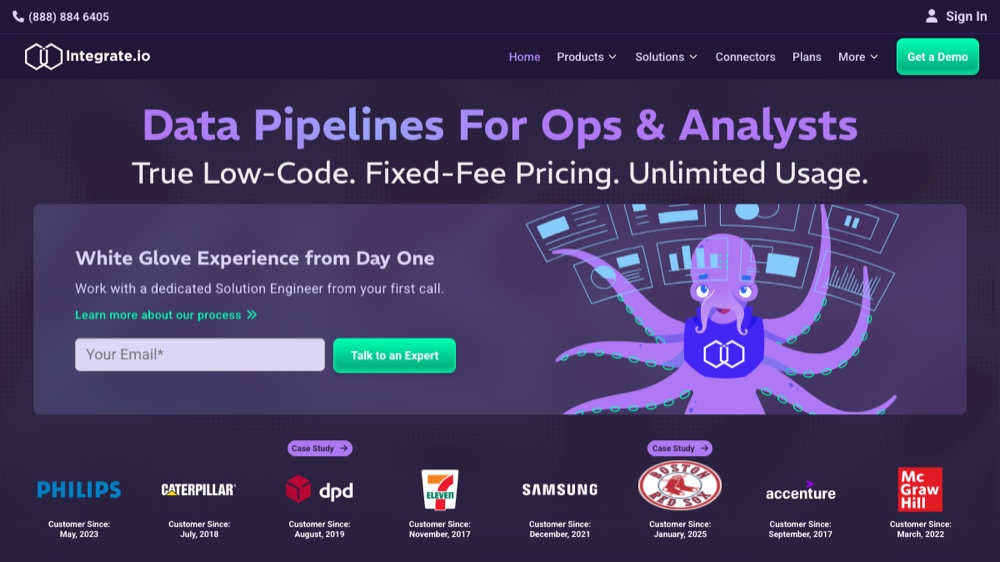
Integrate.io is a low-code data integration platform offering ETL, ELT, reverse ETL, and CDC with 140+ connectors. Its standout is fixed-fee, unlimited-usage pricing — rather than per-row or usage-based billing — which keeps costs predictable for high-volume teams.
Best for: teams that want low-code pipelines with predictable, fixed-fee pricing.
ETL Tools Compared at a Glance
| Tool | Best For | Type | Deployment | Free option | Starting price |
|---|---|---|---|---|---|
| Fivetran | Automated ELT | Fully managed | Cloud | Free tier + trial | Usage-based |
| Airbyte | Open-source flexibility | Open-source / managed | Self-host or Cloud | Yes (open-source) | Free / usage-based |
| Qlik Talend | Data quality & governance | Enterprise | Cloud / hybrid | Free trial | Custom |
| Informatica | Enterprise data management | Enterprise | Cloud (IDMC) | Free tier | Custom |
| AWS Glue | Serverless on AWS | Managed / serverless | AWS Cloud | Pay-as-you-go | ~$0.44/DPU-hour |
| Matillion | Cloud-warehouse transformation | Managed | Cloud | Free trial | Credit-based |
| Stitch | Simple, low-cost replication | Managed | Cloud | Free trial | From ~$100/mo |
| dbt | SQL transformation | Open-source / managed | Self-host or Cloud | Yes (dbt Core) | Free / Cloud paid |
| Hevo Data | No-code real-time pipelines | Managed | Cloud | Free tier | From ~$239/mo |
| Azure Data Factory | Microsoft / Azure stacks | Managed / serverless | Azure Cloud | Pay-as-you-go | Pay-as-you-go |
| Apache Airflow | Open-source orchestration | Open-source | Self-host | Yes (open-source) | Free |
| Integrate.io | Low-code, fixed-fee | Managed | Cloud | 14-day trial | Fixed-fee |
Pricing models vary widely (usage, credit, fixed-fee, custom) and change often — check each vendor for current rates.
Benefits of ETL Software
- One source of truth: consolidate data from every app and database into a single warehouse for analytics.
- Automation: replace fragile manual scripts with scheduled, monitored pipelines that just run.
- Better data quality: clean, deduplicate and validate data so your reports and models can be trusted.
- Saved engineering time: pre-built connectors mean your team builds insights instead of plumbing.
- Analytics & AI ready: reliable, well-structured data powers BI dashboards and machine-learning models.
Key Features to Look For
- Connectors: ready-made integrations for the sources and destinations you actually use.
- Automation & scheduling: set-and-forget syncs with retry and backfill.
- Transformation: built-in or SQL/dbt-based transforms to reshape data.
- Change data capture (CDC): efficient incremental syncs and schema-drift handling.
- Monitoring & alerting: visibility into pipeline health and failures.
- Security & compliance: encryption, access controls and certifications (SOC 2, GDPR, HIPAA).
- Scalability & pricing: handles your data volume at a cost model you can predict.
How to Choose the Right ETL Tool
- Check connector coverage for your specific sources and warehouse first — it’s the most common dealbreaker.
- Decide ETL vs ELT based on where you want transformation to happen and how much warehouse compute you have.
- Managed vs open-source: Fivetran/Stitch for hands-off, Airbyte for control and lower cost.
- Match your cloud: AWS Glue for AWS, Matillion for Snowflake/Databricks/BigQuery.
- Weigh governance needs: Informatica or Qlik Talend when quality and compliance are critical.
- Trial before you commit — almost every tool offers a free tier or trial.
Frequently Asked Questions
What is the best ETL tool in 2026?
For most teams, Fivetran is the best overall thanks to its reliable, fully-managed connectors. Airbyte is the best open-source choice, AWS Glue is best for AWS-native serverless ETL, and Informatica or Qlik Talend lead for enterprise governance.
What is the difference between ETL and ELT?
ETL transforms data before loading it into the destination, while ELT loads raw data first and transforms it inside the cloud warehouse. ELT is the modern default for cloud stacks because it leverages scalable warehouse compute; ETL is still useful when you must clean or mask data before it lands.
Is there a free ETL tool?
Yes. Airbyte is free and open-source if you self-host it, and AWS Glue is pay-as-you-go with no upfront cost. Most commercial tools, including Fivetran and Stitch, also offer a free tier or free trial to get started.
Do I need coding skills to use ETL software?
Not always. Many tools (Fivetran, Stitch, Matillion) are largely no-code or low-code with visual interfaces. More advanced transformations, custom connectors or AWS Glue jobs may require SQL, Python or dbt knowledge.
What is ETL used for?
ETL is used to build data warehouses and lakes that power business intelligence, reporting, analytics and increasingly machine-learning and AI — by pulling data from many systems into one clean, query-ready place.
The Bottom Line
The best ETL tool is the one that connects your sources to your warehouse with the least friction. For most teams, start with Fivetran for managed reliability or Airbyte for open-source flexibility. Choose AWS Glue if you live on AWS, Matillion for in-warehouse transformation, and Informatica or Qlik Talend when enterprise governance is non-negotiable. Check connector coverage, pick ETL or ELT to match your stack, and take advantage of free trials before you commit. And if you’d rather not run pipelines in-house, managed data analytics services can handle ETL for you.