China Smartphone Shipments Fell 4% in Q1 2026 Amid Memory Shortages — Huawei at 20% Share, iPhone Up 20%
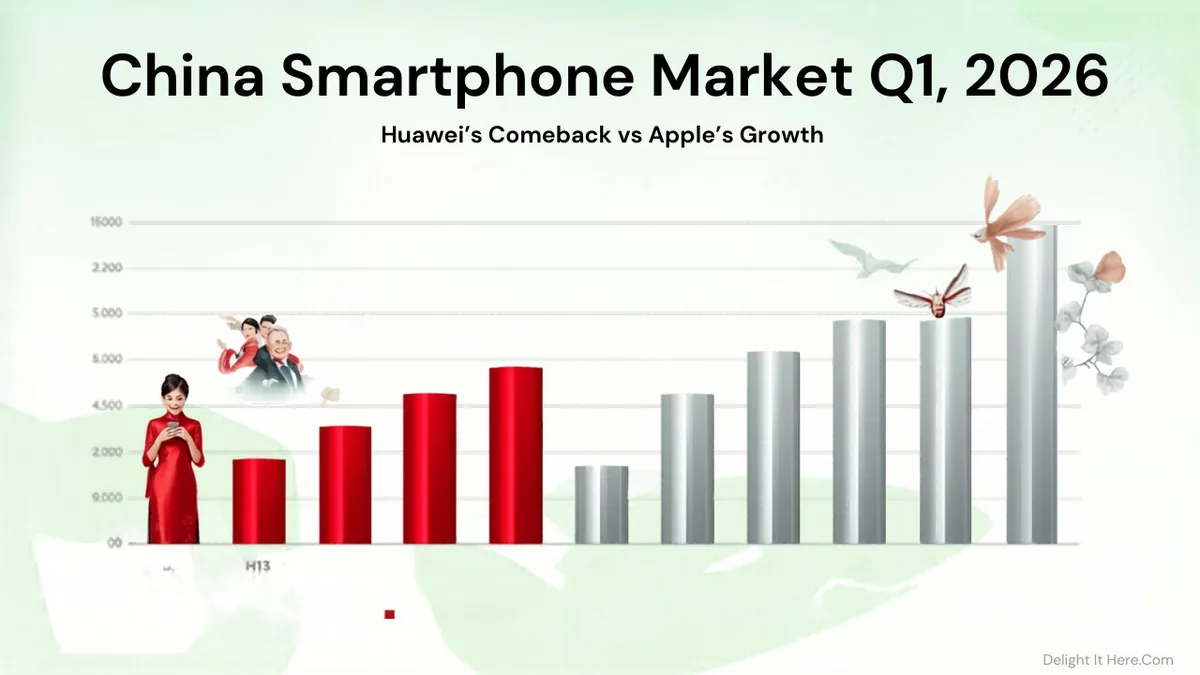
China's smartphone shipments declined 4 percent year-over-year in Q1 2026, according to Counterpoint Research, driven by memory component shortages that constrained production across the market. Within that decline, two brands bucked the trend in opposite ways: Huawei grew shipments 2 percent year-over-year to capture a 20 percent market share, while iPhone shipments surged 20 percent year-over-year to a 19 percent share — nearly matching Huawei for the top position.
Memory Shortages as the Constraint
The 4 percent overall market decline is primarily attributed to memory component shortages rather than weakened consumer demand. NAND flash and DRAM supply constraints have hit smartphone manufacturers across China and globally, with the shortage reducing the number of devices that can be produced and shipped regardless of consumer intent to buy.
These memory constraints are partly a consequence of the same AI infrastructure buildout that is driving explosive demand for high-bandwidth memory in data centers. When AI compute demands compete with consumer electronics for memory supply, smartphone production gets squeezed.
Huawei's Resilience
Huawei's 20 percent market share — achieved with 2 percent growth in a down market — reflects the success of its domestic strategy. The company's Mate and Pura series, running its own HarmonyOS and powered by domestically-developed Kirin chips, have resonated strongly with Chinese consumers who were initially skeptical about the software ecosystem transition from Android.
Huawei's ability to maintain and grow share under US semiconductor export controls is remarkable and has significant geopolitical implications. Each quarter of continued growth validates China's domestic chip development investment.
iPhone's Surprising Surge
A 20 percent increase in iPhone shipments in China — closing to within one percentage point of Huawei's market share — is a notable reversal from recent trends showing Apple losing ground in China. The surge may reflect channel inventory normalization, the launch timing of new models, or promotional pricing adjustments. MacRumors and CNBC both highlighted the data as a meaningful positive signal for Apple in what has been a challenging market.
The Bottom Line
China's smartphone market is in a memory-constrained dip, but the competition between Huawei and Apple at the premium end is intensifying. A 1-percentage-point gap between the two brands is razor-thin — and the next quarter will reveal whether iPhone's surge represents a trend reversal or a one-quarter bounce.
Related Articles
- India Smartphone Shipments Hit Six-Year Low in Q1 2026
- Samsung Quietly Raises US Prices on Galaxy S25 and Z Flip 7