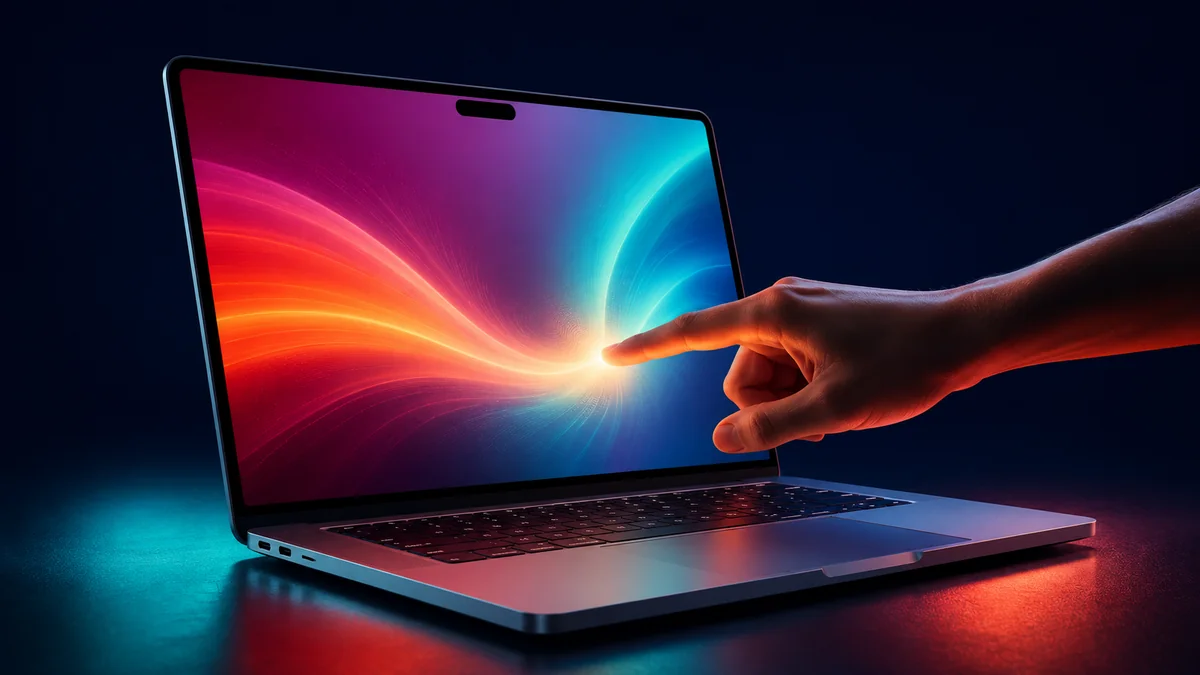
Apple has spent more than a decade telling everyone who'd listen that touchscreens belong on iPhones and iPads — never on a Mac. Steve Jobs called reaching up to touch a vertical laptop screen "ergonomically terrible." So the latest reporting from Bloomberg's Mark Gurman lands like a small earthquake: the next MacBook Pro will have a touchscreen, and it's the centerpiece of the biggest Mac redesign in years.
But there's a catch that's raising eyebrows. Apple's most ambitious laptop in a decade is set to ship with a last-generation chip. Here's the full breakdown of what's coming, when, and why.
The News in Brief
According to Gurman, Apple is developing 14-inch and 16-inch MacBook Pro models that combine three brand-new technologies in one device, paired with a thinner, lighter chassis. It's the first real industrial-design overhaul the MacBook Pro has seen since the 2021 redesign — and arguably the most significant rethink of the Mac laptop since Apple Silicon arrived.
The Three Firsts
What makes this launch a genuine milestone is that it stacks three Mac-firsts into a single product:
| First | What it means |
|---|---|
| Touchscreen | Tap, swipe and scroll directly on the display — the first time ever on a Mac. |
| OLED display | A tandem-OLED panel (branded "Ultra Retina XDR") for deeper blacks, higher brightness and better efficiency. |
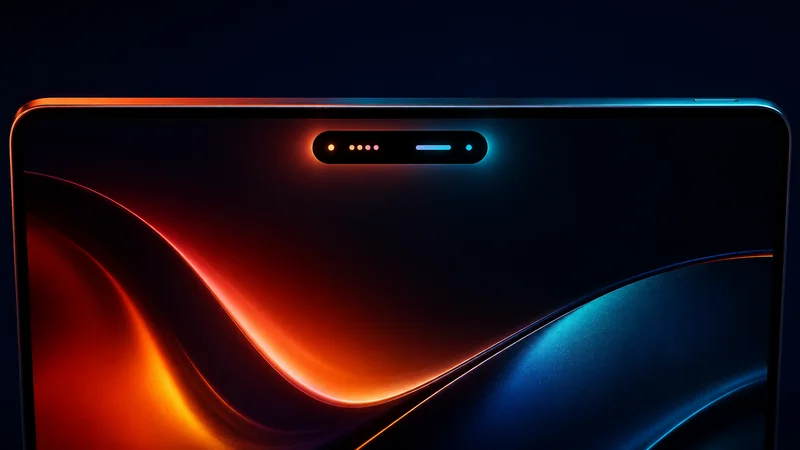
| Dynamic Island | The iPhone-style camera cutout that expands for Live Activities, alerts and Siri — replacing the notch. |
Any one of these would be a headline feature. Together, they turn the MacBook Pro into something that looks and feels distinctly new — closer to the iPad Pro's display tech, but in a true laptop body that keeps the keyboard and trackpad you rely on.
The M5 Twist
Now the strange part. You'd expect Apple's flagship redesign to debut its newest, fastest silicon. Instead, Gurman reports the touchscreen models "will feature Apple's M5 Pro and M5 Max chips, instead of the M6 or the allegedly now-cancelled M6 Pro and Max."
Read that again: the most exciting MacBook Pro in years will run on the same chip family as the MacBook Pro you can buy today. The redesign is all about the screen and the body — not raw performance.
Why Skip the M6?
It sounds like a downgrade, but there's a strategy. Apple reportedly cancelled the M6 Pro and Max generation entirely to fast-track the M7 family, which is being engineered specifically to deliver much stronger on-device AI — the same Apple Intelligence and Siri push the company has been building toward. Rather than wait for an all-new chip to be ready, Apple is reusing the proven M5 Pro/Max so it can get the touchscreen redesign to market sooner.
In effect, Apple is splitting its big bets across two years: the design leap in 2026/27, and the AI-chip leap right after with M7, M7 Pro and M7 Max. It's a pragmatic way to ship a showstopping laptop now without holding it hostage to silicon that isn't finished.
Release Window
The current target is late 2026 to early 2027. But timing is the shakiest part of the picture. The same global memory-chip shortage that's pushing up prices across the tech industry — the one already forcing Apple to raise Mac and iPad prices — could delay the touchscreen MacBook Pro firmly into 2027. We dug into that supply crunch in our look at why Apple and Microsoft prices are jumping, and it's the single biggest wildcard for this launch.
The Price Question
Here's the uncomfortable math. OLED panels are expensive — when Apple switched the iPad Pro to tandem OLED, prices rose by roughly $200. Layer that on top of the memory-chip cost surge already inflating Mac prices, and the touchscreen MacBook Pro is on track to be the most expensive standard MacBook Pro yet.
For buyers, that creates a real decision: pay a premium for the dazzling new screen and design on a familiar M5 chip, or wait for the M7 models that promise the bigger AI gains. There won't be an obviously "right" answer — it depends on whether you value the display or the silicon more.
Why It Matters
- A 15-year reversal. Apple is finally conceding the point on touch — a philosophical shift, not just a spec bump.
- Design now, AI later. Splitting the redesign (M5) from the AI chip (M7) tells you where Apple's real 2027 ambitions lie: on-device intelligence.
- The shortage is the story. A memory-chip crunch is now shaping Apple's roadmap and pricing — the same force behind this year's price hikes.
- iPad vs Mac lines blur. A touchscreen OLED Mac with a Dynamic Island narrows the gap between Apple's two flagship product lines.
Frequently Asked Questions
Is Apple really making a touchscreen MacBook?
Yes. According to Bloomberg's Mark Gurman, Apple is preparing its first touchscreen MacBook Pro in 14-inch and 16-inch sizes. After more than a decade of insisting touchscreens belonged on iPads and not Macs, Apple is finally bringing touch input to the laptop — as part of the biggest MacBook Pro redesign in years.
What are the 'three firsts' of the touchscreen MacBook Pro?
The new MacBook Pro is expected to deliver three Mac firsts at once: the first touchscreen on a Mac, the first OLED display (a tandem-OLED panel marketed as 'Ultra Retina XDR'), and the first Dynamic Island — the iPhone-style camera cutout that houses Live Activities and new Siri features. It's also the first major industrial-design overhaul for the MacBook Pro in years, with a thinner, lighter body.
Which chip will the touchscreen MacBook Pro use?
Surprisingly, the M5 Pro and M5 Max — not a next-generation M6. Gurman reports the touchscreen models 'will feature Apple's M5 Pro and M5 Max chips, instead of the M6 or the allegedly now-cancelled M6 Pro and Max.' In other words, Apple's flashiest new laptop will run on the same chip family as today's MacBook Pro.
Why is Apple using the M5 instead of the M6?
To move faster. Apple reportedly cancelled the M6 Pro and Max generation entirely so it could fast-track the M7 line, which is being built to deliver much stronger on-device AI. Reusing the proven M5 Pro/Max lets Apple ship the touchscreen redesign sooner rather than waiting on an all-new chip — prioritizing the design leap now and the AI leap in 2027.
When will the touchscreen MacBook Pro be released?
The current target is late 2026 to early 2027. However, the global memory-chip shortage that's driving up prices across the industry could push the launch firmly into 2027. Apple is also lining up M7, M7 Pro and M7 Max models for 2027, so the touchscreen Mac will likely arrive first on M5 and get an AI-focused chip upgrade not long after.
Will the touchscreen MacBook Pro be more expensive?
Almost certainly. OLED panels are costly, and when Apple moved the iPad Pro to tandem OLED, prices jumped by around $200. Combine that with the memory-chip shortage already pushing Mac prices higher, and the touchscreen MacBook Pro is shaping up to be a premium device — likely the most expensive standard MacBook Pro yet.
What is the Dynamic Island on the MacBook Pro?
It's the same concept as on the iPhone: the camera cutout at the top of the screen becomes an interactive area that expands to show Live Activities, alerts and Siri interactions, replacing the current notch. On a touchscreen Mac it would give you a tappable status hub right where the camera sits — a natural fit once the display responds to touch.
Final Thoughts
The touchscreen MacBook Pro is the rare Apple product that's exciting for what it changes and fascinating for what it reveals. The touch, OLED and Dynamic Island trifecta is the boldest Mac redesign in years — a genuine reinvention of a laptop that had grown comfortably predictable.
Yet the decision to ship it on M5 while fast-tracking M7 for AI tells the deeper story: Apple sees 2027 as the real battleground, and that battle is about on-device intelligence, not benchmarks. This laptop is the showpiece; the chip that follows is the strategy. If you've been waiting for the Mac to feel new again, it's nearly here — just keep one eye on the memory-chip shortage that could decide exactly when it lands. We'll keep tracking it.