Apple Plans to Send 200 Siri Engineers to an AI Coding Bootcamp as Team Is Called a 'Laggard'
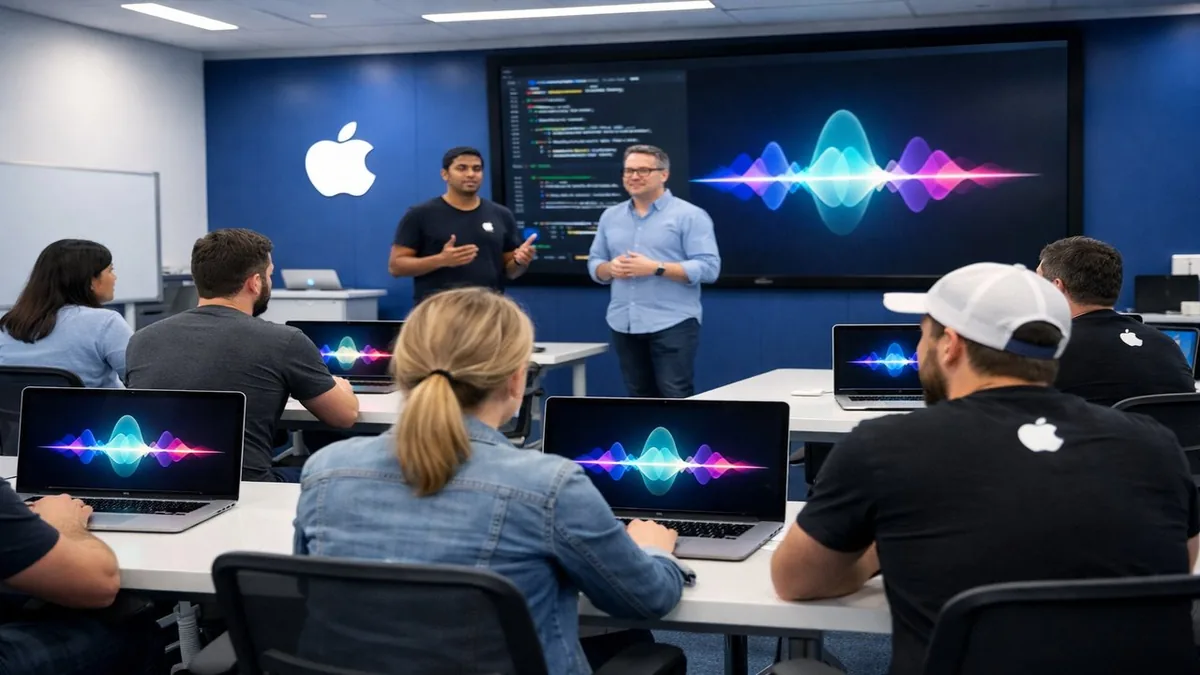
Apple is taking an unusual step to accelerate its artificial intelligence ambitions: the company plans to send approximately 200 engineers from its Siri team to an intensive AI coding bootcamp. Internally, the Siri group has been described as a "laggard," a damning label that underscores how far Apple believes it has fallen behind competitors like Google, OpenAI, and Amazon in the race for conversational AI dominance.
A Team Under Pressure
The Siri team's struggles are not news. Apple's voice assistant has long been criticized as less capable than rivals, and the company's late entry into large language models has cost it credibility with both consumers and developers. The decision to send 200 engineers to a bootcamp signals that Apple's leadership views the gap as both real and urgent.
The bootcamp is designed to upskill engineers who have primarily worked on traditional rule-based voice recognition systems, helping them transition to the neural network architectures that underpin modern AI assistants. The scale — 200 people — suggests Apple is treating this as a sweeping internal transformation, not a one-off training exercise.
What Apple Is Trying to Fix
Siri has struggled with basic tasks that ChatGPT and Google Gemini handle with ease. Complex multi-step requests, contextual understanding, and web-sourced answers remain weak points. Apple's planned AI-powered overhaul of Siri — first previewed at WWDC last year — has reportedly been delayed, adding to the urgency.
The bootcamp initiative is part of a broader internal push that includes hiring dedicated AI researchers and restructuring teams around large language model development. Apple has historically kept AI development siloed; the bootcamp suggests a deliberate effort to break down those walls.
The Competitive Stakes
Apple's position in AI is awkward. Its hardware — particularly the A18 and M-series chips — is among the most capable on-device AI silicon in the world. Yet the software intelligence layer running on top of that hardware has repeatedly disappointed. Competitors have used that gap to poach both mindshare and developers.
Google's Gemini app is now available on iOS, while OpenAI's ChatGPT integration has won default placement on some Android devices. Apple's own App Store is full of third-party AI assistants that outperform Siri on basic tasks. The pressure to respond is existential.
The Bottom Line
Sending 200 engineers to an AI bootcamp is not a product launch — it's an admission. Apple knows Siri is behind, and it is spending significant internal resources to fix the problem. Whether the bootcamp yields results fast enough to matter is a different question, but the move signals that Apple is finally treating AI capability as a first-order priority, not a feature to be polished later.
Related Articles
- Anthropic Rolls Out Identity Verification for Claude
- Google DeepMind Unveils Gemini Robotics-ER 1.6
- OpenAI Updates Agents SDK With Native Sandboxing