US Treasury's Bessent Says Dollar Swap Lines With Gulf and Asian Allies Are About Dollar Dominance
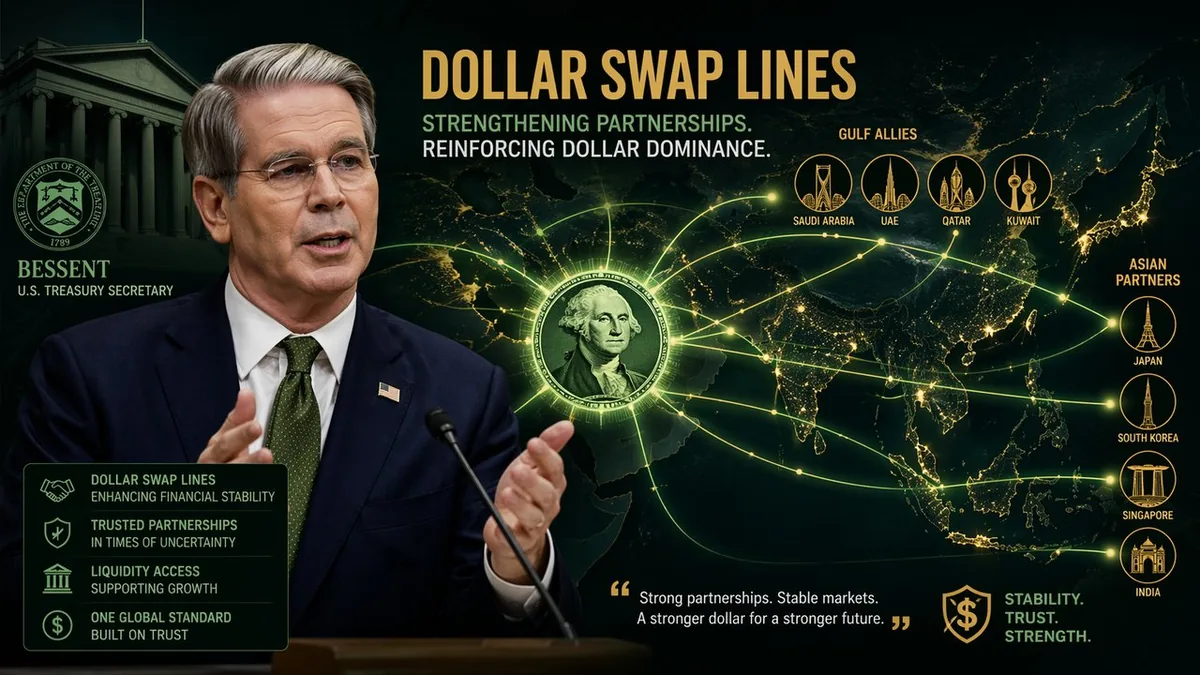
US Treasury Secretary Scott Bessent confirmed that talks around dollar swap lines with Gulf and Asian allies are ongoing but characterized as "routine," while making clear that any expansion of these arrangements is designed explicitly to reinforce US dollar dominance — not to signal financial stress or a shift in dollar policy.
What Dollar Swap Lines Are
Dollar swap lines are arrangements between the Federal Reserve and foreign central banks that allow those banks to access US dollars in exchange for their own currency. They were famously deployed during the 2008 financial crisis and again during COVID-19 to prevent dollar shortages from tipping into global financial panics. Existing permanent swap lines run with major developed economy central banks; extending them to Gulf or Asian allies would represent a meaningful expansion of the network.
Why Gulf and Asian Allies
The context here is the ongoing geopolitical restructuring of the global financial system. As countries in the Middle East and Southeast Asia deepen economic relationships with China and explore alternatives to dollar-denominated trade settlement, the US has an interest in using swap lines as a tool to keep these economies tied to the dollar system. Offering a Gulf state a dollar swap line is, in effect, saying: "We will be your dollar backstop — which means you have less incentive to build an alternative."
Bessent's framing of expanded swap lines as reinforcing "dollar dominance" is unusually direct. Normally, US officials describe swap lines in terms of financial stability rather than geopolitical leverage. The candor suggests the administration views dollar diplomacy as an explicit foreign policy tool, not just a central banking technical arrangement.
Market Implications
If the US extends swap lines to Gulf economies — particularly Saudi Arabia and the UAE — it would reduce the dollar credit risk for those economies and potentially make dollar-denominated oil pricing agreements more durable. It would also make it politically and financially costlier for those governments to participate in yuan-denominated oil trade experiments that China has been pursuing.
My Take
Bessent is using swap line talks to send a message: the dollar system has benefits, and those benefits come with conditions. Countries that want dollar liquidity backstops get them — but in exchange, they're implicitly choosing the US financial architecture over Chinese alternatives. It's dollar dominance as a foreign policy instrument, and it's smarter than tariffs. Whether Gulf allies accept the implicit terms, or use the swap line offers as leverage in their own negotiations with both Washington and Beijing, will be interesting to watch.
Related Articles
- US Dollar Posts Weekly Gain as Iran Talks Stall
- Trump Admin Froze $344 Million in Crypto Over Links to Iran
- The DOJ Is Expected to Drop Its Criminal Probe of Fed Chair Powell