Trump Admin Froze $344 Million in Crypto Over Alleged Links to Iran
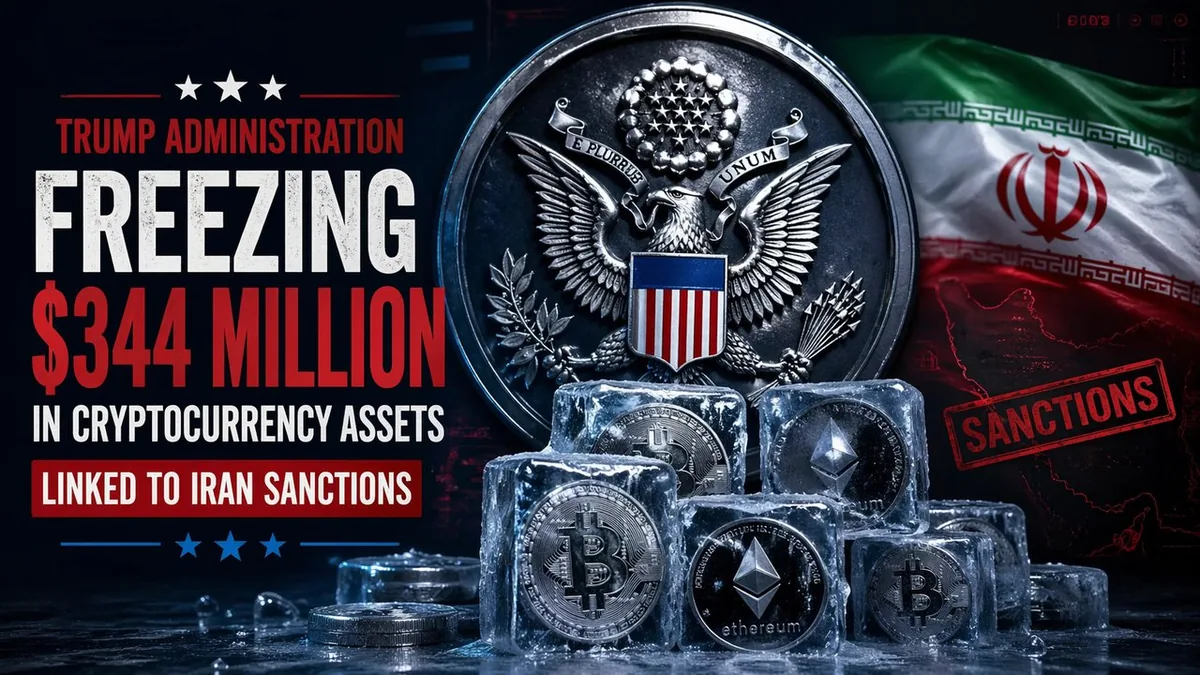
The Trump administration has frozen $344 million in cryptocurrency assets with alleged ties to Iran, marking one of the largest single crypto sanctions actions in US history and intensifying the use of blockchain asset seizures as a geopolitical enforcement tool.
What Was Frozen and How
The US government froze $344 million in crypto assets across multiple wallets identified as connected to Iranian entities subject to existing sanctions. The action was coordinated through OFAC (the Office of Foreign Assets Control), which has steadily expanded its crypto enforcement capabilities over the past several years and can now trace and freeze blockchain assets with considerably more sophistication than even three years ago.
The specific assets frozen, the exchanges involved, and the blockchain networks affected have not been fully disclosed — a deliberate opacity that is standard in sanctions enforcement actions to prevent target entities from moving remaining assets before the full sweep is complete.
Why $344 Million in Crypto
Iran has been an aggressive user of cryptocurrency to circumvent sanctions for years. With traditional financial channels blocked by SWIFT exclusions and correspondent banking restrictions, Iranian entities — including those connected to the government, the Revolutionary Guard, and affiliated businesses — have turned to crypto for international transactions, oil sales, and arms procurement.
The scale of this freeze ($344 million) suggests it targeted significant operational infrastructure, not merely individual wallets. It likely represents months of blockchain analytics work by Treasury, OFAC, and potentially private firms like Chainalysis or Elliptic.
The Broader Geopolitical Context
This action comes as the US and Iran are engaged in ceasefire negotiations — with Iran's Foreign Minister heading to Pakistan for talks facilitated by Islamabad. Freezing $344 million in Iranian crypto assets simultaneously sends a clear message: US financial pressure is not pausing during diplomacy. This is standard sanctions diplomacy — keep the pressure on while talking.
My Take
The crypto community periodically debates whether blockchain is "censorable." This freeze is Exhibit A in the argument that, at the fiat on/off ramp layer, it absolutely is. OFAC doesn't need to break cryptography — it just needs to pressure exchanges not to allow withdrawals from flagged wallets, which is exactly what happens. Iran's crypto sanctions evasion strategy has always depended on the limits of US enforcement capability. Those limits are shrinking every year as blockchain analytics firms get better and regulatory pressure on exchanges increases globally.
Related Articles
- A Crypto Scam Is Luring Ships into the Strait of Hormuz
- Polymarket Traders Made $35,000 Betting on Paris Weather
- US Dollar Posts Weekly Gain as Iran Talks Stall