A Crypto Scam Is Luring Ships into the Strait of Hormuz with Fake Safe-Passage Promises
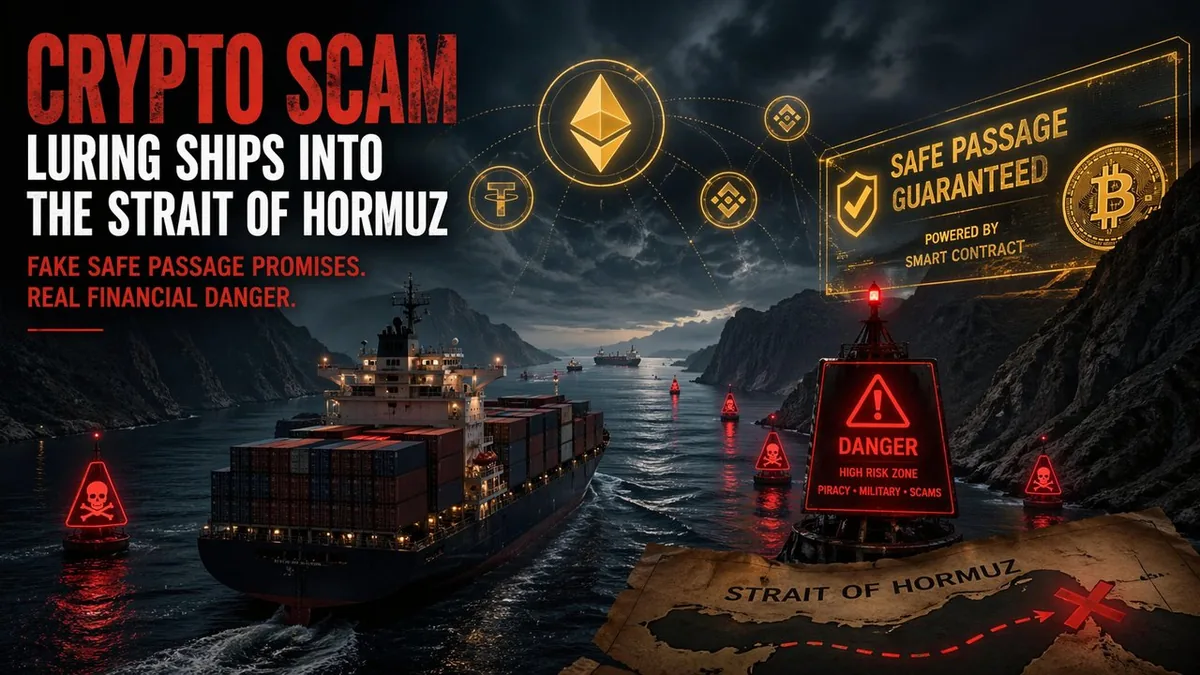
A crypto scam targeting commercial shipping is operating in the Strait of Hormuz — one of the world's most strategically critical maritime chokepoints. Fraudulent messages impersonating Iranian authorities are contacting ships transiting the strait, demanding Bitcoin or USDT payments for "safe passage." At least one ship has already paid — and was fired upon anyway. Greek risk management firm Marisks identified and issued warnings about the scheme.
How the Scam Works
The fraudulent messages claim to be from Iranian maritime authorities conducting an "eligibility assessment" for transit. Ships that respond are told they must pay a cryptocurrency fee — Bitcoin or USDT — to guarantee safe passage through the strait. The messages are sophisticated enough to convince at least one vessel operator: the cargo ship Epaminondas, operated by Greek company Technomar, reportedly complied and was fired upon on April 22, 2026, suggesting the safe passage guarantee was not honored.
The Context That Makes It Credible
The scam emerged against a specific backdrop that made it credible to ship operators. The Trump administration has deployed a naval blockade in the region, and Iran had separately proposed a legitimate cryptocurrency toll system for vessels transiting Iranian-controlled waters. A fraudulent message demanding crypto payment for transit blends into a situation where such demands are genuinely being discussed at a policy level.
That context is what makes this scam more dangerous than a typical phishing scheme: it exploits genuine policy ambiguity in one of the world's highest-tension maritime corridors.
What Shipping Companies Should Know
No legitimate maritime authority will demand cryptocurrency payments for passage rights. Any message requesting Bitcoin or USDT for transit clearance — regardless of claimed authority — should be treated as fraudulent. Verify all communications through official diplomatic and maritime authority channels before responding. Contact your flag state and shipping association rather than engaging with the message directly.
My Take
This scam is notable not for its technical sophistication but for its geopolitical sophistication. Whoever built it understood the specific policy environment around the Strait of Hormuz well enough to craft a credible impersonation. The combination of real geopolitical tension, cryptocurrency's irreversibility, and maritime operators under pressure to keep ships moving created a perfect phishing context. The Epaminondas incident suggests at least one operator thought the risk of not paying was higher than the risk of paying.
Related Articles
- A US Soldier Made $400,000 on Polymarket Betting on the Maduro Raid
- Justin Sun Is Suing Trump-Linked World Liberty Financial