SpaceX Wants to Make Its Own GPUs — and the S-1 Filing Explains Why
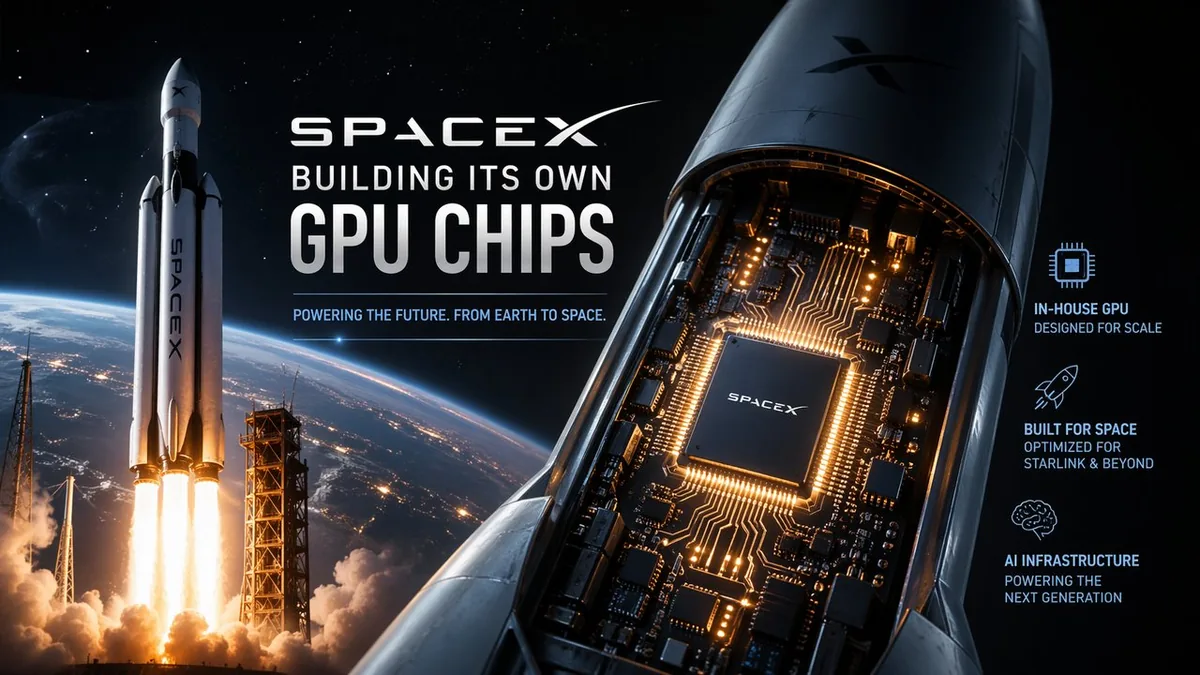
SpaceX's S-1 filing reveals plans to develop in-house GPU manufacturing capability. In a market where Nvidia GPUs are perpetually constrained and priced at premium, SpaceX is betting it can solve its own chip supply problem the same way it solved its rocket supply problem — by building it internally.
What's Actually Happening
The S-1 document — filed as SpaceX moves toward a potential public offering — discloses substantial planned capital expenditures for in-house GPU development. SpaceX is one of the largest GPU consumers in the world: Starlink satellite operations, Grok AI model training at xAI, and internal automation all run on massive GPU clusters. Dependence on Nvidia for all of that compute is both expensive and strategically vulnerable.
Developing custom silicon is not a new idea for SpaceX — the company already designs custom avionics chips for its rockets and spacecraft. Extending that capability to AI accelerators is a logical progression of the vertical integration philosophy that defines how Musk runs his companies.
Why It Matters
Custom AI chips built in-house would give SpaceX and xAI independence from Nvidia's pricing and allocation cycles. Google has TPUs. Amazon has Trainium. Microsoft is building Maia. Apple has its Neural Engine. The major tech players are all moving toward custom silicon — SpaceX joining that list is significant because it is not primarily a software company.
The xAI angle is the most interesting. Grok's training and inference costs are currently tied to Nvidia GPU availability. If SpaceX can supply xAI with custom chips at lower cost, it changes the economics of competing with OpenAI and Anthropic dramatically. Related: xAI's broader partnership strategy shows how Musk is assembling pieces for an AI empire.
My Take
This is Musk applying the SpaceX playbook to AI infrastructure. SpaceX built rockets because buying them from Boeing and Lockheed was too expensive and too slow. Now xAI needs chips, Nvidia is expensive, and the supply chain is unreliable. The pattern repeats.
The timeline is the question. Designing a competitive AI accelerator takes years and billions. TSMC already has a years-long queue. Even if SpaceX starts now, custom xAI chips are a 2027-2028 story at the earliest — and by then, Nvidia will have two more generations of hardware on the market.
Frequently Asked Questions
Why does SpaceX need GPUs? Starlink operations, xAI's Grok model training, and internal automation all require massive GPU compute.
Has SpaceX built chips before? Yes — custom avionics chips for rockets and spacecraft. AI accelerators are a new domain but the organizational capability exists.
When would custom SpaceX GPUs be ready? No timeline disclosed. Custom silicon development typically takes 3-5 years from initiation to production-ready chips.