SoftBank Launches Data-Center Robotics Company "Project Niagara," Eyes $100B IPO
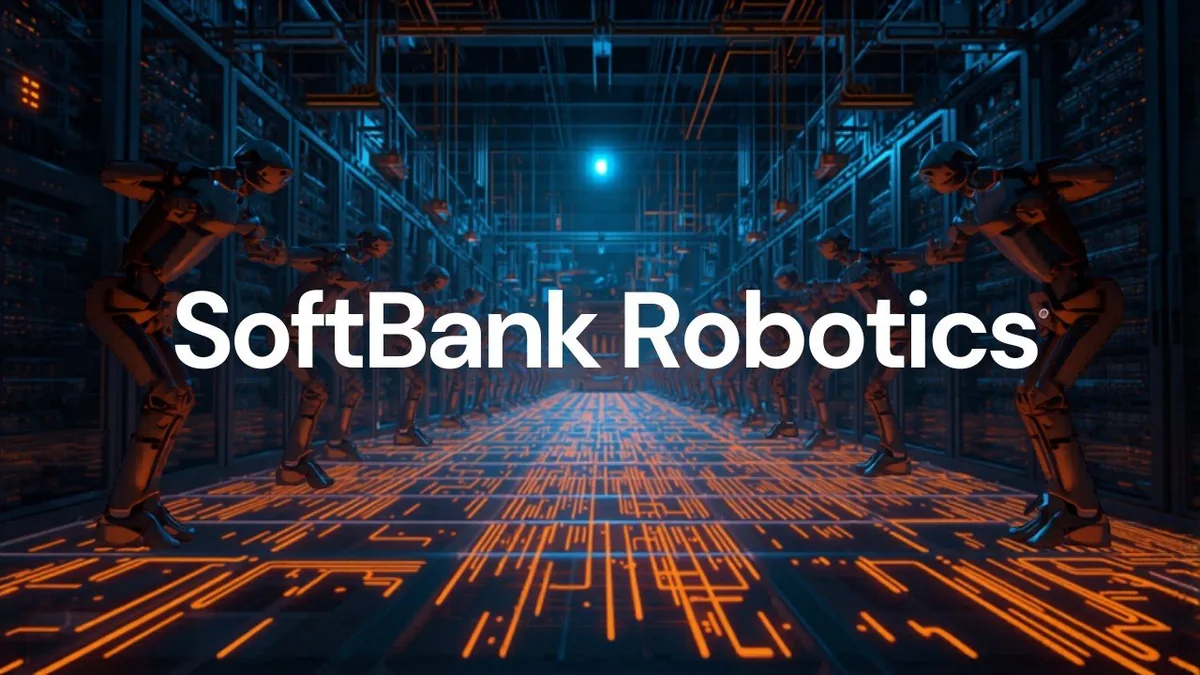
SoftBank is launching a robotics company specifically focused on building data centers — the structures, the rack installation, the cabling, the cooling — and is reportedly already eyeing a $100 billion IPO inside 36 months. The new entity, internally code-named "Project Niagara," will be majority-owned by SoftBank Group and will operate as a separate vehicle from existing portfolio companies.
Masayoshi Son's pitch to potential customers and co-investors is brutally simple: AI infrastructure spend is on track for $1.5 trillion through 2028, but the bottleneck is no longer chips or capital — it's labor. There aren't enough electricians, riggers, mechanical engineers, or trained installers to build data centers as fast as hyperscalers want them. Niagara is a bet that humanoid + specialized robots can close that gap.
What Niagara is actually building
Three product lines, per the leak:
Site preparation robots: Autonomous excavators, concrete-pour systems, and grading drones for greenfield datacenter sites. Less novel — the construction-tech sector has been working on this for a decade — but applied at hyperscaler scale.
Rack installation and cabling robots: The novel piece. Humanoid + specialized arm robots that physically install and cable server racks. SoftBank's existing relationship with Boston Dynamics and Berkshire Grey gives it a head start on the locomotion + manipulation stack.
Cooling and power-distribution maintenance: Persistent on-site robots that handle the ~5% of datacenter floor work that's truly continuous (cable swaps, hot-aisle inspections, leak detection in liquid-cooling loops). Higher margin once deployed; lower CapEx for the customer.
The customer pipeline
SoftBank claims signed letters of intent from three of the four hyperscalers and at least two sovereign-AI buyers (Saudi PIF and UAE G42 are the open secrets). The deal structure is reportedly "robots-as-a-service" — customers pay per deployed robot per month rather than buying outright. That model echoes the early days of cloud and is meant to make the unit economics palatable on the customer side while building Niagara's recurring revenue.
Open Compute Project member companies (Microsoft, Meta, Google) have all reportedly toured Niagara's prototype site outside Tokyo. Internal SoftBank projections show first commercial deployments by Q3 2026, scale revenue by 2027, and IPO readiness by 2028.
The $100B IPO ambition
For context, $100 billion would put Niagara at IPO comparable to Stripe and SpaceX in private markets. The SoftBank pitch deck reportedly anchors on $5-7B in 2027 revenue at robotics-SaaS-equivalent margins (60%+), justifying a 16-20x sales multiple. That math is aggressive but not unprecedented for a category-defining infrastructure company.
The risks are obvious: humanoid robotics still has a notoriously bad track record on commercial deployment timelines (look at the histories of Boston Dynamics, Sanctuary AI, Apptronik). Niagara's bet is that data center work is a constrained, well-defined environment — easier than household robotics, more predictable than open-world manipulation. That's plausible. It's not yet proven.
My Take
Masayoshi Son's vision pattern is consistent: identify a labor bottleneck, deploy capital at scale to robotize it, IPO before the technology fully works. Sometimes (Vision Fund, semiconductor capex calls) it works. Sometimes (WeWork, OneWeb) it doesn't. Niagara's specific pitch — robots that build data centers — is one of the more credible humanoid-robotics commercial use cases I've seen articulated. The constraint is real, the customer demand is real, the work is structured and constrained. The execution risk is high but the failure modes are different from previous robotics flops. If anything, the $100B IPO target is more about Son needing the headline number than reflecting the underlying business: the actual unit economics could justify $30-40B comfortably, and that's still a large successful company. I'd take 60-40 odds Niagara reaches IPO by 2029, vs. only 20-25% odds it reaches the $100B target.
FAQ
How is Niagara different from existing construction robotics startups? Vertical specialization on data centers and a SoftBank-scale capital base. Most construction-robotics startups are sub-$500M companies with single-product focus. Niagara's pitch is full-stack data-center automation.
Is Boston Dynamics part of this? Likely yes via licensing and partnership; Boston Dynamics is a separate Hyundai-controlled entity but SoftBank retains commercial relationships from prior ownership.
What's the IPO timeline? SoftBank internal projections show 2028 IPO readiness; market conditions will determine actual timing.
The Bottom Line
SoftBank is launching a data-center construction robotics company with a clearly identified customer bottleneck and an aggressive 36-month IPO target. The strategic logic holds up; the technology execution risk is the binding constraint. Watch for first commercial deployments in Q3 2026.