Ransomware Is Now Using Post-Quantum Encryption: What the Kyber Group Means for Security
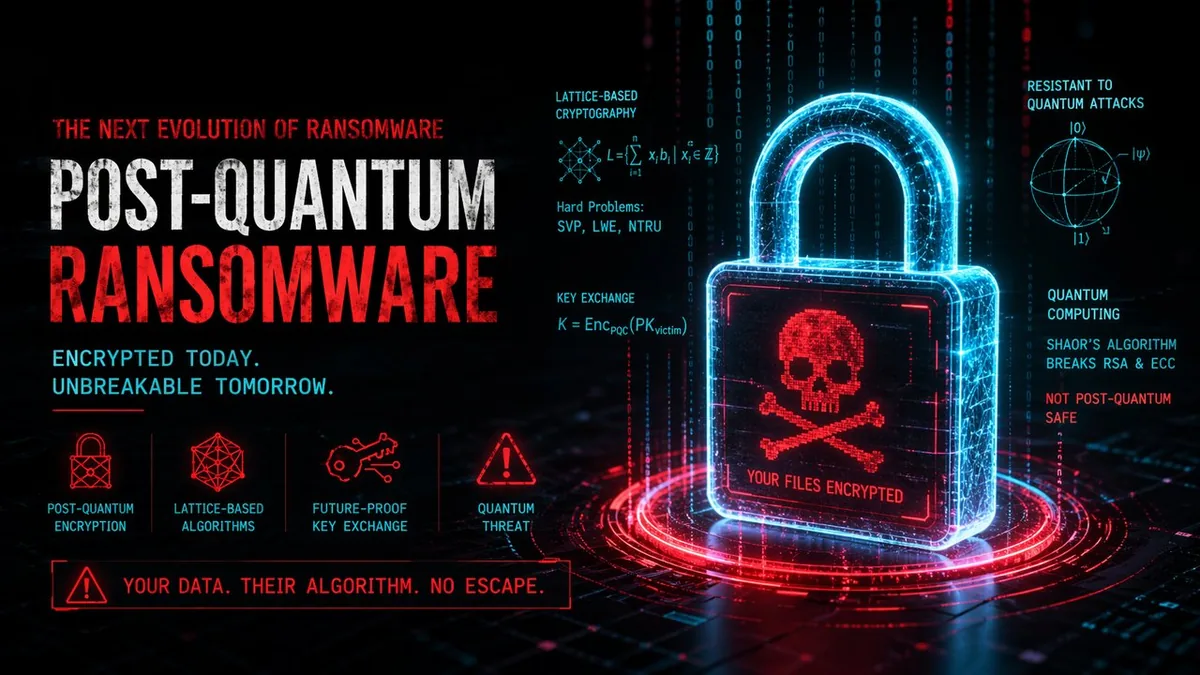
A ransomware group calling itself Kyber has become the first confirmed threat actor to deploy post-quantum cryptography in a production attack. The Windows variant of the Kyber ransomware uses Kyber1024 lattice-based key encapsulation combined with classical X25519 and AES-CTR for bulk encryption — a hybrid scheme that would resist decryption even from a future quantum computer. The first confirmed victim was a multibillion-dollar US defense contractor, targeted in March 2026.
What Post-Quantum Ransomware Actually Means
Traditional ransomware encrypts files using RSA or ECC-based key exchange. The premise of "harvest now, decrypt later" quantum attacks is that an adversary could record encrypted ransomware traffic today and decrypt it once quantum computers become capable. Post-quantum key encapsulation eliminates that threat vector: even if a quantum computer eventually breaks classical encryption, Kyber1024-encrypted ransomware keys cannot be retroactively cracked.
NIST standardized the Kyber algorithm — now officially called ML-KEM — in 2024 specifically for this kind of threat. The Kyber ransomware group appears to have implemented the standard within two years of its finalization, which is a fast adoption timeline for a criminal operation.
The Important Caveat: Only Windows
The post-quantum claims apply only to the Windows variant. The Linux and ESXi variant of Kyber ransomware does not use post-quantum cryptography despite the group's marketing suggesting otherwise. This distinction matters for enterprise defenders: VMware environments and Linux servers are not facing the same cryptographic threat as Windows endpoints.
Why a Defense Contractor Was the First Target
Targeting a major defense contractor with post-quantum encryption is not random. Defense organizations are precisely the entities that would most benefit from "harvest now, decrypt later" capabilities — both as attackers and as defenders. A ransomware group deploying quantum-resistant encryption against defense sector targets may be testing capabilities that have intelligence value beyond the ransom payment itself.
My Take
Post-quantum ransomware is not a future threat — it is a present one. The practical implication for security teams is not that quantum computers are imminent but that the migration to post-quantum cryptography for internal key management now has an adversarial forcing function. Organizations that have been deferring PQC transitions should treat this as the forcing event it is.
Related Articles
- Bitwarden CLI Was Compromised in a Supply Chain Attack
- CISA Is Ordering Federal Agencies to Patch a Microsoft Defender Zero-Day