CISA Is Ordering Federal Agencies to Patch a Microsoft Defender Zero-Day Under Active Attack
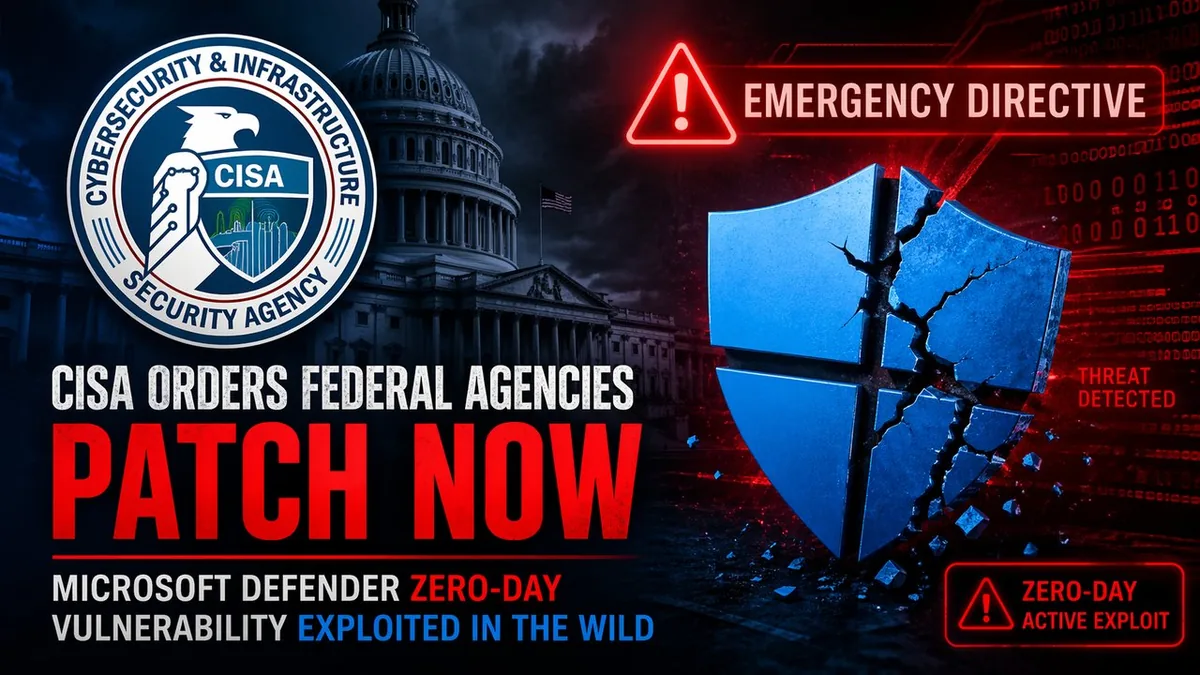
CISA issued an emergency directive on April 22, 2026, ordering all US federal agencies to patch CVE-2026-33825 — a high-severity privilege escalation vulnerability in Microsoft Defender — by May 7. The flaw allows attackers to escalate privileges to SYSTEM level on affected Windows machines. Exploitation was confirmed by Huntress Labs on April 16, with attackers traced to Russian infrastructure showing signs of hands-on-keyboard involvement, meaning human operators — not automated tools — are directing the attacks.
What the Vulnerability Does
CVE-2026-33825 is a privilege escalation flaw in Microsoft Defender. An attacker who already has low-privilege access to a Windows system can exploit this flaw to gain SYSTEM-level privileges — the highest level of access on a Windows machine. Combined with initial access via phishing, a vulnerable web application, or a compromised account, this creates a straightforward path to full system control.
Microsoft patched the vulnerability on April 14 as part of Patch Tuesday. Eight days later, CISA confirmed active exploitation and issued the emergency directive. The gap between patch availability and emergency mandate reflects the time it took to confirm in-the-wild exploitation.
The Russian Infrastructure Connection
Huntress Labs' attribution to Russian infrastructure, combined with "hands-on-keyboard involvement," suggests this is a targeted campaign rather than opportunistic scanning. Hands-on-keyboard activity — where human operators are actively navigating compromised systems rather than running automated scripts — is characteristic of nation-state or sophisticated criminal actors with specific targets rather than mass exploitation campaigns.
The Federal Deadline
Federal agencies must patch by May 7, 2026 — a two-week window from CISA's April 22 announcement. For private sector organizations, CISA's Known Exploited Vulnerabilities catalog entry serves as a strong signal to treat this patch as urgent regardless of formal mandates. If you patched on Patch Tuesday, you are already protected. If not, this is the prioritization signal to act now.
My Take
Microsoft Defender is installed on virtually every Windows enterprise endpoint — it is the default antivirus and endpoint protection platform. A privilege escalation flaw in Defender is particularly ironic: the tool designed to protect the system becomes the vector for fully compromising it. The Russian attribution and hands-on-keyboard involvement suggest this is being used in targeted intrusions, not mass exploitation. Patch Tuesday patches should not require two weeks of follow-up pressure to deploy.
Related Articles
- Trump's Pick to Run CISA Just Asked to Drop Out
- UK Government Warns Chinese Hackers Are Building Botnets from Hijacked Home Devices