Physical Intelligence's π0.7 Robot Model Generalizes to Tasks It Was Never Trained On
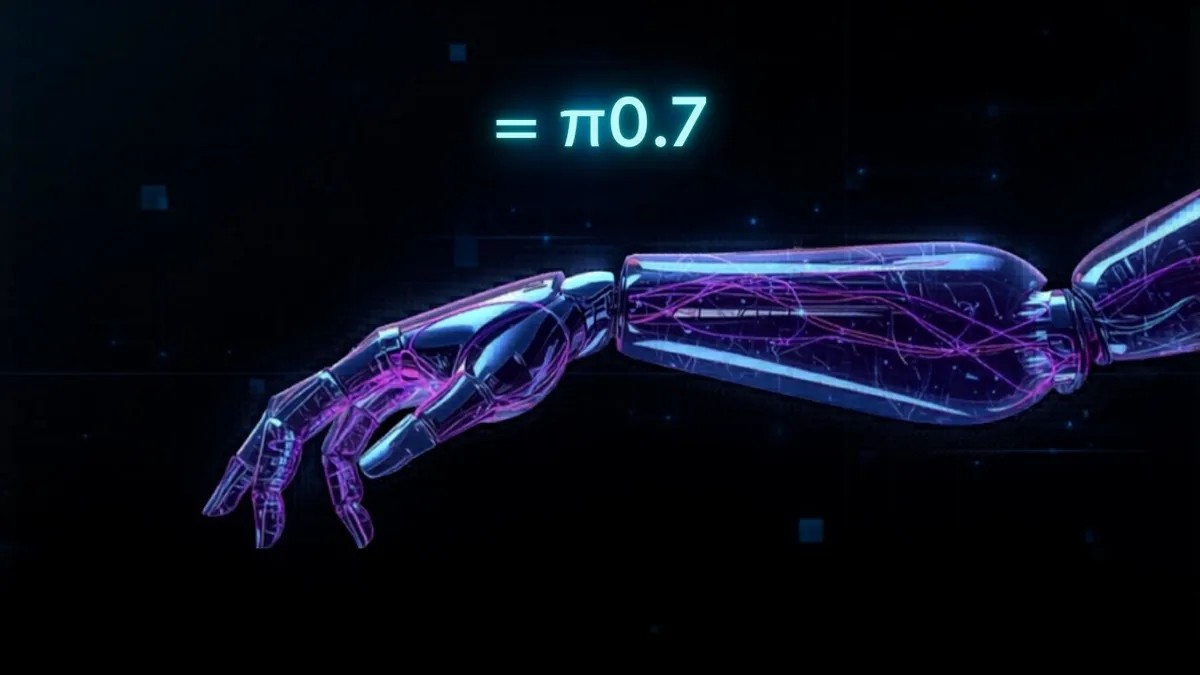
Physical Intelligence, the two-year-old San Francisco robotics startup, has unveiled π0.7 — a new foundation model for robot control that can direct robots on tasks they were never specifically trained on. Researchers describe it as "an early sign of generalization," a capability that has long been considered one of the hardest unsolved problems in physical AI.
Why Generalization Is the Hard Problem
Most robot AI systems today are narrow: they are trained on specific tasks — pick this object, place it there — and fail badly when the environment or task changes even slightly. Generalization means a model can transfer reasoning and physical intuition across contexts it has never seen. This is trivial for humans but has proven extraordinarily difficult for robots, which lack the common-sense physical world model that humans build through years of embodied experience.
What π0.7 Can Do
Physical Intelligence says π0.7 demonstrated the ability to follow instructions on novel manipulation tasks without task-specific training. The model appears to have built a sufficiently rich representation of physical interactions that it can reason about new scenarios from first principles. Researchers noted the results were surprising — the level of transfer exceeded internal expectations.
The Foundation Model Approach to Robotics
Physical Intelligence is betting that the same foundation model paradigm that transformed language and vision can work for robotics. Rather than training individual models for each task, the goal is a single large model trained on vast quantities of robot interaction data that can generalize across the physical world. π0.7 represents their most advanced public evidence that this approach is working.
Why This Matters Beyond the Lab
Generalist robot models unlock economics that narrow models cannot. A robot that can be retasked through natural language instructions — without retraining — becomes a general-purpose labor unit rather than a single-purpose machine. For warehousing, manufacturing, and home robotics, the ability to generalize is the difference between a niche tool and a transformative platform.
The Bottom Line
π0.7's generalization results are early and limited — but they are the right kind of early. Physical Intelligence is producing the most credible evidence in the industry that robot foundation models can generalize. If this scales, it is one of the most important AI results of the year.
Related Articles
- Google DeepMind Unveils Gemini Robotics ER-1.6
- Manycore IPO Surges 187% on AI Robot Training Data Pivot