New York AG Letitia James Sues Coinbase and Gemini Over Prediction Markets as Illegal Gambling
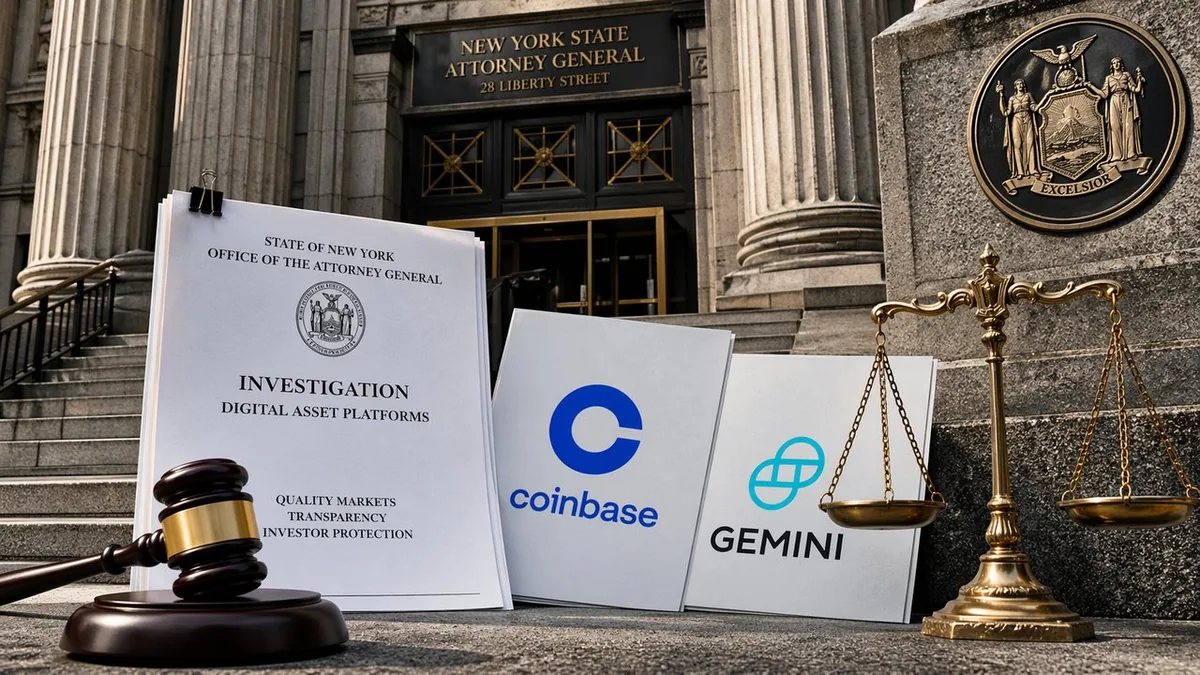
New York Attorney General Letitia James has filed lawsuits against cryptocurrency exchanges Coinbase and Gemini, alleging that their prediction market products violate New York state laws prohibiting illegal gambling. The suits target the fast-growing prediction market sector that has attracted billions of dollars in volume following the success of platforms like Polymarket.
What the Lawsuits Claim
The AG's office argues that prediction markets — where users bet on the outcomes of real-world events including elections, sports results, and economic indicators — constitute illegal gambling under New York's penal law and the General Business Law. The suits allege that Coinbase's and Gemini's prediction market offerings accept bets from New York residents in violation of state gambling regulations, which require specific licensing that neither company has obtained.
Critically, the AG is targeting the platforms rather than the underlying blockchain infrastructure, arguing that Coinbase and Gemini act as the operators of illegal gambling enterprises by facilitating, marketing, and profiting from prediction market activity. This legal framing seeks to hold centralized crypto exchanges liable even when the prediction market mechanics run on decentralized protocols.
The Prediction Market Industry at Stake
Prediction markets have exploded in popularity since Polymarket's high-profile election coverage in 2024. Polymarket raised $400 million at a $15 billion valuation earlier this year, validating the sector's mainstream trajectory. Coinbase launched its own prediction market product and Gemini followed with a competing offering, both seeking a share of the growing retail market.
The New York action represents the most direct regulatory challenge the prediction market sector has faced in the US. If successful, it could force Coinbase and Gemini to shut down prediction market features for New York users — or potentially face broader regulatory consequences that chill the entire sector's US expansion plans.
Industry and Legal Reactions
Coinbase and Gemini are expected to contest the lawsuits vigorously, arguing that prediction markets constitute a legitimate financial instrument rather than gambling, and that federal commodity trading regulations preempt state gambling laws when it comes to event contracts. The CFTC has long debated its jurisdiction over prediction markets, and federal preemption arguments may be Coinbase's strongest defense. Other jurisdictions have moved toward licensing crypto financial products rather than banning them outright, creating a patchwork regulatory environment that makes New York's aggressive approach stand out.
Frequently Asked Questions
What are Coinbase and Gemini accused of in New York?
New York AG Letitia James accuses Coinbase and Gemini of operating illegal gambling enterprises by offering prediction market products to New York residents without the required state gambling licenses.
Are prediction markets legal in the US?
The legal status varies by state and product type. The CFTC regulates event contracts federally, but state gambling laws can also apply. New York's suit argues that prediction market products fall under its state gambling prohibitions.
How might this affect Polymarket and other prediction market platforms?
While the suits target Coinbase and Gemini specifically, a successful outcome could set precedent that pressures all prediction market platforms operating in New York or serving New York users to obtain gambling licenses or exit the state market.
The Bottom Line
The New York AG's suits against Coinbase and Gemini signal that the prediction market sector's explosive growth is drawing serious regulatory attention in the US's most important financial jurisdiction. For Coinbase and Gemini, the litigation is a distraction and a potential business disruption in a key market. For the broader prediction market industry, the outcome of these cases may determine whether the sector can operate openly in the US or remains in a perpetual regulatory gray zone.