Kalshi Is Going After Coinbase's Lunch With Crypto Perpetual Futures — And It Might Actually Work
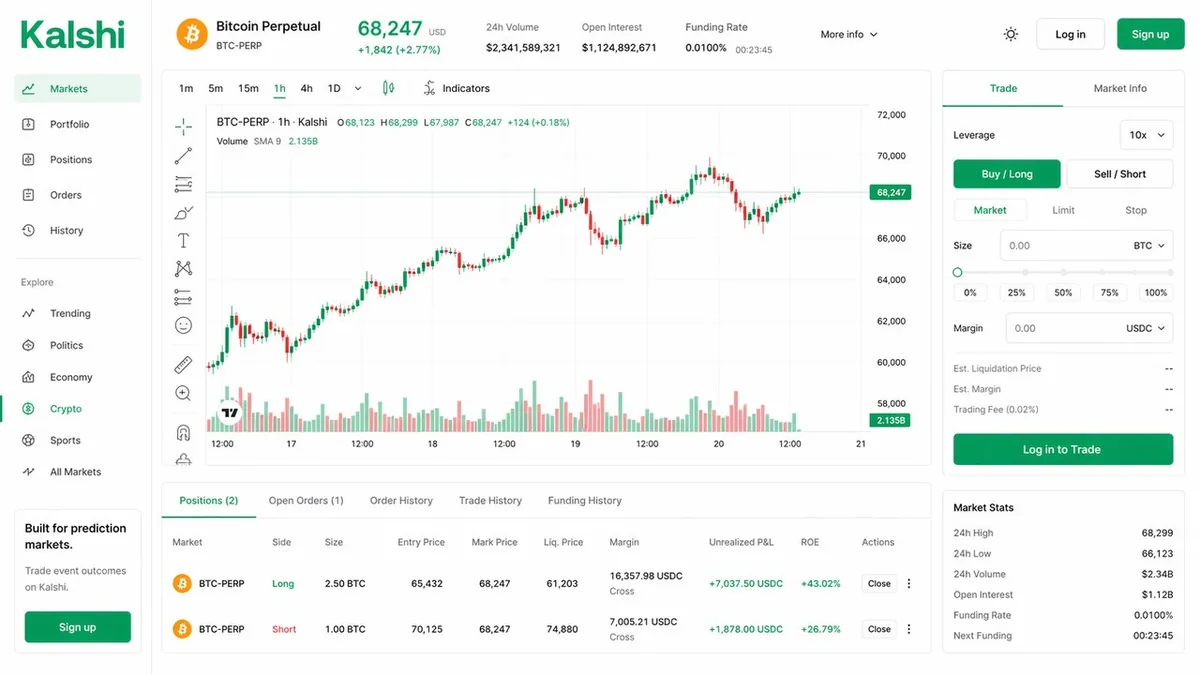
Prediction market platform Kalshi is reportedly planning to enter crypto trading, specifically offering perpetual futures contracts — putting it directly in competition with established crypto exchanges like Coinbase, Binance, and Kraken. Coming from a company that just helped normalize betting on election outcomes, this is a bold pivot. But it makes more sense than it might appear at first glance.
What Kalshi Is Actually Building
Perpetual futures are the most popular derivative product in crypto. Unlike regular futures that expire on a set date, perpetuals have no expiry — traders hold them indefinitely and pay or receive a funding rate based on their position direction. They're essentially leveraged bets on price direction that can run forever. This market does over $50 billion in daily volume on major exchanges. Kalshi wants a piece of that.
The interesting angle is Kalshi's regulatory position. Kalshi is a CFTC-regulated designated contract market — meaning it operates under federal commodity trading rules, not state-by-state crypto licensing. This is the same legal framework that lets it offer prediction markets on elections without being called a gambling operator by state AGs. The same shield could let it offer crypto derivatives in states where traditional crypto exchanges face more friction.
The Competitive Landscape
Coinbase already offers derivatives through its international arm but faces regulatory hurdles on perpetuals in the US market. Kraken, Bybit, and Binance run massive perp markets offshore. If Kalshi can offer US-regulated perpetual crypto futures through its CFTC framework, it would be one of very few platforms doing this legally onshore — a genuine first-mover advantage in a market that's been desperate for regulatory clarity.
The timing is notable given that the New York AG just sued Coinbase and Gemini over prediction markets as illegal gambling. Kalshi's CFTC-regulated approach is the exact legal architecture those companies lacked.
My Take
Kalshi has been playing a longer game than most people realize. They didn't just build a prediction market — they built the first federally regulated market for event-based contracts, and now they're using that regulatory moat to expand into adjacent financial products. Perpetual futures are a natural fit: they're event-contingent (what's the BTC price at any given moment?), high volume, and currently trapped in a legal grey zone for US users. If Kalshi pulls this off, they could become the most interesting US-regulated fintech company of the decade. Not bad for a company most people dismissed as a novelty election betting app.
Frequently Asked Questions
What are perpetual futures in crypto?
Perpetual futures are leveraged crypto contracts with no expiry date. Traders can hold them indefinitely while paying or receiving a funding rate. They're the most traded crypto derivative globally, with $50B+ in daily volume.
How is Kalshi different from Coinbase for crypto futures?
Kalshi operates under a CFTC designated contract market license, giving it a federal regulatory framework. This potentially allows it to offer perpetual futures legally in the US where Coinbase currently cannot.
Is Kalshi CFTC regulated?
Yes. Kalshi is a CFTC-regulated designated contract market — the same status that allowed it to offer election prediction markets without being classified as illegal gambling in most US states.