IREN Acquires Mirantis for $625M to Unlock GPU Utilization — The AI Infra Vertical Integration Race Heats Up
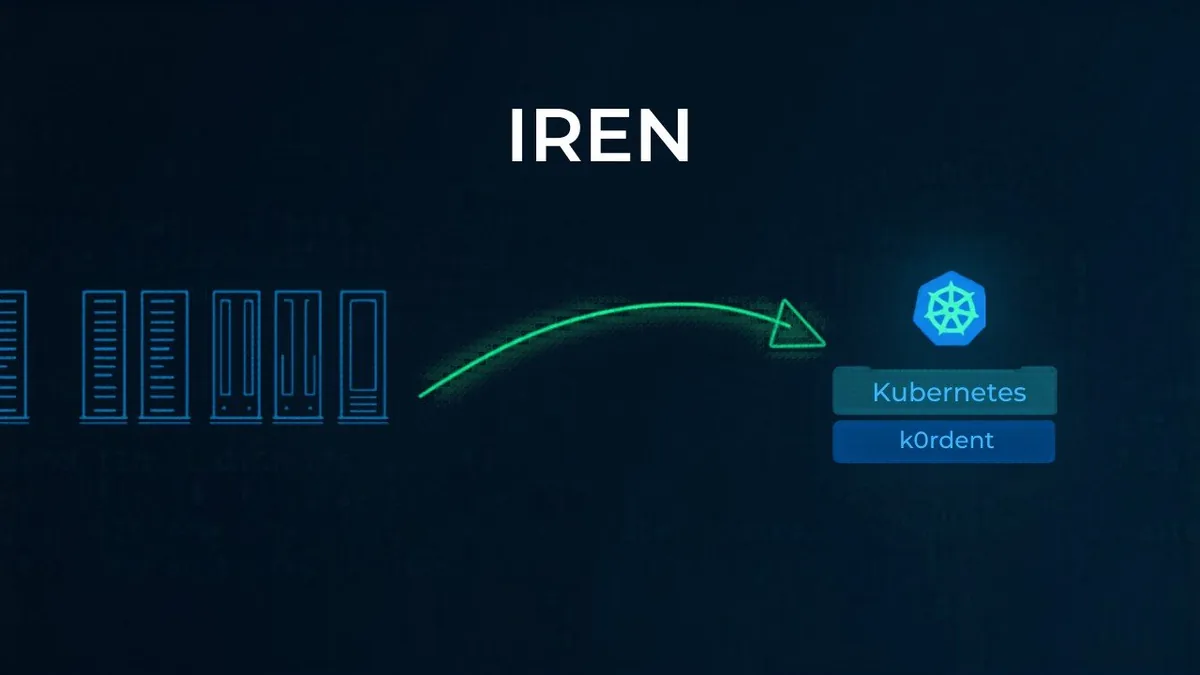
IREN, the Sydney-listed AI data center operator (formerly Iris Energy, the Bitcoin miner that pivoted to AI infrastructure last year), announced an all-stock $625 million acquisition of Mirantis on Monday. Mirantis brings Kubernetes management, the k0rdent platform for orchestrating AI workloads across bare metal / VMs / Kubernetes, and 1,500+ enterprise customers. The strategic logic: IREN has been good at securing power and deploying GPUs at scale, but the layer that turns deployed GPUs into revenue-generating services — orchestration, multi-tenant isolation, customer-facing API surface — has been weak. Mirantis fixes that overnight.
Reuters and CNBC will largely ignore this story because it sits in the “infrastructure orchestration software” vertical that nobody outside enterprise IT covers. That is the long-tail opportunity. The structural read is more interesting: GPU orchestration software has quietly become the chokepoint in AI economics. The companies that ship GPU capacity without an orchestration layer are stuck competing on commodity pricing against AWS, Azure, and Oracle Cloud. The companies that own the orchestration layer extract software-multiple margins on top of the hardware. IREN is buying its way out of the commodity layer.
What IREN Is Actually Buying
From Data Center Knowledge's coverage and the IREN announcement:
- Deal structure: $625M all-stock (IREN ordinary shares as consideration). Subject to regulatory approval and customary closing conditions.
- Mirantis customer base: 1,500+ enterprise customers globally
- Mirantis flagship product: k0rdent — manages AI workloads across bare metal, virtual machines, and Kubernetes environments simultaneously. Multi-environment orchestration is the real differentiator vs pure-K8s competitors.
- NVIDIA partnership: Mirantis is a founding Independent Software Vendor partner in the NVIDIA AI Cloud Ready Initiative — meaning their orchestration stack is pre-certified for NVIDIA's reference architecture.
- Operational structure: Mirantis will operate as a standalone subsidiary while supporting IREN's AI cloud platform.
- IREN CEO Daniel Roberts quote: “IREN's core advantage is execution — from securing power to building data centers, deploying GPUs and bringing compute online at scale.”
The GPU Orchestration Chokepoint Thesis
To understand why this deal matters, consider where margin actually sits in the AI infrastructure stack:
- Tier 1 — Power and real estate: Commodity, low-margin. IREN sits here historically.
- Tier 2 — GPU hardware: NVIDIA captures most of this margin (~70% gross). Cloud operators pass-through.
- Tier 3 — Networking and infrastructure software: Margin layer. Cisco, Juniper, NVIDIA Spectrum-X, Arista all play here.
- Tier 4 — Orchestration / multi-tenancy / API surface: Highest software multiple. Mirantis, Rafay, Spectro Cloud, Red Hat OpenShift, and the hyperscaler-native equivalents (EKS, AKS, GKE) own this.
- Tier 5 — Foundation model / inference: Variable. OpenAI/Anthropic/Google capture most.
IREN was stuck at Tier 1-2 — owning the metal but renting out the orchestration story. Mirantis catapults them into Tier 4 ownership, which is where software-style margins live. This is also why hyperscalers (AWS, Azure, GCP) historically extracted margin from AI workloads — they owned both the hardware AND the orchestration. Pure-play infrastructure operators like CoreWeave, Lambda, and Crusoe are now in the same position IREN was in last week: hardware deployed, but no native orchestration moat.
What This Means for Pure-Play K8s Vendors
The acquisition reshapes competitive dynamics for several adjacent players:
- Rafay Systems — Independent K8s management platform with multi-cloud support. Now has to compete against a Mirantis-IREN bundle that includes the underlying GPU compute. Rafay's pure-software pitch becomes harder when prospects can buy compute + orchestration in one bill.
- Spectro Cloud — Similar position to Rafay. Their k0s-based platform competes on flexibility; IREN-Mirantis competes on integrated economics.
- Red Hat OpenShift — Most insulated because of IBM's broader enterprise relationships, but the OpenShift-on-AWS / OpenShift-on-Azure pattern that drives much of their growth now has a credible “Mirantis-on-IREN” alternative for AI-specific workloads.
- Hyperscalers (EKS / AKS / GKE) — Most defended because of broader cloud ecosystem lock-in. But for pure-GPU workloads where the customer doesn't need the broader cloud stack, IREN+Mirantis is now a credible third option.
My Take
This is the smartest acquisition any GPU-cloud operator has made in 2026, and it will probably be copied within 12 months. The thesis is correct: GPU economics without an orchestration layer is a race to commodity pricing, and the only escape is to own the layer where customers actually integrate. Mirantis was undervalued because it had been a sleepy enterprise k8s vendor (its prior big moment was acquiring Docker Enterprise in 2019); attaching it to a GPU-cloud operator gives both companies a step-change in defensibility.
The interesting follow-on question: which GPU-cloud operator buys the next-best orchestration vendor? CoreWeave is the obvious next mover — they have the most capital and the deepest hyperscaler-adjacent GPU footprint. Lambda Labs and Crusoe both need a similar move but have less acquisition capacity. The most-likely target list: Rafay (mid-stage, ~$100M-150M ARR range likely), Spectro Cloud (similar), Loft Labs (smaller). Watch for an announcement within 6 months.
The other thing worth flagging: IREN's all-stock structure is a tell. $625M in stock for a 1,500-customer enterprise software company is generous on paper but cheap in cash burn — IREN is using its public-market valuation to acquire margin layers without touching the balance sheet. This is the same playbook private-equity AI roll-ups have been using. The combination of all-stock currency + repeated tuck-in software acquisitions is the new AI infrastructure consolidation pattern. Expect more of it.
Frequently Asked Questions
What does IREN do?
IREN is an Australia-listed AI infrastructure operator (formerly Iris Energy, a Bitcoin miner that pivoted to AI workloads in 2025). It secures power, builds data centers, and deploys GPU clusters at scale primarily for AI training and inference customers.
What is Mirantis k0rdent?
k0rdent is Mirantis's flagship orchestration platform. Unlike most Kubernetes platforms that only manage k8s clusters, k0rdent manages AI workloads across bare metal, virtual machines, AND Kubernetes environments simultaneously — the multi-environment capability is the real differentiator vs pure-K8s competitors like Red Hat OpenShift.
How big is Mirantis?
Mirantis serves more than 1,500 enterprise customers globally. Revenue figures were not disclosed in the announcement, but industry estimates put Mirantis ARR in the $150-250M range based on customer count and typical enterprise-K8s ASPs.
Will Mirantis continue serving non-IREN customers?
Yes. The announcement specifies Mirantis will operate as a standalone subsidiary while supporting IREN's AI cloud platform. Existing customers continue under their current contracts. Whether new enterprise customers prefer Mirantis-as-software over Mirantis-on-IREN is the next 12 months' competitive question.
Why does this matter for AI infrastructure pricing?
GPU orchestration software has quietly become the chokepoint where margin is captured in the AI stack. Operators that own only the hardware compete on commodity pricing; operators that own orchestration extract software-multiple margins. IREN's Mirantis acquisition moves them from commodity hardware (Tier 1-2) into orchestration ownership (Tier 4), changing their unit economics meaningfully.
The Bottom Line
IREN's $625M all-stock Mirantis acquisition is the smartest GPU-cloud consolidation deal of 2026 because it solves the right problem: turning deployed GPUs into a defensible business by owning the orchestration layer where customers integrate. Expect similar moves from CoreWeave, Lambda Labs, and Crusoe within 12 months. The pure-play K8s vendors (Rafay, Spectro Cloud) are now under acquisition pressure. The hyperscaler-orchestration moat just got slightly less moaty.
Related Reading
- Uber CTO: Claude Code Burned Through Our Entire Annual AI Budget
- SAP's €1B Bet on Prior Labs: Tabular Foundation Models
- Cloudflare Cuts 1,100 Jobs in 'Agentic AI-First' Pivot