Invoice vs Receipt: Key Differences Every Business Owner Must Know
Executive Summary
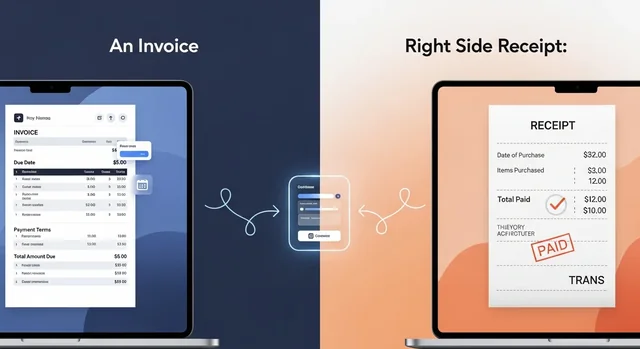
Understanding the distinction between invoices and receipts is fundamental to running a successful business in 2025. While these two financial documents are often confused, they serve distinctly different purposes in business transactions and accounting processes. An invoice is a payment request sent before payment is received, while a receipt is proof of payment issued after a transaction is completed.
This comprehensive guide breaks down the key differences, use cases, legal requirements, and best practices for both invoices and receipts. Whether you're a startup founder, small business owner, or established entrepreneur, mastering these essential business documents will streamline your operations, improve cash flow management, and ensure compliance with tax regulations.
The choice between when to use invoices versus receipts depends on your business model, customer base, and transaction types. Service-based businesses typically rely heavily on invoicing, while retail operations primarily issue receipts. However, many modern businesses use both documents strategically to optimize their financial processes.
Related: The Importance of Educating Yourself About Money.
Need to create invoices? Try our free invoice generator - no signup required, instant PDF download, 35+ currencies supported.
Quick Comparison Table
| Aspect | Invoice | Receipt |
|---|---|---|
| Purpose | Request payment for goods/services | Confirm payment has been received |
| Timing | Sent before payment | Issued after payment |
| Legal Status | Payment request (not proof of payment) | Legal proof of transaction |
| Payment Terms | Includes due dates and terms | Shows payment method and date |
| Tax Implications | Records accounts receivable | Records completed sales |
| Customer Use | Payment reminder and record | Expense tracking and returns |
| Business Use | Cash flow management | Revenue tracking and accounting |
Detailed Analysis: Invoices
What is an Invoice?
An invoice is a formal payment request document that businesses send to customers before receiving payment. It serves as a commercial instrument that details the products or services provided, their costs, applicable taxes, and payment terms. In 2025, invoices have evolved beyond simple paper documents to become sophisticated digital tools that integrate with accounting software, payment processors, and customer relationship management systems.
Key Components of Modern Invoices
Today's invoices must include several essential elements to be legally compliant and professionally effective:
- Unique invoice number: Sequential numbering system for tracking and organization
- Business information: Company name, address, contact details, and tax identification numbers
- Customer details: Billing address and contact information
- Invoice date: When the invoice was created
- Due date: Payment deadline with clear terms
- Itemized breakdown: Detailed description of goods or services
- Payment methods: Accepted payment options and instructions
- Tax calculations: Applicable sales tax, VAT, or other levies
- Total amount due: Final payment amount clearly displayed
Types of Invoices in 2025
Modern businesses utilize various invoice types depending on their specific needs:
- Standard invoices: Traditional payment requests for completed work
- Recurring invoices: Automated billing for subscription services
- Milestone invoices: Progress-based billing for long-term projects
- Time-based invoices: Hourly billing with detailed time tracking
- Retainer invoices: Upfront payment requests for future services
- Credit invoices: Adjustments for returns or corrections
Invoice Technology and Automation
The invoicing landscape has been revolutionized by technology in 2025. Cloud-based invoicing platforms like FreshBooks, QuickBooks Online, and Xero offer automated features including:
- Automatic invoice generation based on project milestones
- Integration with time tracking and project management tools
- Multi-currency support for international transactions
- Real-time payment tracking and notifications
- Customizable templates with professional branding
- Mobile apps for on-the-go invoice management
Detailed Analysis: Receipts
What is a Receipt?
A receipt is a document that confirms a transaction has been completed and payment has been received. It serves as legal proof of purchase for customers and revenue documentation for businesses. In 2025, receipts have transformed from simple paper slips to comprehensive digital records that provide detailed transaction data and integrate with various business systems.
Essential Receipt Elements
Modern receipts must contain specific information to meet legal and business requirements:
- Business identification: Company name, address, and registration details
- Transaction date and time: Precise timestamp of the purchase
- Receipt number: Unique identifier for tracking purposes
- Itemized purchases: Detailed list of products or services
- Payment method: How the customer paid (cash, card, digital wallet)
- Tax breakdown: Separate line items for applicable taxes
- Total amount paid: Final transaction amount
- Return policy information: Terms for exchanges or refunds
Digital Receipt Revolution
The shift toward digital receipts has accelerated in 2025, driven by environmental concerns and customer convenience. Digital receipt platforms offer numerous advantages:
- Environmental sustainability: Reduced paper waste and carbon footprint
- Customer convenience: Automatic organization and storage
- Enhanced data analytics: Detailed customer behavior insights
- Integration capabilities: Seamless connection with expense tracking apps
- Improved accuracy: Elimination of lost or damaged paper receipts
- Marketing opportunities: Personalized offers and communications
Receipt Management Systems
Modern point-of-sale (POS) systems and receipt management platforms have evolved significantly. Leading solutions in 2025 include:
- Square: Comprehensive POS with digital receipt capabilities
- Shopify POS: Integrated e-commerce and retail receipt system
- Toast: Restaurant-focused receipt and order management
- Lightspeed: Multi-location receipt coordination
- Clover: Customizable receipt templates and customer data
Head-to-Head Comparisons
Timing and Cash Flow Impact
Invoices: Provide predictable cash flow management by establishing clear payment expectations and timelines. Businesses can forecast revenue based on outstanding invoices and implement follow-up procedures for overdue accounts. The average payment cycle for B2B invoices in 2025 ranges from 30-60 days, making cash flow planning essential.
Receipts: Represent immediate revenue recognition and completed transactions. They provide real-time insight into business performance and eliminate uncertainty about payment collection. Retail businesses particularly benefit from the immediate cash flow that receipt-based transactions provide.
Legal and Compliance Considerations
Invoices: Must comply with tax authority requirements for business-to-business transactions. In 2025, many jurisdictions require electronic invoicing for government contracts and large corporate transactions. Invoices must be retained for audit purposes, typically 7 years in most countries.
Receipts: Serve as legal proof of transaction completion and are essential for warranty claims, returns, and tax deductions. Digital receipts must meet the same legal standards as paper receipts, including data security and accessibility requirements under regulations like GDPR.
Customer Experience and Relationship Management
Invoices: Provide opportunities for professional branding and detailed service descriptions. They can include personalized messages, payment terms that accommodate customer cash flow, and detailed project breakdowns that demonstrate value. However, they may create friction in the customer experience due to payment delays.
You might also be interested in AI in Banking: Why HSBC’s Mistral Deal Signals the Industry’s Next Big Shift.
Receipts: Offer immediate satisfaction and transaction closure for customers. Digital receipts can enhance the customer experience through automatic expense categorization, warranty tracking, and personalized offers. They eliminate the anxiety associated with pending payments.
Winner by Category
Cash Flow Management: Invoice
Winner: Invoice
Invoices excel in cash flow management by providing structured payment terms, predictable collection timelines, and systematic follow-up processes. They allow businesses to extend credit to customers while maintaining organized accounts receivable systems.
Customer Convenience: Receipt
Winner: Receipt
Receipts win in customer convenience by providing immediate transaction completion, instant proof of purchase, and elimination of payment uncertainty. Customers prefer the simplicity and immediacy of receipt-based transactions.
Business Scalability: Tie
Winner: Tie
Both invoices and receipts can scale effectively with modern technology. Automated invoicing systems handle large volumes of B2B transactions, while digital receipt platforms manage high-frequency retail operations equally well.
Legal Protection: Receipt
Winner: Receipt
You might also be interested in PDFelement Review 2025: Is This PDF Editor Worth Your Money?.
Receipts provide stronger legal protection as proof of completed transactions. They eliminate disputes about payment status and provide clear documentation for tax authorities, warranty claims, and financial audits.
Revenue Recognition: Receipt
Winner: Receipt
Receipts enable immediate revenue recognition under accounting standards, providing clearer financial reporting and reducing the complexity of accounts receivable management.
Which to Choose: Recommendations
Choose Invoices When:
- Providing professional services: Consulting, legal, accounting, or creative services
- Selling to businesses: B2B transactions often require payment terms and purchase orders
- Offering credit terms: When customers need time to process payments
- Managing large projects: Complex work requiring milestone-based billing
- Subscription services: Recurring billing for ongoing services
- Custom manufacturing: Made-to-order products requiring deposits
Choose Receipts When:
- Retail operations: Point-of-sale transactions in stores or online
- Restaurant services: Food and beverage sales
- Immediate service delivery: Services completed at the point of sale
- Small transaction amounts: Low-value purchases where credit terms aren't necessary
- Cash-based businesses: Operations requiring immediate payment
- Event services: Conferences, workshops, or entertainment
Hybrid Approach:
Many successful businesses in 2025 use both invoices and receipts strategically:
- Service businesses: Invoice for project work, provide receipts for expenses
- E-commerce: Invoice for B2B sales, receipts for consumer transactions
- Consulting firms: Invoice for consulting fees, receipts for training sessions
- Manufacturing: Invoice for custom orders, receipts for standard products
Implementation Best Practices
Invoice Best Practices
- Clear payment terms: Specify due dates, late fees, and accepted payment methods
- Professional design: Use branded templates that reflect your company image
- Detailed descriptions: Provide clear explanations of services or products
- Follow-up systems: Implement automated reminders for overdue payments
- Multiple payment options: Accept various payment methods for customer convenience
- Regular reviews: Monitor accounts receivable aging and collection efficiency
Receipt Best Practices
- Complete information: Include all required elements for legal compliance
- Digital options: Offer both digital and paper receipts based on customer preference
- Secure storage: Maintain organized receipt records for accounting and audits
- Customer communication: Use receipts for marketing messages and return policies
- Integration systems: Connect receipt data with inventory and accounting systems
- Environmental consideration: Promote digital receipts to reduce waste
Technology Integration in 2025
AI and Machine Learning
Artificial intelligence has transformed both invoicing and receipt management in 2025:
- Predictive analytics: AI predicts payment delays and suggests optimal payment terms
- Automated categorization: Machine learning organizes receipts and invoices by category
- Fraud detection: AI identifies suspicious transactions and duplicate invoices
- Smart matching: Automated reconciliation between invoices and payments
- Customer insights: AI analyzes receipt data to identify purchasing patterns
Blockchain and Cryptocurrency
Blockchain technology and cryptocurrency payments are increasingly integrated into invoice and receipt systems:
- Smart contracts: Automated invoice payment upon delivery confirmation
- Immutable records: Blockchain-based receipts provide tamper-proof transaction history
- Cryptocurrency payments: Digital currency options for international transactions
- Supply chain transparency: Blockchain receipts track product origins and authenticity
FAQ Section
1. Can an invoice serve as a receipt?
No, an invoice cannot serve as a receipt because they serve different purposes. An invoice is a request for payment, while a receipt is proof that payment has been received. However, a paid invoice can be converted to or accompanied by a receipt once payment is processed.
2. How long should businesses keep invoices and receipts?
Most tax authorities require businesses to retain invoices and receipts for 7 years. However, some jurisdictions may have different requirements. Digital storage is acceptable in most cases, provided the records remain accessible and authentic.
For more details, check out our guide on Comprehensive Guide on How to Make Money on YouTube.
3. Are digital receipts legally valid?
Yes, digital receipts are legally valid in most jurisdictions, provided they contain the same information as paper receipts and meet data security requirements. Many countries have specific regulations governing electronic transaction records.
4. What happens if a customer loses their receipt?
Businesses can typically provide duplicate receipts from their transaction records. Digital receipt systems make this process easier by storing receipts in cloud-based systems accessible to both businesses and customers.
5. Should small businesses use invoicing software?
Yes, even small businesses benefit from invoicing software due to automation features, professional templates, payment tracking, and integration with accounting systems. Many platforms offer affordable plans specifically designed for small businesses.
6. How can businesses reduce invoice payment delays?
Businesses can reduce payment delays by offering multiple payment methods, providing clear payment terms, sending automated reminders, offering early payment discounts, and maintaining professional customer relationships.
7. What information is required on receipts for tax purposes?
Tax-compliant receipts must include business name and address, transaction date, itemized purchases, tax amounts, total paid, and payment method. Specific requirements vary by jurisdiction and transaction type.
8. Can businesses charge fees for paper receipts?
Some businesses charge small fees for paper receipts to encourage digital receipt adoption. However, this practice is regulated in some jurisdictions, and businesses should check local laws before implementing such fees.
9. How do invoices and receipts affect cash flow differently?
Invoices create accounts receivable and delayed cash flow but allow businesses to extend credit terms. Receipts represent immediate cash flow and completed transactions but may limit business flexibility in customer relationships.
10. What are the environmental impacts of digital vs. paper receipts?
Digital receipts significantly reduce environmental impact by eliminating paper waste, chemical processing, and transportation. Studies show that widespread digital receipt adoption could save millions of trees annually and reduce carbon emissions substantially.
Final Verdict
The choice between invoices and receipts isn't an either-or decision for most businesses in 2025. Instead, successful companies strategically implement both documents based on their specific transaction types, customer relationships, and business models. Understanding when and how to use each document type is crucial for optimizing cash flow, maintaining legal compliance, and providing excellent customer experiences.
Invoices excel in B2B environments, professional services, and situations requiring payment terms or credit arrangements. They provide structured cash flow management and professional customer relationships but require more complex collection processes.
Receipts shine in retail environments, immediate service delivery, and transactions requiring instant completion. They offer superior customer convenience and immediate revenue recognition but may limit business flexibility in customer payment arrangements.
The future of business documentation lies in intelligent systems that automatically determine the appropriate document type based on transaction characteristics, customer preferences, and business rules. By 2025, AI-powered platforms are already making these decisions seamlessly, allowing business owners to focus on growth rather than administrative details.
Regardless of which approach you choose, invest in modern technology platforms that provide automation, integration, and scalability. The businesses that thrive in 2025 and beyond will be those that leverage technology to streamline their financial processes while maintaining the human touch that builds lasting customer relationships.
For more details, check out our guide on BOI Net Banking 2025: Registration, Login, Features & Transaction Limits.
Remember that both invoices and receipts are more than just paperwork—they're tools for building professional relationships, managing cash flow, and creating positive customer experiences. Choose the right combination for your business, implement them professionally, and use them strategically to support your long-term success.
Start Creating Professional Invoices Today
Understanding the difference between invoices and receipts is crucial for proper business documentation. When you need to request payment from clients, use our free online invoice generator to create professional invoices in minutes.
Our tool includes all essential invoice elements discussed in this guide: unique invoice numbers, itemized descriptions, tax calculations (including GST), payment terms, and professional templates. Best of all, it's completely free with no signup required.