Hesai Launches EXT Lidar — Industry First to Integrate Spatial and Color Detection for Nvidia ADAS
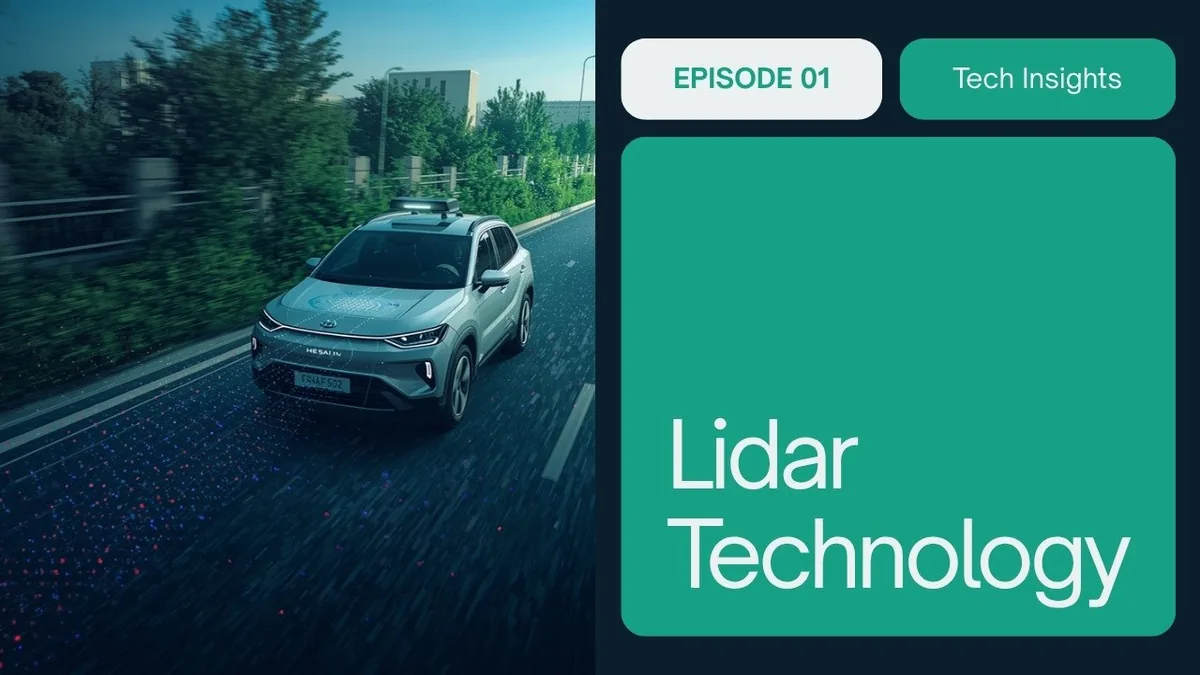
Chinese lidar manufacturer Hesai has announced the EXT, its most advanced sensor yet and the industry's first lidar to simultaneously capture both spatial geometry and color information. Hesai is a primary supplier for Nvidia's ADAS (Advanced Driver Assistance Systems) platform, making this launch significant for the broader autonomous vehicle and assisted driving ecosystem.
What Makes EXT Different
Traditional lidar sensors produce point clouds — highly accurate 3D maps of an environment — but capture no color information. The EXT combines point cloud generation with color detection in a single unit, effectively merging the capabilities of lidar and cameras. This integration gives autonomous systems richer semantic data to work with, reducing the need for as many separate sensors on a vehicle while improving object classification accuracy in complex scenarios.
Why the Nvidia Partnership Matters
Hesai's relationship with Nvidia's ADAS division gives the EXT immediate credibility and a clear path to deployment. Nvidia's Drive platform is used by dozens of vehicle manufacturers and Tier 1 suppliers globally. A lidar sensor that integrates seamlessly into Drive's sensor fusion pipeline — and adds color data that enhances Nvidia's computer vision models — has a ready-made customer base that Hesai can leverage for rapid commercialization.
The Race for Lidar Supremacy
The lidar market is intensely competitive, with players including Luminar, Velodyne (now Ouster), Innoviz, and several Chinese manufacturers vying for spots in automotive supply chains. Hesai has differentiated itself through a combination of price, performance, and strategic partnerships in the China market and globally. The EXT's color integration capability could be a significant differentiator if the technology performs reliably at automotive scale and temperature ranges.
Broader Implications for Autonomous Vehicles
The EXT represents a step toward sensor consolidation — one of the key engineering challenges in autonomous vehicle development. Fewer, more capable sensors mean lower cost, less weight, simpler calibration, and reduced complexity in sensor fusion software. If Hesai can deliver on the EXT's promises at automotive production scale, it advances the case that full autonomy can be achieved with practical hardware constraints.
The Bottom Line
Hesai's EXT lidar is a meaningful technical milestone — the first to combine spatial and color detection in automotive lidar. With Nvidia's ADAS platform as a deployment vehicle, the EXT has a direct path to widespread adoption, making it one of the more impactful hardware announcements in the autonomous driving space this year.
Related Articles
- xAI and Cursor Partner to Train Composer 2.5 Using Tens of Thousands of GPUs
- Cursor Raises $2B at $50B+ Valuation Led by a16z With Nvidia Participating
- China Smartphone Shipments Fall 4% in Q1 2026 Amid Memory Shortages