Global Smartphone Shipments Fall 4.1% in Q1 2026 as Memory Chip Crunch Hits the Industry
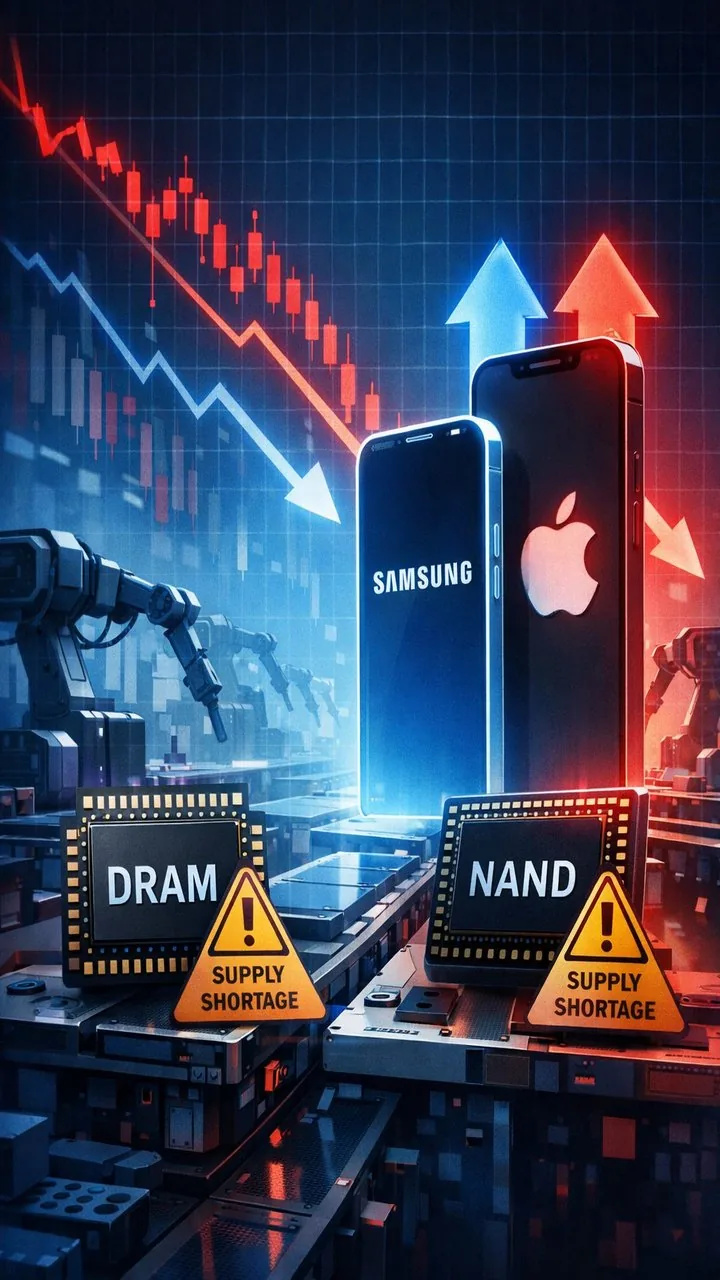
Global smartphone shipments fell 4.1% year-over-year in the first quarter of 2026, marking the first industry-wide decline since 2023, according to IDC. The drop is primarily attributed to a memory chip crunch that has constrained device availability and driven up prices across the supply chain. Samsung and Apple both managed modest growth, bucking the trend through supply chain advantages and premium demand.
The Memory Chip Crunch Hits Smartphones
The global DRAM and NAND flash shortage that has driven up Surface, Samsung tablet, and AI server prices has now worked its way into smartphone production. Device makers that rely on memory components from Samsung, SK Hynix, and Micron are facing longer lead times and higher input costs, forcing some to reduce production volumes or delay launches. The memory crunch has been exacerbated by the AI data center buildout, which is absorbing a disproportionate share of available high-bandwidth memory (HBM) supply.
Samsung and Apple Outperform
Despite the industry decline, Samsung grew shipments 3.6% and Apple grew 3.3% in Q1. Samsung's vertical integration — the company manufactures its own memory chips — provides a degree of insulation from the supply crunch that affects competitors. Apple benefits from its premium positioning, where demand for its flagship iPhones remains relatively inelastic to supply constraints, and from its deep contractual relationships with key suppliers. Both companies' Q1 resilience stands in contrast to broader market weakness.
Mid-Range and Emerging Markets Hit Hardest
The shipment decline falls disproportionately on the mid-range and budget segments, which have the least pricing power to absorb component cost increases. Vendors like Xiaomi, Oppo, vivo, and Transsion — which have built massive businesses on affordable, high-spec devices in emerging markets — face a particularly difficult environment. These brands cannot easily pass memory cost increases on to price-sensitive buyers in India, Africa, and Southeast Asia without losing volume.
When Will the Crunch Ease?
Analysts expect the memory chip shortage to begin easing in late 2026 as new YMTC, Samsung, and Micron capacity comes online. However, the AI compute buildout continues to compete for memory supply, and any acceleration in AI infrastructure spending — particularly around the training of next-generation models — could prolong the crunch further. Smartphone vendors are planning their second-half launches cautiously, with conservative inventory targets to avoid being caught with overstock if supply normalizes faster than expected.
The Bottom Line
The first smartphone shipment decline since 2023 is a direct consequence of the AI infrastructure boom consuming memory resources that historically flowed to consumer devices. For the smartphone industry, recovery depends on memory supply growing faster than AI data center demand — a race that is still very much undecided. Samsung and Apple's resilience is a reminder that in constrained markets, scale and vertical integration matter more than ever.
Related Articles
- Google Launches Windows Desktop App with AI Shortcuts
- Meta and Broadcom Expand MTIA Chip Partnership
- ASML Beats Q1 Expectations, Raises 2026 Guidance as AI Chip Demand Surges