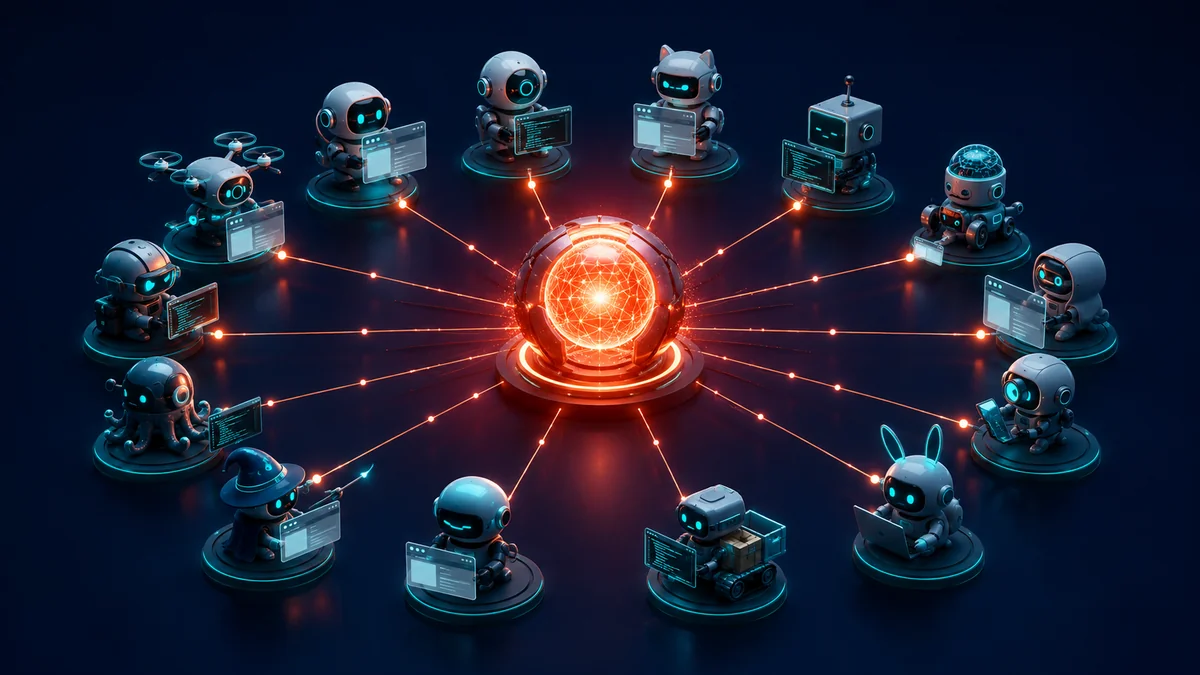
Some days move the whole industry. On June 30, 2026, Anthropic stacked two of them into one. First, it launched Claude Sonnet 5, a mid-tier model built to run AI agents cheaply. Second — and almost simultaneously — the US government lifted the export ban that had forced Anthropic's most capable models offline for foreign users just weeks earlier.
Taken together, it's a statement: Anthropic is pushing hard on price and capability and clearing the regulatory cloud over its business, all as it reportedly races toward a giant IPO. Let's break down both stories.
Two Headlines, One Day
It's rare for a company to ship a major product and win a major regulatory reprieve on the same day. The Sonnet 5 launch is about the future — cheaper, more autonomous AI. The lifted ban is about closing a painful chapter that began weeks ago. Both point the same direction: momentum.
What Is Claude Sonnet 5?
Claude Sonnet 5 is Anthropic's new mid-tier model — the middle child between the lightweight and flagship tiers. Its whole pitch is near-flagship quality at a fraction of the cost, tuned specifically for agentic work: planning tasks, using tools like browsers and terminals, and running autonomously. It's now the default model on Claude's Free and Pro plans, and available to Max, Team and Enterprise users too.
The Price Story
Price is the headline feature. Here's how Sonnet 5 lands:
| Tier | Input / 1M tokens | Output / 1M tokens |
|---|---|---|
| Intro (through Aug 31, 2026) | $2.00 | $10.00 |
| Standard (after) | $3.00 | $15.00 |
That's roughly 40% cheaper than Opus 4.8 at standard pricing, and about 60% cheaper during the introductory window. For anyone running high-volume agent workloads — where a single task can burn millions of tokens across many steps — that difference is the whole ballgame.
How Good Is It?
Cheaper only matters if the quality holds up. It largely does. On one agentic coding benchmark, Sonnet 5 scored about 63.2% — compared with 69.2% for the flagship Opus 4.8 and 58.1% for the previous Sonnet 4.6.
| Model | Agentic coding score |
|---|---|
| Claude Opus 4.8 (flagship) | ~69.2% |
| Claude Sonnet 5 | ~63.2% |
| Claude Sonnet 4.6 (previous) | ~58.1% |
So Sonnet 5 meaningfully narrows the gap to the flagship while clearly beating its predecessor. Even more striking: on a knowledge-work benchmark, Sonnet 5 slightly edged out Opus 4.8. The honest caveat is that Opus still wins on the very hardest, most complex problems — but for a huge share of everyday work, Sonnet 5 is now "good enough" at a much better price. It's the same value calculus we saw with open, cheaper models like GLM-5.2.
Why "Built for Agents" Matters
The word "agent" gets thrown around a lot, so here's the plain version. A chatbot answers; an agent acts. It browses the web, runs code in a terminal, calls tools, and chains many steps together to finish a job with minimal hand-holding.
Anthropic says Sonnet 5 can plan and run these multi-step workflows at a level that, only months ago, needed larger and far more expensive models. Combine that with lower token prices and you get the thing every company building AI features wants: agents that are both capable and affordable to run at scale.
The Ban Is Lifted
The second headline closes a saga we've followed closely. On June 12, the US Commerce Department abruptly ordered Anthropic to suspend foreign access to its most powerful models, Fable 5 and Mythos 5, citing national-security and "diversion" risks — reportedly after Amazon executives and NSA reviewers flagged possible jailbreak vulnerabilities. We covered that shock in Anthropic's export-control crackdown.
About 18 days later, it's over. After a two-week review, Commerce Secretary Howard Lutnick told Anthropic it no longer needs government sign-off to export or transfer the two models within the US or to foreign nationals. Anthropic is restoring Fable 5 globally and has added new safety classifiers that block sensitive cybersecurity tasks — a concession that likely helped clear the path.
It's the flip side of the gatekeeping regime we described when OpenAI's GPT-5.6 launched under government supervision: Washington can pull frontier models back — and, as now, let them return once safeguards are agreed.

Why It All Matters
- Cheaper agents change the math. A near-flagship model at ~40-60% less makes large-scale automation viable for far more companies.
- The regulatory cloud is gone. Removing the ban restores confidence in Anthropic's most valuable products right when it needs it.
- Safety became the price of entry. New cyber-blocking classifiers show how "ship it safely" is now a condition of shipping at all.
- IPO timing. A strong product plus a clean regulatory story is exactly the narrative Anthropic wants heading into a reported public listing.
Frequently Asked Questions
What is Claude Sonnet 5?
Claude Sonnet 5 is Anthropic's new mid-tier AI model, launched June 30, 2026. It's designed to deliver close to the quality of the flagship Claude Opus 4.8 at a much lower price, with a particular focus on running AI 'agents' — models that can plan, use tools like browsers and terminals, and work autonomously. It's now the default model on Claude's Free and Pro plans.
How much does Claude Sonnet 5 cost?
Through August 31, 2026, Sonnet 5 has an introductory API price of $2 per million input tokens and $10 per million output tokens. After that it moves to $3 input and $15 output. That works out to roughly 40% cheaper than Opus at standard pricing and about 60% cheaper during the introductory window — a big deal for anyone running high-volume agent workloads.
How good is Sonnet 5 compared to Claude Opus 4.8?
Very close, and in some areas even better. On one agentic coding benchmark, Sonnet 5 scored about 63.2%, versus 69.2% for Opus 4.8 and 58.1% for the previous Sonnet 4.6 — so it narrows the gap to the flagship while beating its predecessor. On a knowledge-work benchmark it actually edged out Opus 4.8. The trade-off: Opus still leads on the very hardest problems.
What does 'built for agents' mean?
An AI agent doesn't just answer a question — it takes actions to complete a task: browsing the web, running code in a terminal, calling tools, and chaining many steps together autonomously. Anthropic says Sonnet 5 can plan and run these multi-step workflows at a level that, just months ago, required larger and pricier models. Cheaper tokens plus strong agentic skills make it well-suited to running agents at scale.
Why did the US just lift the ban on Claude Fable 5 and Mythos 5?
On June 30, 2026, the US Commerce Department lifted the export controls it had placed on Anthropic's Fable 5 and Mythos 5 models. The restrictions were imposed on June 12 over national-security and 'diversion' concerns — reportedly after Amazon executives and NSA reviewers flagged possible jailbreak vulnerabilities — and lasted about 18 days before being cleared.
What changed to get the models unbanned?
Anthropic and the government spent roughly two weeks reviewing the models. Commerce Secretary Howard Lutnick told Anthropic that it no longer needs government sign-off to export or transfer Fable 5 and Mythos 5 within the US or to foreign nationals. Anthropic is bringing Fable 5 back globally and has added new safety classifiers that block sensitive cybersecurity tasks.
Why does this matter for Anthropic?
It's a double win at a pivotal moment. A cheaper, agent-focused Sonnet 5 helps Anthropic grab high-volume enterprise usage from rivals, while the lifted ban removes a cloud of regulatory uncertainty over its most powerful models. Both land as Anthropic is widely reported to be racing toward a blockbuster IPO, where momentum and a clean regulatory story matter.
Final Thoughts
Claude Sonnet 5 is the more lasting story. The AI race is quietly shifting from "who has the smartest model" to "who can run capable models cheaply and autonomously" — and a mid-tier model that nearly matches the flagship at a fraction of the cost is squarely aimed at that shift. Expect rivals to answer on price.
The lifted ban, meanwhile, is a reminder of the new rules of the game: frontier AI now operates at the pleasure of regulators, and safety guarantees are the toll for market access. For Anthropic, ending June with a cheaper flagship-class model and a clean bill of regulatory health is about as good as a fortnight gets. We'll keep tracking what both mean for the rest of 2026.