China Reroutes Chipmaking Tool Imports Through Singapore and Malaysia to Bypass US Export Controls
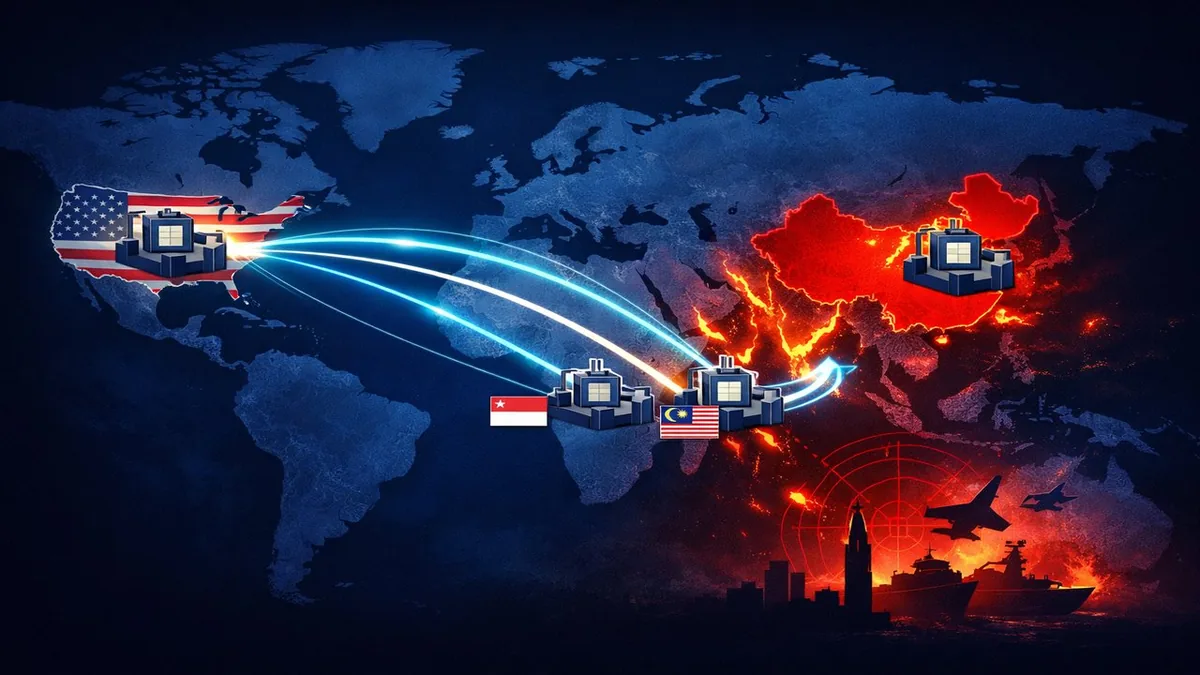
New trade data analysis reveals a striking pattern in China's semiconductor equipment supply chain: imports of chipmaking tools from Singapore rose 17% year-over-year to $5.7 billion in 2025, while imports from Malaysia more than doubled to $3.4 billion. Over the same period, direct imports from the United States fell 34% to approximately $2 billion. The data points strongly to systematic circumvention of US export controls through third-country transshipment.
The Routing Strategy
US export control rules restrict the sale of advanced semiconductor manufacturing equipment to Chinese chipmakers. These controls, administered by the Commerce Department's Bureau of Industry and Security, require export licenses for equipment above certain capability thresholds — licenses that are frequently denied for sales to Chinese entities.
The Singapore and Malaysia import surge suggests that US and allied semiconductor equipment is being sold to intermediary entities in those countries and then re-exported to China, potentially with modified documentation or through shell structures that obscure the ultimate end user. This is not a new tactic, but the scale revealed in the 2025 data is unprecedented.
Why Singapore and Malaysia
Both countries are legitimate hubs for Southeast Asian semiconductor manufacturing and have long-standing trade relationships with both the US and China. Singapore in particular hosts regional offices for major US semiconductor equipment makers, giving it legitimate access to equipment that China cannot directly import. The opacity of these supply chains makes it difficult to distinguish genuine local use from transshipment.
US and Allied Response
The US has been tightening controls on transshipment — adding Singapore and Malaysia to enhanced scrutiny lists and pressuring both governments to implement stricter end-user verification. But enforcement is difficult. The equipment often has legitimate dual-use purposes, and proving that a sale to a Singapore entity was intended for eventual Chinese use requires intelligence and legal resources that are not easily scalable.
The Netherlands (through ASML) and Japan (through Tokyo Electron and others) face the same pressure: their equipment is increasingly finding its way into Chinese supply chains through third-country intermediaries despite national export control frameworks.
The Bottom Line
The trade data makes a compelling case that China's semiconductor supply chain has adapted to US export controls faster than the controls have adapted to China. The 17% Singapore surge and the Malaysia doubling are not coincidences — they are a supply chain workaround that is now operating at billions of dollars of scale. The chip war is being fought through logistics, not just policy, and China appears to be winning the routing game.
Related Articles
- Jane Street Takes $1B More in CoreWeave
- Google DeepMind Unveils Gemini Robotics-ER 1.6
- Snap Confirms 1,000 Layoffs Citing AI