
The pace of AI in 2026 is dizzying. In roughly seven weeks, OpenAI, Google, Anthropic, and a wave of fast-moving challengers each shipped a new flagship model — and the cheapest of them started matching the most expensive on real benchmarks. If you're trying to figure out which AI model to actually use, the choice has never been wider or more confusing.
We cut through it. This guide compares every major model available in June 2026 — what each is best at, how much it costs, how big its memory is, and which one fits your needs. Whether you're a developer, a business, or just choosing a chatbot, here's the clear picture.
The June 2026 Model Wave
Here's how fast it happened — five flagship-class releases in under two months:
- GPT-5.5 (OpenAI) — April 23
- DeepSeek V4 (open) — April 24 preview
- Gemini 3.5 Flash (Google) — May 19
- Claude Opus 4.8 (Anthropic) — May 28
- MiniMax M3 (open) — June 1
- Claude Fable 5 (Anthropic, Mythos-class) — June 9 (now restricted; see below)
- GLM 5.2 (Zhipu / Z.ai, open) — June 13
Two themes define the wave: the flagships keep getting smarter, and open, efficient models keep getting cheaper — fast enough that price, not raw capability, is now the real battleground. (For the bigger picture on falling costs, see our deep dive on the 2026 AI price war.)
At-a-Glance Comparison
| Model | Maker | Context | Price (in / out per 1M) | Best For |
|---|---|---|---|---|
| Claude Opus 4.8 | Anthropic | 1M | $5 / $25 | Coding, agents, reasoning |
| GPT-5.5 | OpenAI | ~1M | $5 / $30 | Balanced all-rounder |
| Gemini 3.5 Flash | 1M | $1.50 / $9 | Speed + value at scale | |
| MiniMax M3 | MiniMax (open) | 1M | ~$0.30 / $1.20 | Cheap, capable, coding |
| GLM 5.2 | Zhipu / Z.ai (open) | 1M | Coding Plan ~$18/mo | Open coding agents |
| DeepSeek V4 | DeepSeek (open) | 1M | $1.74 / $3.48 (Pro) | Ultra-low-cost workloads |
| Claude Fable 5 | Anthropic | 1M | $10 / $50 | Frontier tasks (restricted) |
Prices are approximate API rates as of mid-June 2026 and change often. Gemini 3.5 Pro (with a larger context and a "Deep Think" mode) is expected shortly.
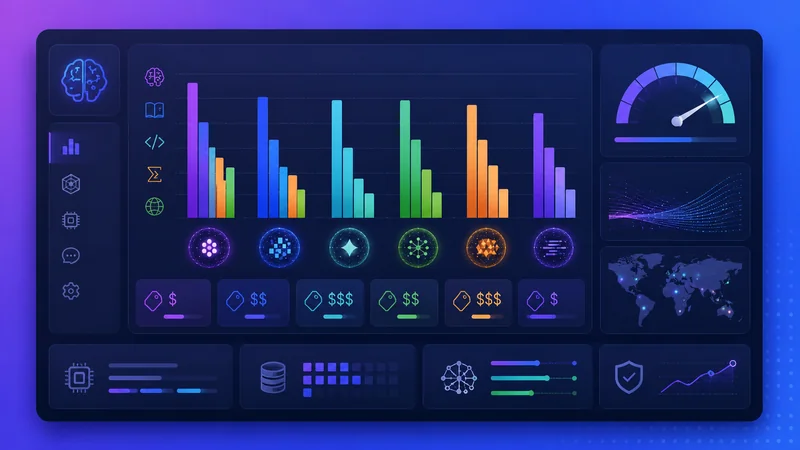
The Flagship Race
Claude Opus 4.8 — the reasoning & coding leader
Anthropic's Opus 4.8 (May 28) is the model to beat for hard problems. It tops the real-world coding benchmark SWE-Bench Pro at around 69.2%, comfortably ahead of GPT-5.5, and excels at agentic, multi-step work. With Fable 5 currently restricted, Opus 4.8 is also Anthropic's available flagship. At $5 input / $25 output per million tokens, it's premium but not the priciest.
GPT-5.5 — the balanced all-rounder
OpenAI's GPT-5.5 (April 23) remains the dependable generalist with the most mature ecosystem of tools and integrations. It scores about 58.6% on SWE-Bench Pro and is more token-efficient on long prompts than its predecessor — though OpenAI roughly doubled its price to $5 input / $30 output. The faster GPT-5.5 Instant variant targets quick, interactive use.
Gemini 3.5 — speed, scale, and value
Google's Gemini 3.5 Flash (May 19) is built for high-volume, low-latency work at a fraction of rivals' cost — $1.50 input / $9 output. It's the value pick among the big-lab models, and the upcoming Gemini 3.5 Pro is set to add a much larger context window and a "Deep Think" reasoning mode.
The Efficiency Revolution
The most disruptive story of June 2026 isn't a flagship — it's how cheap "good enough" became.
MiniMax M3 — flagship quality at 5–10% of the cost
Launched June 1, the open MiniMax M3 matches or beats GPT-5.5 and Gemini 3.1 Pro on key benchmarks (about 59% on SWE-Bench Pro) for just 5–10% of their price. Its Sparse Attention architecture slashes per-token compute and processes long contexts far faster, making it a genuine flagship alternative for budget-conscious teams.
DeepSeek V4 — the price floor
DeepSeek's open V4 family (April preview) pushes costs to the floor: the Flash variant runs around $0.28 per million output tokens, with a 1.6-trillion-parameter Mixture-of-Experts design and a 1M context. For high-volume, cost-sensitive workloads, it's hard to beat on price-per-quality.
GLM 5.2 — open and coding-first
Released June 13, Zhipu's (Z.ai) GLM 5.2 is a coding-first open model built on a 744-billion-parameter Mixture-of-Experts design, with a 1M-token context and up to 131k output tokens — enough for repository-scale, agentic refactors. It ships on Z.ai's Coding Plans (from about $18/month) with MIT open weights, and works out of the box with agent tools like Claude Code, Cline, and OpenCode. Zhipu didn't publish benchmarks at launch, but its focus on long-context, plan-then-execute software work makes it a serious open rival for developers.
Together, MiniMax, DeepSeek, and GLM prove the point of the year: for most tasks, you no longer need a top-tier flagship to get excellent results.
The Context-Window Race
"Context window" is how much text a model can consider at once — bigger means it can read whole codebases, books, or document sets in one go. In June 2026, 1 million tokens is the new normal: GPT-5.5, Opus 4.8, MiniMax M3, and DeepSeek V4 all offer it. The next leap is Gemini 3.5 Pro, expected to roughly double that to a 2-million-token window paired with a deeper reasoning mode — useful for analyzing very large repositories or archives without splitting them up.
The Fable 5 Wrinkle
One headline from the wave comes with an asterisk. Anthropic's Claude Fable 5 — its most powerful "Mythos-class" model — went generally available on June 9, but on June 14 Anthropic disabled Fable 5 and Mythos 5 for all customers after the US government issued an export-control order citing national security. Both sides are working on a resolution, but for now the frontier model is off the table. If you want Anthropic capability today, Claude Opus 4.8 is the fallback. It's a reminder that, in 2026, AI availability can hinge on policy as much as on technology.
Which Model Should You Use?
Match the model to the job rather than chasing a single "best":
- Coding & AI agents: Claude Opus 4.8 (best), or the open MiniMax M3 and GLM 5.2 for strong coding at a fraction of the cost.
- General assistant / writing: GPT-5.5 for ecosystem and polish; Gemini 3.5 Flash for speed and value.
- High-volume, cost-sensitive tasks: DeepSeek V4 or MiniMax M3 — pennies per million tokens.
- Huge documents / whole codebases: any 1M-context model now; Gemini 3.5 Pro soon for 2M.
- Cutting-edge research / frontier work: Claude Fable 5 was the pick — watch for its return after the export situation resolves.
The smartest setup for most teams is model routing: send routine work to a cheap model and escalate only hard tasks to a flagship. It's the single biggest way to control cost as usage grows.
Frequently Asked Questions
What is the best AI model in June 2026?
There's no single winner — it depends on the job. For coding and complex reasoning, Claude Opus 4.8 leads, scoring about 69% on SWE-Bench Pro. For speed and value, Gemini 3.5 Flash and the ultra-cheap MiniMax M3 and DeepSeek V4 are excellent. GPT-5.5 remains a strong all-rounder. Pick the cheapest model that reliably handles your specific task rather than defaulting to the most powerful.
Which AI model is best for coding in 2026?
Claude Opus 4.8 is the coding leader in June 2026, scoring roughly 69.2% on SWE-Bench Pro (real-world software tasks), ahead of GPT-5.5 at about 58.6%. Surprisingly, the low-cost MiniMax M3 (around 59%) matches or beats GPT-5.5 on the same benchmark at a fraction of the price, making it a strong budget choice for coding.
Which model has the largest context window?
Most flagship models now offer a 1-million-token context window, including GPT-5.5, Claude Opus 4.8, MiniMax M3, and DeepSeek V4. Google's upcoming Gemini 3.5 Pro is expected to push this to a 2-million-token window with a "Deep Think" reasoning mode, which would make it the context leader.
How much do the top AI models cost in June 2026?
Output prices per million tokens vary widely: DeepSeek V4-Flash is about $0.28, MiniMax M3 about $1.20, Gemini 3.5 Flash $9, Claude Opus 4.8 $25, GPT-5.5 $30, and Claude Fable 5 $50. Input prices are lower — for example GPT-5.5 is $5 input / $30 output, and Gemini 3.5 Flash is $1.50 input / $9 output. Open and efficient models cost a tiny fraction of the flagships.
What is MiniMax M3 and why is it a big deal?
MiniMax M3, launched June 1, 2026, is an open, highly efficient model that matches or beats GPT-5.5 and Gemini 3.1 Pro on key benchmarks for just 5–10% of the cost. Its Sparse Attention architecture cuts per-token compute dramatically, with much faster processing of long contexts. It's a flagship example of the 2026 trend toward cheap, capable models.
What is GLM 5.2?
GLM 5.2 is a coding-first open model from Zhipu AI (Z.ai), released June 13, 2026. Built on a 744-billion-parameter Mixture-of-Experts design, it offers a 1-million-token context window and ships with MIT open weights, working out of the box with agent tools like Claude Code, Cline and OpenCode. It's available on Z.ai Coding Plans from about $18/month and is aimed at repository-scale, agentic software engineering.
Can I still use Claude Fable 5?
As of mid-June 2026, no. Anthropic disabled Claude Fable 5 and Mythos 5 for all customers after the US government issued an export-control order citing national security, and both sides are working on a resolution. For Anthropic models, Claude Opus 4.8 is the available flagship in the meantime.
Are cheap AI models good enough to replace expensive ones?
For most everyday tasks, yes. Models like MiniMax M3 and DeepSeek V4 now handle summarization, classification, drafting, and even much coding at quality close to the flagships, for a small fraction of the price. The expensive models still lead on the hardest reasoning and long-horizon agent work, so a common strategy is to route simple tasks to cheap models and reserve flagships for difficult ones.
GPT-5.5 vs Gemini 3.5 vs Claude Opus 4.8 — which should I choose?
Choose Claude Opus 4.8 for coding, agents, and deep reasoning; Gemini 3.5 (Flash now, Pro soon) for speed, huge context, and the lowest flagship pricing; and GPT-5.5 for a balanced general-purpose assistant with a mature ecosystem. If budget is the priority, MiniMax M3 or DeepSeek V4 deliver most of the capability for a fraction of the cost.
Why did so many AI models launch in 2026?
Intense competition ahead of major AI IPOs, rapid gains in training efficiency, and the rise of strong open models (MiniMax, DeepSeek) pushed every major lab to ship faster and cheaper. The result is a wave of releases in a few weeks and a price war that keeps driving the cost of capable AI down.

Final Verdict
June 2026 made one thing clear: the "best AI model" is now a question of fit, not just power. Claude Opus 4.8 owns coding and reasoning, Gemini 3.5 wins on speed and value, GPT-5.5 is the safe all-rounder, and MiniMax M3 and DeepSeek V4 prove you can get most of the capability for a tiny fraction of the cost.
For most people and teams, the winning move isn't picking one model forever — it's matching each task to the right-sized model and keeping an eye on price as usage scales. Capability is no longer the bottleneck; smart selection is. We'll keep this guide updated as Gemini 3.5 Pro lands and the Fable 5 situation evolves.