Another Spyware Maker Was Caught Distributing Fake Android Apps That Spy on Users
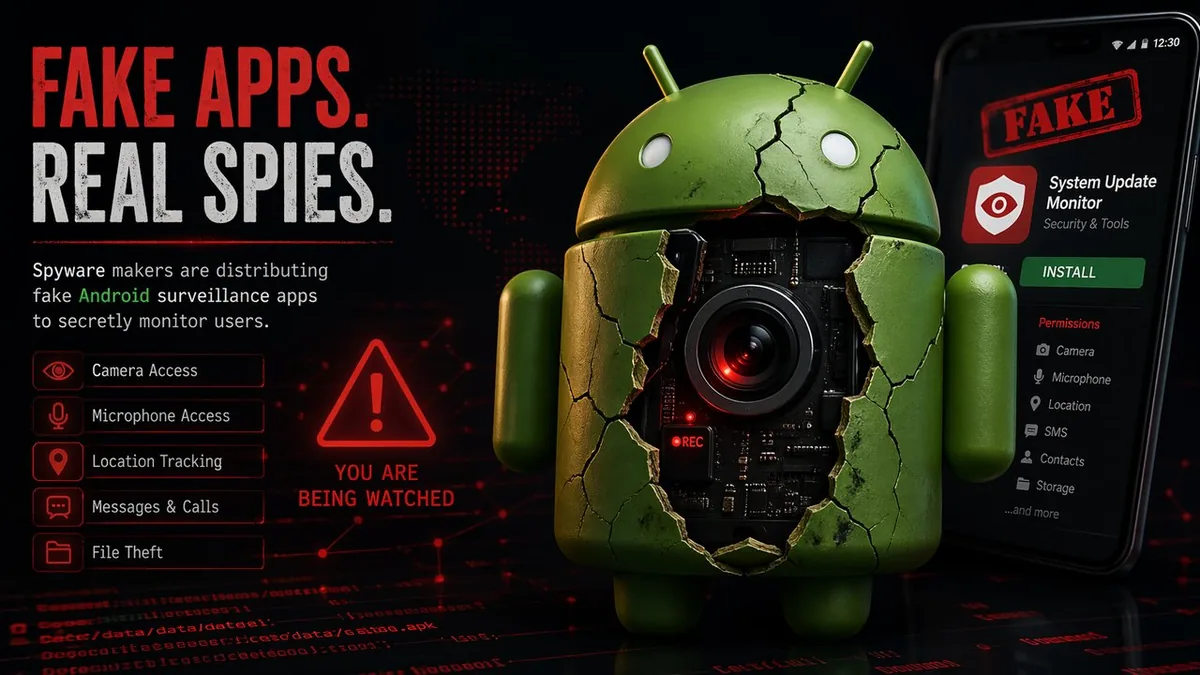
Security researchers have identified another spyware operator distributing counterfeit Android surveillance applications, continuing a pattern of commercial spyware vendors using fake or trojanized apps to compromise target devices without detection.
How Fake App Spyware Works
The attack pattern is consistent across most commercial spyware operations: create a convincing replica of a legitimate app — a messaging platform, a utility tool, or a security scanner — and distribute it through unofficial channels, phishing campaigns, or sometimes even slipping it through app store review processes. Once installed, the app behaves normally from the user's perspective while silently harvesting contacts, messages, location data, photos, and in some cases live microphone and camera feeds.
What makes these operations particularly dangerous is that they target specific individuals rather than mass populations. Unlike commodity malware that casts a wide net, spyware tools of this type are typically deployed against journalists, activists, political opposition figures, and corporate targets — groups that represent high-value intelligence targets for state-aligned or corporate customers.
The Commercial Spyware Industry
The commercial spyware market — sometimes called the surveillance-for-hire industry — operates in a legal gray zone. Companies like NSO Group (makers of Pegasus) have faced international sanctions and lawsuits, but dozens of smaller operators continue to build and sell similar capabilities with fewer constraints and less scrutiny. Each time one is exposed, the investigation reveals a web of shell companies, offshore registrations, and plausible-deniability structures designed to insulate the developers from legal accountability.
Google, Apple, and Meta have all invested significantly in detecting and blocking commercial spyware, but the cat-and-mouse game continues because the economic incentives for developing and selling these tools remain high.
What Users Can Do
The most effective protection against fake app spyware is strict app hygiene: only install apps from official stores, be suspicious of apps that request excessive permissions, and keep device OS and security patches current. Users in high-risk categories — journalists, activists, executives — should consider using devices managed with mobile device management (MDM) software and conduct regular security audits.
My Take
Every time a new spyware operator is caught, two more are quietly operating. The commercial surveillance market is not going away — it is fragmenting into smaller, harder-to-detect players who have learned from the NSO Group's very public downfall. The fact that yet another actor is distributing fake Android apps is not surprising; it is the default business model for a $12 billion global industry that faces minimal regulatory consequences in most jurisdictions. The solution is not catching operators after the fact — it is making the Android app distribution chain harder to abuse, which Google is slowly doing.
Related Articles
- A New npm Supply Chain Attack Self-Spreads Like a Worm
- GopherWhisper APT Is Using Slack and Discord as C2 Channels
- UK Government Warns Chinese Hackers Are Building Botnets