Amazon Launches Its First Smart Warehouse in Shenzhen to Cut Merchant Storage Costs by 45%
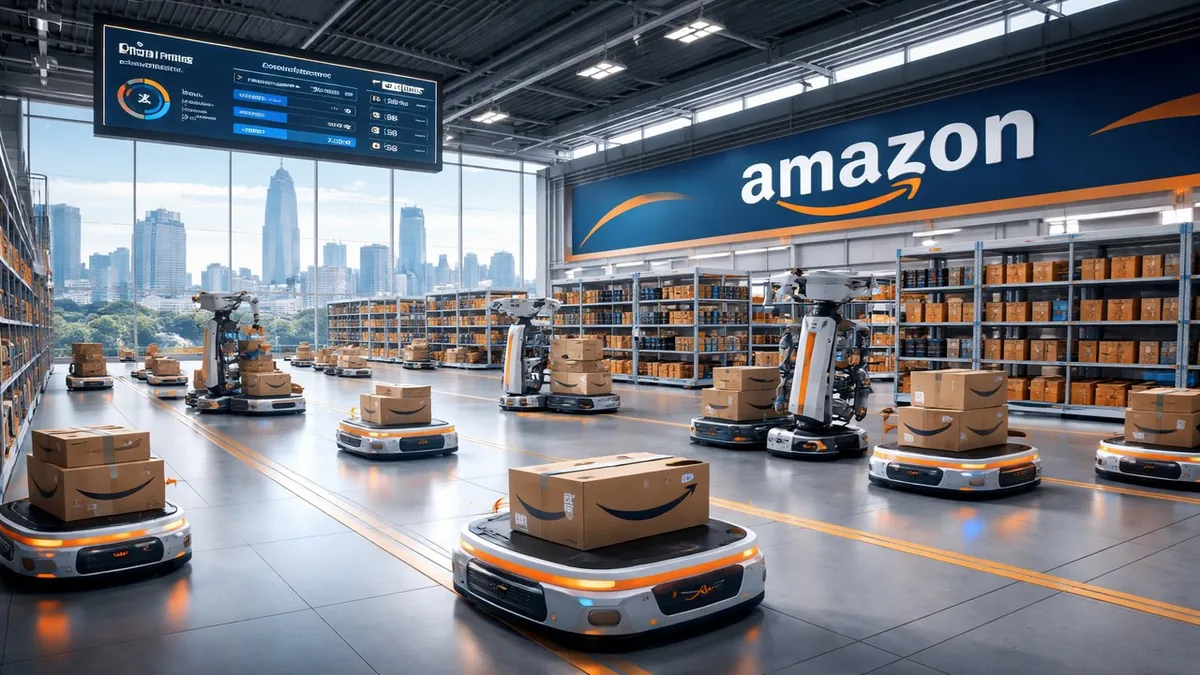
Amazon has opened its first smart warehouse in Shenzhen, China's tech manufacturing and export capital, deploying a fleet of autonomous mobile robots and AI-driven inventory management systems designed to cut storage and fulfillment costs for local merchants by up to 45%. The facility is Amazon's most direct infrastructure play in China in years, targeting the Shenzhen merchant ecosystem that also supplies Shein, Temu, and AliExpress — Amazon's most aggressive competitors in global fast commerce.
What Makes It "Smart"
The Shenzhen facility deploys several generations of Amazon Robotics technology, including the Proteus autonomous mobile robots and the newer Sequoia inventory management system that reduces the time from product receiving to order availability from hours to minutes. AI-driven demand forecasting determines optimal stock positioning within the warehouse, reducing the travel time robots spend moving inventory and improving pick efficiency.
The net effect is a warehouse that can handle significantly higher throughput per square meter than conventional facilities, translating into the 45% cost reduction Amazon is advertising to prospective merchant partners. For merchants who currently pay premium rates for Shenzhen warehouse space — one of the most expensive markets in China — the offer is financially meaningful.
The Competitive Context
Amazon's move into Shenzhen warehouse infrastructure is a direct response to the success of Shein and Temu in building end-to-end logistics pipelines that connect Shenzhen manufacturers to global consumers with minimal intermediary margin. Both companies have built their competitive advantage on ultra-fast inventory turnover enabled by sophisticated local logistics networks.
By offering Shenzhen merchants competitive warehouse economics, Amazon is attempting to deepen its relationships with the same supplier base and secure preferred access to inventory that could otherwise flow through rival platforms.
Amazon's China Position
Amazon exited the Chinese consumer marketplace in 2019 after failing to compete with Alibaba and JD.com domestically. The Shenzhen warehouse facility does not reverse that exit — it is not a consumer-facing operation. Instead, it serves Amazon's global marketplace strategy: attracting Chinese sellers to list on Amazon.com, Amazon.co.uk, and other Amazon storefronts worldwide, with Shenzhen as the logistics hub.
The Bottom Line
Amazon's Shenzhen smart warehouse is a supply chain play, not a China consumer play. By offering competitive storage economics to Shenzhen merchants, Amazon is competing for the same seller relationships that Shein and Temu have cultivated. The 45% cost reduction headline is the hook; the strategic intent is to ensure Amazon has access to the best Chinese manufacturer inventory before its competitors can lock it up.
Related Articles
- Apple Sends 200 Siri Engineers to AI Coding Bootcamp
- X Launches Cashtags With Real-Time Stock and Crypto Data
- OpenAI Updates Agents SDK With Native Sandboxing