
Everyone agrees artificial intelligence is changing the world. The harder question — the one now keeping investors awake — is whether the prices being paid for it make any sense. This week one of the most respected voices in finance delivered a blunt answer: the AI spending boom looks dangerously overheated, and if it cracks, the fallout could be worse than the dot-com bust of 2000.
The warning comes from Aswath Damodaran, the New York University professor known as the "Dean of Valuation." His argument isn't the usual hand-waving about hype. It's a specific, structural case about how this boom is being paid for — and why that makes it more fragile than the last tech mania. Here's what he's saying, and what it means for you.
The Warning
Damodaran's core message: a correction in the AI sector would inflict greater damage than the dot-com crash, because today's AI leaders are pouring borrowed money into massive physical infrastructure — data centers, chips, and power — rather than running the capital-light software businesses of the 2000s.
"The damage wouldn't just fall on shareholders," he warns, "but could ripple out across society." In other words, this time a bust might not stay neatly contained inside the stock market.
Who Is Aswath Damodaran?
If you follow markets, you know the name. Damodaran is a finance professor at NYU's Stern School of Business and the author of the textbooks many Wall Street analysts learned valuation from. His nickname — the "Dean of Valuation" — isn't marketing; it reflects decades of rigorous, widely cited work on how to price companies.
That pedigree is exactly why this warning lands harder than a typical bubble call. Damodaran isn't a perma-bear or a headline-chaser. He's a methodical valuation expert who still owns big tech stocks — which makes his caution about AI prices all the more striking.
Why It Could Be Worse Than Dot-Com
This is the heart of his argument, and it's worth slowing down for. The difference between 2000 and 2026 isn't just the size of the boom — it's the financing.
| Dot-com era (≈2000) | AI era (2026) | |
|---|---|---|
| How it was funded | Mostly equity | Increasingly debt |
| Capital intensity | Capital-light websites | Capital-heavy data centers |
| Who eats the losses | Mostly shareholders | Lenders, economy, society |
In the dot-com boom, companies were largely equity-funded and asset-light. When the bust came, shareholders lost 60%, 70%, even 90% of their money — brutal, but the pain was restricted to shareholders.
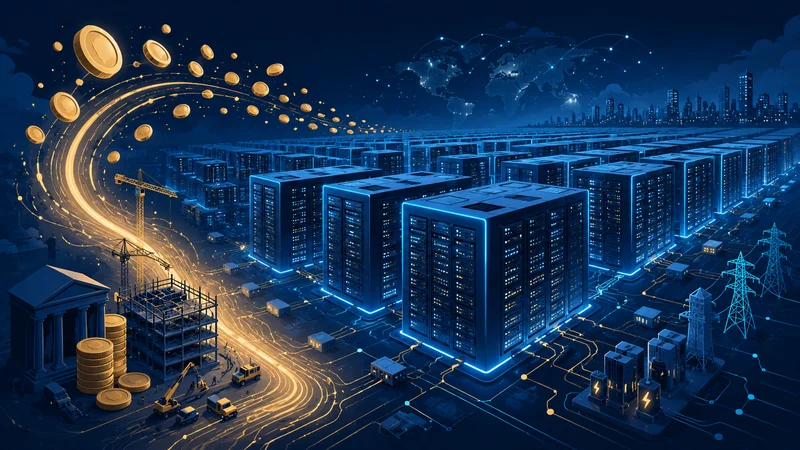
The AI boom is different. Building frontier AI means constructing enormous data centers — with ten-year depreciation schedules on hardware that could be obsolete in five — and a growing share of that is financed with debt. If the returns don't show up, that leverage doesn't just vaporize stock gains; it strains balance sheets across the whole tech sector and the lenders behind it. Debt is what turns a market correction into something more systemic.

The Trillion-Dollar Math
How overheated are valuations? Damodaran puts a number on it. To justify the capital currently being poured into large language models and AI infrastructure, he estimates the industry would eventually need to generate "two, three, four trillion in revenues."
That is a staggering figure next to today's actual AI revenues. It's the gap between that multi-trillion-dollar expectation and present-day reality that defines the valuation risk. The spending assumes a future that has to arrive almost perfectly — and on schedule — to pay off. This is the same tension running through 2026's record-breaking tech IPOs and sky-high private valuations.
The Business-Model Problem
There's a subtler issue beneath the headline numbers: AI may not enjoy the beautiful economics that made software so profitable.
Classic software scales gorgeously. Think of Netflix: it pays for content once, then spreads that cost across a growing army of subscribers, so margins improve as it grows. AI is more like Spotify's per-stream model — every query burns real compute that costs real money. That creates weak economies of scale, and as Damodaran warns, "growth paired with thin margins could actually destroy value" rather than create it.
He even flags a darker paradox he calls the "AI fever dream": many of the rosy revenue forecasts quietly assume AI will replace huge numbers of human jobs. If that actually happens at scale, he notes, it would carry "some insane costs for society" — hardly the clean, happy ending the valuations imply.
Why He Sold Nvidia
Damodaran doesn't just talk — he acted. He fully exited his Nvidia position by the end of 2025, selling gradually over several years rather than all at once.
Crucially, this wasn't a bet against the company. He still calls Nvidia a business that genuinely delivers. But he judged the stock "richly priced" — demanding "too much to go right to break even." It's a textbook lesson he preaches constantly: even a great company can be a bad investment if you overpay. Trimming a winner on valuation, not on fear, is the discipline.
He's Not Saying Sell Everything
Here's the nuance the scary headlines miss. Damodaran is not screaming that AI is a fraud or that you should dump every tech stock. He frames the moment as "bubble, boom, or both."
- He still owns five of the "Magnificent Seven" big-tech stocks.
- He keeps his Microsoft stake, viewing cloud computing as a stable "utility essential to modern life" that needs fewer heroic assumptions to justify.
- His sharpest caution is aimed at venture capital and private markets, where he says investors chasing late-stage AI deals risk getting "eaten alive."
The message isn't "AI is worthless." It's "don't pay any price for it" — and know that the riskiest money is the hype-driven capital flooding private rounds.
What It Means for You
You don't need to be a Wall Street pro for this to matter. A few takeaways:
- Separate the technology from the stock price. AI being transformative and AI stocks being fairly valued are two completely different claims.
- Debt is the variable to watch. The more this boom leans on borrowed money for data centers, the broader the fallout if growth disappoints.
- Beware story stocks. Durable economics beat exciting narratives. Ask what a company actually earns, not just what it might.
- Bubbles can inflate for years. A warning isn't a timing signal — even Damodaran still holds big tech. The point is caution, not panic.
For more on where today's sky-high valuations are coming from, see our coverage of the 2026 AI model wave and the IPO rush reshaping the industry.
Frequently Asked Questions
Is AI a bubble?
There is no consensus, but a growing number of respected voices warn that AI valuations have run ahead of reality. NYU valuation professor Aswath Damodaran argues the AI spending boom shows classic signs of overheating and that a correction could be more damaging than the dot-com bust. He stops short of calling it a definite bubble — he still owns several big tech stocks — but says the risk of a painful reset is real, especially in venture capital and private markets.
Who is Aswath Damodaran?
Aswath Damodaran is a finance professor at New York University's Stern School of Business, widely nicknamed the 'Dean of Valuation' for his decades of work on how to value companies. His commentary on stock prices is closely followed by professional investors, which is why his warning about AI valuations carries weight.
Why could an AI crash be worse than the dot-com bust?
Damodaran's key point is how the boom is financed. The dot-com era was largely equity-funded and capital-light, so when it busted, shareholders lost 60–90% but the damage was mostly contained to them. The AI boom is capital-heavy and increasingly debt-funded — hundreds of billions are going into data centers and chips. If returns disappoint, that debt can ripple out across the wider economy, not just hit shareholders, making a correction more systemically dangerous.
How much revenue does the AI industry need to justify its valuations?
By Damodaran's estimate, the AI industry would eventually need to generate on the order of two to four trillion dollars in annual revenue to justify the capital being poured into large language models and AI infrastructure today. That is an enormous figure relative to current AI revenues, which is the core of the valuation concern.
Why did Damodaran sell his Nvidia stock?
Damodaran fully exited his Nvidia position by the end of 2025, selling gradually over several years. He still calls Nvidia a company that genuinely delivers, but believes the stock became 'richly priced' — requiring too much to go right just to break even. Trimming a winner on valuation grounds, rather than because the business is bad, is a classic discipline he preaches.
Is Damodaran saying investors should sell all AI stocks?
No. His stance is nuanced — he frames it as 'bubble, boom, or both.' He still owns several of the 'Magnificent Seven' big-tech stocks and keeps his Microsoft stake, viewing cloud computing as a stable utility. His warning is mainly about paying any price for AI exposure, and about the outsized risk faced by late-stage venture and private-market investors.
What does the AI bubble debate mean for everyday investors?
The practical takeaway is to separate the technology from the stock price. AI is real and useful, but that doesn't mean every AI-linked asset is fairly valued. Damodaran's advice in spirit: be wary of chasing hype at any price, understand what you own, favor businesses with durable economics over story stocks, and remember that even great companies can be bad investments if you overpay.
Final Thoughts
Aswath Damodaran's warning is powerful precisely because it isn't hysterical. He believes in AI's potential, owns big tech, and still says the math is stretched and the financing is fragile. That combination — bullish on the technology, cautious on the price — is the most honest place to stand in 2026.
Whether or not this turns into the bubble he fears, the lesson is timeless: a transformative technology and a smart investment are not the same thing. The internet changed everything too — and still wiped out a generation of investors who paid too much, too late. As the AI money keeps flowing, that history is worth remembering.