What Is a Blog? Meaning, History, Types and How to Start One (2026)
A blog is a website, or a section of one, where a person or organization publishes regular posts about recent events or topics that interest them. Oxford Learner's Dictionaries defines it in almost exactly those words, and lists "weblog" as the older, less common form of the word. On most blogs the newest post appears first: WordPress's own documentation says posts appear in reverse chronological order on a blog's home page in a default setup.
Blogs have been around since the mid-1990s, and in 2026 they still power a huge share of the web, from personal diaries and recipe sites to company news pages and paid newsletters. This guide explains what a blog is in simple terms, where blogs came from, how a blog differs from a website or a vlog, how bloggers make money and how to start one for free.
What Is a Blog in Simple Terms?
Think of a blog as an online journal or magazine that you keep adding to. Each entry is a blog post: WordPress.com defines posts as individual pieces of time-based content, like articles or updates. Posts are dated, usually listed newest first, and grouped with categories and tags so readers can browse by topic. Most blogs also let readers comment, subscribe by email or follow along on social media.
A blog can be the whole site (a personal or niche blog) or one part of a bigger website, such as a company's "News" or "Insights" section. What makes it a blog is the format: regular, dated posts, often written in a personal or conversational voice.
A Short History of Blogging
- 1994: Justin Hall, author of Links.net, says he started on the web in January 1994. Jorn Barger later named Hall's Links from the Underground as one early prototype of the weblog.
- 1997: Barger's own FAQ says his Robot Wisdom Weblog was the first to use the name "weblog", in December 1997.
- 1999: Peter Merholz wrote that in April or May 1999 he broke "weblog" into "wee-blog", or "blog" for short. That August, Pyra Labs in San Francisco started Blogger, and LiveJournal has been running since 1999 too.
- 2003: Google acquired Pyra Labs, the company behind Blogger. On May 27, 2003, WordPress released its first version, 0.7, after Mike Little and Matt Mullenweg forked the b2/cafelog software.
- 2012: Blogger and Twitter co-founders Evan Williams and Biz Stone unveiled a preview of Medium in August 2012.
- 2020s: Newsletters became blogs' paid cousin: Substack says its platform now has 5 million paid subscriptions.
Blog vs Website: What's the Difference?
Every blog is a website, but not every website is a blog. The difference is the type of content. WordPress.com describes website pages such as Home, About and Contact as static content that isn't tied to a date or time, while posts are time-based and keep coming. A brochure website for a dentist or a restaurant may never change; a blog is updated regularly with new posts.
Most businesses now combine the two: static pages explain who they are and what they sell, and a blog section publishes guides, news and stories that bring in visitors from search and social media.
Blog vs Vlog vs Newsletter
Oxford Learner's Dictionaries glosses a vlog as a video blog: the same idea, but each post is a video, usually on YouTube. A newsletter on a platform like Substack or Ghost is a blog delivered by email, where creators can publish for free or charge a subscription. Many creators now do all three, publishing a post, cutting a video version and emailing it to subscribers.
Types of Blogs
Blogs cover every subject imaginable, but most fall into a few broad types:
- Personal blogs: an online diary of one person's life, thoughts or creative work.
- Niche blogs: a focused topic such as gardening, chess, home espresso or retro gaming. A niche blog aims to be the go-to resource for a specific audience.
- Lifestyle, travel and food blogs: recipes, trip reports and everyday life, usually photo-heavy.
- Tech, finance and health blogs: explainers, reviews and how-tos, where accuracy matters most.
- Business and company blogs: a brand's news, tutorials and case studies, written to attract and inform customers.
- Review and affiliate blogs: product comparisons that earn a commission when readers buy through their links.
- News blogs and newsletters: frequent updates on one industry or community, sometimes paid by subscribers.
The Parts of a Blog
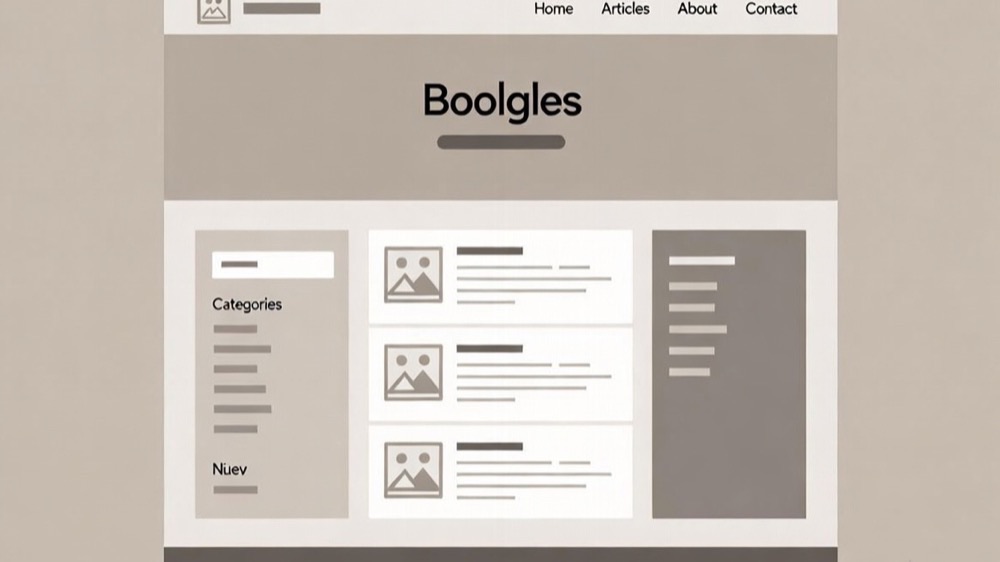
- Home page: usually a list of the latest posts, newest first.
- Posts: the dated articles themselves, each with a title, author, date and body.
- Static pages: About, Contact, privacy policy and other pages that don't change often.
- Categories and tags: labels that group posts by topic so readers can browse.
- Comments: a space for readers to reply, if the blogger allows it.
- Sidebar and footer: search, popular posts, an email sign-up box and links.
Do People Still Read Blogs in 2026?
Yes. Blogs and blog software still run a big part of the web: W3Techs says WordPress, which began as blogging software, is used by 38.5% of all websites and has a 57.4% share of sites whose content management system it can identify (20 November 2026). Netcraft's September 2026 survey received responses from 1,470,435,351 sites. Reading has also moved to phones: StatCounter measured mobile at 59.9% of worldwide web page views in October 2026, though in the US desktop was still slightly ahead, with mobile at 45.43%.
Getting readers from search is harder, though. In a 2025 study, Pew Research Center found Google users clicked a traditional result link in 8% of visits when an AI summary appeared, versus 15% when none did. That's why many bloggers now build an email list alongside their blog, so they reach readers directly.
How to Start a Blog (Free or Cheap)

- Pick a topic and audience. Choose something you can write about for years and that a specific group of readers cares about.
- Choose a platform. Free platforms are the fastest start; a self-hosted WordPress blog gives you the most control (see the table below).
- Get a name and address. A free plan gives you a subdomain; a custom domain looks more professional and stays yours if you switch platforms.
- Set up the basics. Pick a clean theme, then write your About and Contact pages.
- Publish your first posts. Start with a few genuinely useful posts that answer questions your readers ask.
- Keep a schedule. There's no magic posting frequency; choose a pace you can sustain and stick to it.
- Promote and collect emails. Share posts where your audience already is and add an email sign-up.
Blogging Platforms Compared
| Platform | Free option | Paid plans (US) | Good to know |
|---|---|---|---|
| WordPress.com | Free plan, US$0, 1 GB storage | Personal $4/month, Premium $8, Business $25 (billed yearly) | Free sites show WordPress.com ads |
| WordPress.org (self-hosted) | The software is free and open source (GPLv2 or later) | You pay for hosting, e.g. SiteGround StartUp $3.99/month for the first 12 months, then $17.99 | Most control; you handle updates and backups |
| Blogger | Free | Only a custom domain, if you want one | blogspot.com address; can show Google AdSense ads |
| Wix | Free plan, no credit card | Varies by region | Free sites use a username.wixsite.com/sitename address |
| Squarespace | 14-day free trial | Varies by region | Design-led website builder with a blog |
| Ghost | — | Ghost(Pro) hosted plans | No transaction fee on paid subscriptions (payment processor fees apply) |
| Substack | Free to publish | None; Substack keeps 10% of paid subscriptions | Writers keep 90% of revenue minus card fees |
To start a blog for free, the quickest routes are Blogger, the WordPress.com free plan, Wix's free plan or a free Substack. Expect a branded subdomain and, on WordPress.com, the platform's ads on your site; upgrade or move to self-hosted WordPress once your blog grows.
How Do Bloggers Make Money?
Most bloggers earn little at first, and any income depends on traffic, topic and trust. The main ways blogs make money are:
- Display ads. Anyone 18 or over with their own policy-compliant content can sign up for Google AdSense. Publishers receive 80% of the revenue for AdSense for Content (about 68% when advertisers buy through Google Ads), and AdSense pays US-dollar accounts once earnings reach US$100. Bigger blogs move to premium ad networks: Mediavine requires at least $5,000 in annual ad revenue to apply, while Journey by Mediavine accepts sites with at least 5,000 monthly sessions from the US, UK, Canada, Australia, Germany, France or the Netherlands. AdThrive and CafeMedia are now Raptive, rebranded on April 19, 2023.
- Affiliate links. You earn a commission when a reader buys through your link. Amazon Associates pays a standard 4.00% in its "All Other Categories" bracket, and its highest fixed standard rate is 10.00%. Affiliate networks such as Awin, which has owned ShareASale since 2017, connect blogs with other merchants.
- Sponsored posts. Brands pay to be featured. The FTC Endorsement Guides, last revised in a July 26, 2023 Federal Register notice, say an unexpected material connection must be disclosed clearly and conspicuously, and they include an example of a blog with affiliate links that must disclose it earns from them.
- Paid subscriptions. Readers pay for extra posts or a members area. Substack writers keep 90% of revenue minus card fees, and Ghost takes no transaction fee on paid subscriptions.
- Video. A YouTube version of your posts can earn ad revenue: YouTube pays Partner Program creators 55% of net revenue from ads on their long-form watch pages, once a channel has 1,000 subscribers plus 4,000 watch hours in 12 months (or 10 million Shorts views in 90 days).
- Your own products and services. E-books, courses, templates, consulting or freelance work, using the blog as your portfolio.
Blog SEO Basics
Search engines are still a major source of blog readers, so a few basics help:
- Write for people first. Google says one quality factor is whether other prominent websites link or refer to the content, and it uses aggregated, anonymised interaction data to judge whether results are relevant. Useful, original posts earn both.
- Use HTTPS. Google announced in August 2014 that HTTPS is a lightweight ranking signal.
- Make pages fast. Google recommends good Core Web Vitals and says Largest Contentful Paint should happen within the first 2.5 seconds of a page starting to load.
- Write clear titles and descriptions. Google says there's no limit on meta description length and that snippets are truncated to fit the device, so put the key point first.
- Ignore magic numbers. No Google source sets a rule like "put your keyword in the first 100 words"; use the words your readers use, naturally.
How to Measure Your Blog's Success
Google Analytics 4 is the free standard (standard Universal Analytics properties stopped processing data on July 1, 2023). Watch visitors and where they come from, engaged sessions and email sign-ups rather than raw page views. In GA4, bounce rate is the percentage of sessions that were not engaged sessions. If you run ads, AdSense's page RPM (estimated earnings divided by page views, multiplied by 1,000) shows how much each 1,000 page views earns.
Can You Use ChatGPT or AI to Write a Blog?
You can use AI tools to brainstorm topics, outline posts, tighten wording and check grammar, and many bloggers do. But readers come back for your experience, opinions and accuracy, which AI can't supply. Treat AI output as a first draft: check every fact, add your own examples and photos, and disclose AI use where your readers would expect it. Before publishing, run a final check with a free grammar checker.
Blogs vs Social Media
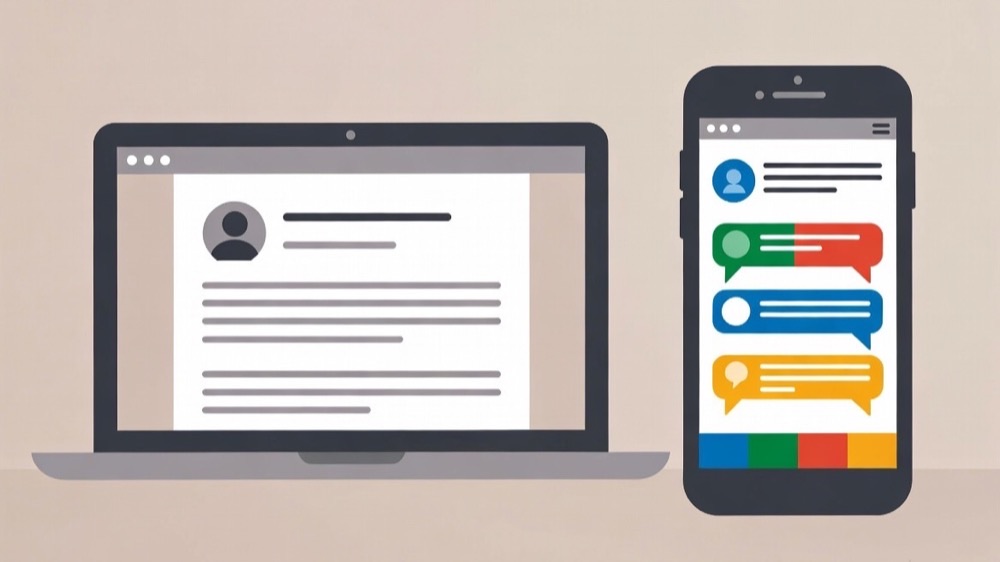
Social media is great for reach, but you don't own it: a platform can change its algorithm, limit your account or shut down. A blog on your own domain is yours, its posts keep getting found in search for years, and it has room for depth that a feed post doesn't. The best approach for most creators is both: publish the full post on your blog, then share short versions and links on social media and in your newsletter.
Frequently Asked Questions
What is a blog in simple terms?
A blog is a website, or part of one, where a person or organization publishes regular posts about recent events or topics that interest them, usually with the newest post first. Each entry is called a blog post.
What is a blog post?
A blog post is one dated article on a blog. WordPress.com defines posts as individual pieces of time-based content on a site, like articles or updates, unlike static pages such as About or Contact.
What is the difference between a blog and a website?
A blog is a type of website, or a section of one, that is updated regularly with dated posts. A standard website is mostly static pages, such as Home, About and Contact, that aren't tied to a date. Many business websites include a blog section.
What is the difference between a blog and a vlog?
A vlog is a video blog. A blog publishes written posts, usually with images, while a vlog publishes videos, typically on YouTube.
Who started the first blog?
Jorn Barger named Justin Hall's Links from the Underground as one early prototype of the weblog; Hall, author of Links.net, says he started on the web in January 1994. Barger coined "weblog" in December 1997, and Peter Merholz shortened it to "blog" in 1999.
How do bloggers make money?
Mainly through display ads such as Google AdSense, affiliate links such as Amazon Associates, sponsored posts (which the FTC says must be clearly disclosed), paid subscriptions on platforms like Substack or Ghost, and selling their own products or services.
How can I start a blog for free?
Sign up for a free platform such as Blogger, the WordPress.com free plan, Wix's free plan or Substack, pick a name, write your About page and publish your first posts. Free plans use a branded address (for example, a blogspot.com or wixsite.com subdomain), and WordPress.com shows its own ads on free sites.
Is blogging still worth it in 2026?
Yes, if you write for a specific audience and build direct reader relationships. WordPress alone runs 38.5% of all websites, but search clicks are harder to win: Pew found Google users clicked a traditional result in 8% of visits with an AI summary versus 15% without, so pair your blog with an email list.
How often should you post on a blog?
There's no proven ideal frequency. Post as often as you can while keeping quality high, whether that's twice a week or twice a month, and stay consistent so readers know when to expect new posts.
Conclusion
A blog is simply a website, or a section of one, built around regular, dated posts. It started as a handful of personal link lists in the 1990s and now ranges from family recipe sites to company newsrooms and paid newsletters. Starting one is free on Blogger, WordPress.com, Wix or Substack; making it worth reading takes a clear topic, honest and accurate posts, and a schedule you can keep.
Sources
- Oxford Learner's Dictionaries: blog
- WordPress: history
- W3Techs: content management system usage
- Pew Research Center: AI summaries and clicks (2025)
- Google AdSense: revenue share
- FTC Endorsement Guides (16 CFR Part 255)
Prices and program rules were checked on November 20, 2026, and change often; check each platform's site before you sign up.