Your Voice Is a Privacy Goldmine and AI Knows How to Exploit It
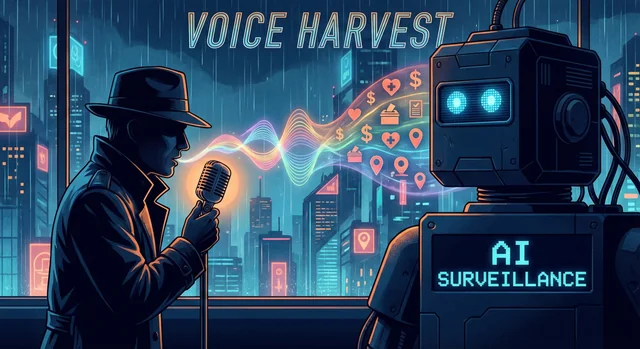
We obsess over cookies, trackers, and digital privacy settings. We put tape over webcams, use VPNs, and carefully manage browser permissions. But according to new research, the biggest data leak might be something far more personal and impossible to turn off — our own voice.
What Your Voice Reveals About You
A study published in the Proceedings of the IEEE by researchers at Finland's Aalto University has found that AI-powered voice analysis can extract a startling amount of personal information from how we speak. Beyond the obvious cues like fatigue or nervousness that humans can detect, computers can analyze intonation patterns and word choices to reveal your education level, political leanings, financial situation, emotional state, and even the presence of health or medical conditions.
"Automatic detection of anger and toxicity in online gaming and call centers is openly talked about," said lead author Tom Bäckström, an associate professor of speech and language technology at Aalto University. "But the increasing adaptation of speech interfaces towards customers tells me more ethically suspect or malevolent objectives are achievable."
The Risks Are Real and Growing
The implications are deeply concerning. If a corporation can understand your economic situation or emotional vulnerability from your voice, it opens the door to discriminatory pricing — imagine insurance companies setting premiums based on health cues detected in your voice during a phone call. Cybercriminals and stalkers could identify and track victims across platforms using voice signatures, exposing them to extortion or harassment.
What makes this especially alarming is the sheer volume of voice data we generate. Every voicemail we leave, every customer service call that is "recorded for training and quality purposes," and every voice memo creates a digital voice footprint as extensive as our browsing history.
The Tools Already Exist
While Bäckström says the technology isn't being widely exploited yet, the building blocks are already in place. "The reason for me talking about it is because I see that many of the machine learning tools for privacy-infringing analysis are already available, and their nefarious use isn't far-fetched," he warned. "If somebody has already caught on, they could have a large head start."
The researcher is emphatic that public awareness is critical. Without it, "big corporations and surveillance states have already won," he adds.
How We Can Protect Ourselves
The researchers propose several engineering approaches to safeguard voice privacy. The first step is measuring exactly what our voices give away — as Bäckström notes, it's hard to build protections when you don't know what you're protecting against.
This has led to the creation of the Security And Privacy In Speech Communication Interest Group, which provides an interdisciplinary framework for quantifying information contained in speech. Practical solutions include systems that convert speech to text for transmission, stripping away the revealing vocal characteristics while preserving the necessary information.
The Bottom Line
As voice interfaces become ubiquitous — from smart speakers to customer service bots — the need to protect our vocal privacy has never been more urgent. The same technology that makes voice assistants more natural and responsive could be weaponized to profile, manipulate, and exploit us. The question isn't whether the technology exists to do this — it already does. The question is whether we'll build the safeguards before it's too late.