Why the United Launch Alliance CEO Resignation Matters Now
United Launch Alliance CEO Resignation: What It Really Means for the Space Industry
As reported by major U.S. business media outlets, the United Launch Alliance CEO resignation of longtime leader Tory Bruno closes a significant chapter in America’s space launch history. But this isn’t just a leadership update—it’s a signal of how fast the commercial space race is evolving and how legacy players must adapt to survive.
Key Facts: A Condensed Overview
United Launch Alliance (ULA), a joint venture between Boeing and Lockheed Martin, confirmed that CEO Tory Bruno has stepped down after 12 years at the helm. The company appointed chief operating officer John Elbon as interim CEO while it searches for a permanent replacement.
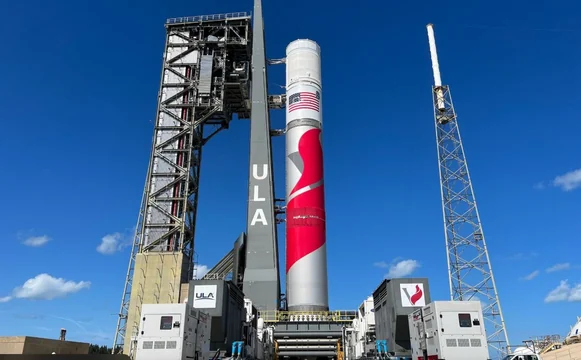
Bruno’s tenure included the long and complex development of Vulcan, ULA’s next-generation rocket, which finally flew in 2024 after nearly a decade of delays. His departure comes as SpaceX dominates launch cadence and Blue Origin begins to emerge as a more credible heavy-lift competitor.
Why the United Launch Alliance CEO Resignation Matters
At first glance, this may look like a routine executive transition. In reality, it reflects a deeper shift in the U.S. space launch market.
ULA was once the default choice for NASA and the Department of Defense. That dominance eroded as SpaceX proved it could launch faster, cheaper, and more frequently. Bruno was tasked with steering ULA through that disruption—modernizing operations while maintaining reliability for national security missions.
His exit suggests that phase of transformation is complete—or at least paused. Vulcan is operational, contracts are in place, and the company now needs a different kind of leader: one focused less on development and more on scaling, cost control, and competitiveness.
The Bigger Picture: SpaceX Changed the Rules
The underlying trend is clear. SpaceX didn’t just outperform rivals; it reset expectations.
Over the same decade Vulcan was in development, SpaceX refined reusable rockets, secured massive government contracts, and became the world’s most active launch provider. Blue Origin, though slower, is now showing tangible progress with New Glenn.
For ULA, this means competing in a market where reliability alone is no longer enough. Speed, price, and reusability are now baseline requirements—not differentiators.
Vulcan’s Role in ULA’s Next Chapter
One of the most important legacies of Bruno’s tenure is Vulcan itself. The rocket was designed to:
-
Replace aging Atlas and Delta systems
-
End U.S. reliance on Russian-built engines
-
Offer a platform that could eventually support reusability
Vulcan already has customers, including Amazon’s Project Kuiper and space startup Astrobotic. But success will depend on execution from here on out. Launch cadence, cost per mission, and reliability over multiple flights will determine whether Vulcan can truly compete with Falcon 9 and future SpaceX vehicles.
This is where new leadership becomes critical.
What Comes Next for ULA?
The United Launch Alliance CEO resignation opens several possible paths forward:
-
A commercial-first strategy
ULA may prioritize private-sector customers and partnerships, reducing dependence on government contracts. -
Accelerated reusability efforts
Matching SpaceX’s economics will likely require faster progress on reusable components. -
Operational streamlining
A new CEO could push for cultural and structural changes to reduce costs and improve launch frequency.
Whoever takes the permanent role will inherit a company at a crossroads—technically capable, but under intense competitive pressure.
What This Means for the Space Industry
For the broader industry, this transition reinforces one key lesson: space launch is no longer a slow-moving, government-driven sector. It’s a competitive commercial market where innovation cycles are measured in months, not years.
For investors, contractors, and startups, leadership changes at ULA are worth watching closely. They may signal shifts in pricing, partnerships, and long-term strategy across the entire launch ecosystem.
As Tory Bruno himself noted, his work bringing Vulcan into service is “complete.” Whether ULA’s next chapter is defined by resurgence or further erosion will depend on how boldly it responds to the realities of modern spaceflight.
Looking Ahead
The United Launch Alliance CEO resignation isn’t an ending—it’s a handoff. With Vulcan flying and competition fiercer than ever, ULA’s future will be shaped less by engineering milestones and more by strategic execution. The next CEO won’t just run a rocket company—they’ll define ULA’s relevance in a rapidly reshaped space economy.