Why the AI Boom Faces a Trust Crisis Unlike Any Tech Revolution Before
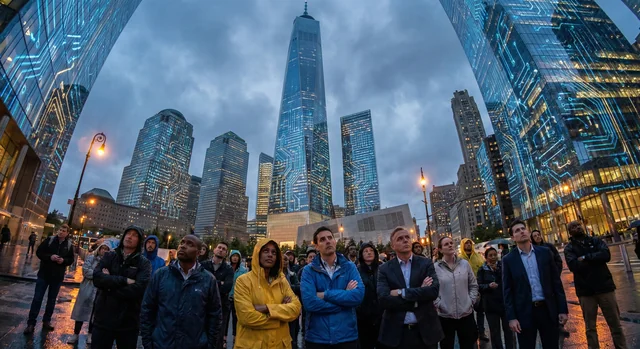
The artificial intelligence industry is experiencing something unprecedented in tech history: a boom that the public actively resents. While Nvidia's market cap soars to $4.5 trillion and tech CEOs promise a revolutionary future, a growing body of research shows that ordinary people aren't buying it — literally or figuratively.
The Numbers Paint a Stark Picture
According to a recent National Bureau of Economic Research (NBER) study, 80% of firms report that AI has had zero impact on their productivity or employment. Gallup data shows workplace AI adoption stuck at 38%, flatlined between Q3 and Q4 of 2025. Only 8% of consumers say they would pay extra for AI-powered features in products they already use.
These aren't the numbers of a technology that's changing the world. They're the numbers of a technology that Wall Street has priced as if it already has.
A Boom Without Public Support
What makes this moment historically unusual isn't just the gap between hype and reality — it's the active hostility. A Pew Research study found that 61% of Americans want more control over how AI affects their lives. Gallup reports that 80% favor AI regulation even if it means slower development. Economic historian William Quinn notes: "I can't remember a boom with such active hostility to it."
Compare this to the dot-com era. In the late 1990s, people were genuinely excited about the internet. They rushed to get email addresses, explored early websites, and bought stocks in companies they believed in. The AI boom has no such grassroots enthusiasm. Two-thirds of low-income workers and nearly half of high-income workers report feeling left behind by AI advancement.
Tech Leaders Are Starting to Notice
Even the industry's biggest cheerleaders are acknowledging the problem. OpenAI CEO Sam Altman has admitted that AI adoption is "surprisingly slow." Nvidia CEO Jensen Huang says critics are winning the "battle of narratives," calling the public skepticism "extremely hurtful." Microsoft CEO Satya Nadella has warned that AI could lose its "social permission" if the industry doesn't address public concerns.
The financial markets are beginning to reflect this unease. The S&P North American software index fell 15% in January 2026, suggesting investors are starting to question whether the AI revenue boom will materialize as quickly as promised.
The Bottom Line
The AI industry faces a paradox: it has more capital, more compute power, and more corporate backing than any technology in history, yet it lacks the one thing every successful tech revolution has needed — public enthusiasm. Until AI companies can demonstrate clear, tangible value to ordinary people rather than just quarterly earnings growth, the gap between Silicon Valley's AI vision and Main Street's AI reality will only widen.
The question isn't whether AI technology works. It's whether the industry can earn the trust it's been spending billions to demand.