Why South Korea Is the Most AI-Optimistic Country in the World
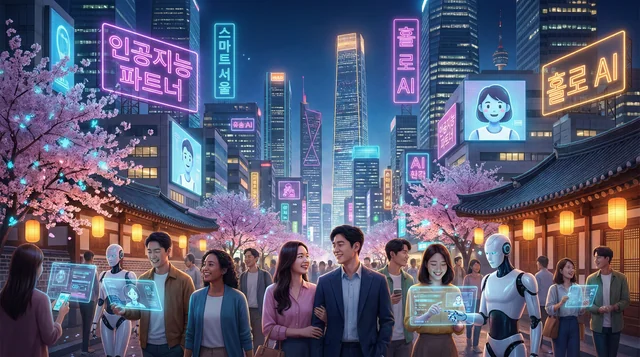
While much of the Western world wrestles with anxiety over artificial intelligence, South Korea has emerged as the most AI-optimistic country on the planet. A new Politico report from Seoul paints a striking picture of a nation that does not just tolerate AI but actively celebrates it.
The Numbers Tell the Story
Out of 25 countries surveyed by Pew Research Center, South Korea had the lowest percentage of people who said they were more concerned than excited about AI, at just 16 percent. Compare that to the United States, where 50 percent of respondents expressed more concern than excitement, tied with Italy for the highest among those surveyed.
The enthusiasm runs deep. Seventy percent of South Koreans believe AI will have a positive effect on society. More than half already use AI in their work, and 40 percent of the country's smartphone owners have the ChatGPT app installed.
Technology as Survival
The roots of this optimism trace back to South Korea's remarkable economic transformation. A country devastated by war in the 1950s rebuilt itself into a global powerhouse through technology, from semiconductors to automobiles to shipbuilding. For Koreans, adopting new technology has always been linked to survival and growth.
This mindset creates a powerful FOMO effect around AI. As one researcher put it, people feel that if they do not learn how to use AI while everyone else already has, they will be left behind. The emergence of AI is simply the latest chapter in a decades-long story of technological reinvention.
The Demographic Crisis Factor
South Korea also faces a demographic time bomb that makes AI adoption feel even more urgent. With drastically falling fertility rates, some analysts predict the peninsula's population could shrink to just 15 percent of its current size within 100 years. In worst-case scenarios, people over 65 could outnumber the working population within 75 years.
For many South Koreans, AI and robotics represent the answer to this existential crisis. The promised increase in efficiency could help a shrinking workforce maintain the same level of productivity, especially as physical AI and humanoid robots become more sophisticated.
Government Goes All In
The Korean government has been proactive in framing AI as an inevitable and essential tool for the future. South Korea's Basic Act on Artificial Intelligence prioritizes building an institutionalized framework for innovation, in contrast to the EU's regulation-forward approach that focuses on risk minimization and rights protection.
Not Without Tensions
Despite the overwhelming optimism, South Korea is not completely immune to AI anxiety. Nearly half of Korean respondents in one survey believed their jobs would be replaced by AI. Hyundai Motor Group's plan to deploy AI-driven humanoid robots in its factories has triggered strong backlash from the automaker's powerful labor union, with the possibility of strikes if robots are deployed.
Still, AI ethics advocates in South Korea acknowledge that changing the national attitude toward AI will be an uphill battle. The combination of economic history, demographic pressure, and government support creates a powerful current of optimism that is unlikely to reverse anytime soon.
The Bottom Line
South Korea may be offering the rest of the world a preview of where attitudes toward AI are headed. As other countries face similar demographic challenges and economic pressures, the incentives driving AI adoption in Korea could soon be found across the globe. The question is whether the enthusiasm will be justified, or whether the risks that critics warn about will eventually catch up.