Why Mill’s Food Waste Strategy Won Over Amazon and Whole Foods
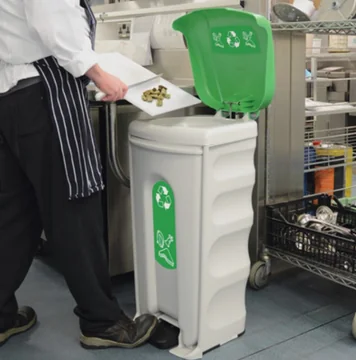
How Mill’s Food Waste Tech Is Reshaping Grocery Operations
Mill has secured a major commercial partnership with Amazon and Whole Foods—but the real story goes far beyond a single deal. This move highlights how food waste technology is quietly becoming a strategic advantage for retailers facing razor-thin margins, rising landfill costs, and growing sustainability pressure.
Rather than treating waste as an unavoidable expense, Mill is reframing it as a source of data, efficiency, and long-term resilience. That shift has implications not just for grocery chains, but for the entire food system.
Key Facts: What Actually Happened
Mill, a startup best known for its sleek household food waste bins, has signed an agreement with Amazon and Whole Foods. Starting in 2027, Whole Foods will deploy a commercial-scale version of Mill’s bins across its grocery stores.
These systems grind and dehydrate food waste from produce departments, reducing landfill fees while converting waste into animal feed for egg producers. At the same time, the bins collect detailed data on what gets discarded and why, giving Whole Foods a clearer picture of grocery store food waste patterns.
Mill’s leadership says this commercial expansion has been part of its plan since early fundraising rounds, not a sudden pivot.
Why This Matters: The Bigger Trend Behind the Deal
At a surface level, this looks like a sustainability win. Dig deeper, and it’s a signal of how operational technology is changing retail economics.
Food waste is one of the least visible but most expensive problems in grocery retail. Shrink—industry jargon for losses from waste or theft—can quietly erase profit margins. Mill’s approach uses AI waste management tools to identify whether discarded food could have remained on shelves, helping retailers reduce losses upstream.
More importantly, this partnership reflects a broader trend: enterprise adoption increasingly starts at home. Mill intentionally launched in the consumer market first, building trust, data, and brand familiarity. By the time enterprise conversations began, many decision-makers already understood the product firsthand.
That’s a subtle but powerful shift in how commercial food waste solutions are sold.
The Role of AI in Commercial Food Waste Solutions
One of Mill’s key differentiators is its use of artificial intelligence. Its bins rely on sensors and AI models to analyze discarded food in real time.
According to Mill’s leadership, advances in large language models dramatically reduced development time and cost. What once required dozens of engineers and massive budgets can now be achieved by smaller teams with better accuracy.
This matters because AI waste management isn’t just about automation—it’s about insight. Retailers gain visibility into waste patterns, supplier performance, and consumer demand mismatches. Over time, that data can influence ordering, pricing, and even store layout decisions.
In short, waste data becomes a competitive asset.
Strategic Insight: Why Diversification Is the Real Play
This deal also reveals something deeper about Mill’s business strategy. Relying on a single customer type—or a single revenue channel—creates fragility. Mill’s move into grocery, and its stated interest in municipal waste programs, shows a deliberate effort to build multiple “legs” of the business.
This mirrors a familiar lesson from tech history: companies that fail to diversify risk being disrupted overnight. By expanding beyond households into enterprise and municipal markets, Mill positions its food waste technology as infrastructure, not a niche gadget.
For retailers, that stability matters. Long-term partners need to outlast short-term trends.
Practical Implications for Retailers and Operators
For grocery chains and food service operators, this shift offers several takeaways:
-
Waste reduction is now a profit lever, not just a sustainability checkbox
-
AI-driven insights can reduce shrink, not just manage disposal
-
Consumer-tested products lower enterprise adoption friction
-
Data ownership around waste will matter more over time
Retailers that treat waste as a data problem—not just a logistics problem—will likely outperform those that don’t.
Conclusion: What Comes Next for Food Waste Technology
Mill’s partnership with Amazon and Whole Foods isn’t just about bins in grocery stores. It’s about redefining how food waste technology fits into modern retail strategy.
As regulatory pressure grows and margins tighten, waste visibility will become non-negotiable. Companies that invest early in commercial food waste solutions will gain operational clarity others can’t easily replicate.
The next phase won’t be about who wastes less—it will be about who learns faster from what they waste.
FAQ SECTION
Q: What is food waste technology in grocery stores?
A: Food waste technology uses hardware and software to process discarded food while collecting data on waste patterns. In grocery stores, it helps reduce landfill costs, cut shrink, and improve inventory decisions by showing what gets wasted and why.
Q: How does Mill’s system reduce grocery store food waste?
A: Mill’s bins grind and dehydrate food waste, lowering disposal fees. More importantly, built-in AI analyzes discarded items, helping stores identify preventable waste and adjust ordering or stocking before losses occur.
Q: Why are grocery chains investing in AI waste management now?
A: Rising landfill fees, tighter margins, and sustainability goals are forcing retailers to find efficiencies. AI waste management turns waste into actionable data, helping grocery chains reduce costs while meeting environmental targets.