What is Conscious Marketing: Principles and Benefits
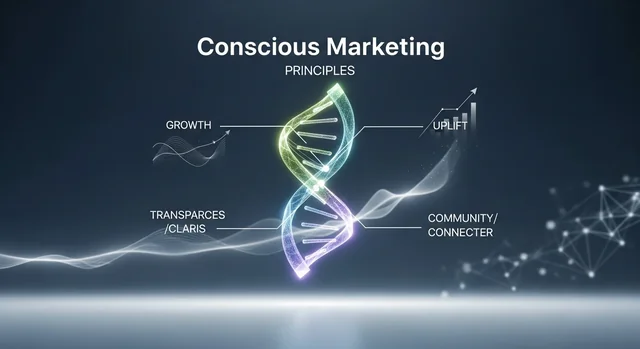
Conscious Marketing: Principles, Benefits, and 2025 Trends
In 2025, conscious marketing isn't just a trend; it's a necessity. Consumers are more aware than ever of the social and environmental impact of their purchasing decisions. They demand transparency, authenticity, and a genuine commitment to values from the brands they support. Conscious marketing, at its core, prioritizes these values, shifting the focus from pure profit to purpose and positive impact.
What is Conscious Marketing?
Conscious marketing is a holistic approach that integrates social responsibility, ethical business practices, and environmental sustainability into every aspect of a company's marketing strategy. It moves beyond simply selling a product or service; it's about building a brand that resonates with consumers on a deeper level by aligning with their values and beliefs.
In 2025, this means going beyond superficial "greenwashing" or performative activism. Consumers are savvy and can easily detect inauthenticity. Conscious marketing requires a genuine commitment to making a positive difference, backed by concrete actions and measurable results.
Related: 5 Most Popular Search Engines For Social Networks.
The Pillars of Conscious Marketing in 2025
Several key pillars support the foundation of a successful conscious marketing strategy in 2025:
1. Ethical Branding
Ethical branding is about building a brand identity that reflects your company's core values and commitment to ethical practices. This includes:
- Transparency: Openly communicating your company's sourcing, manufacturing processes, and impact on the environment and society.
- Fair Labor Practices: Ensuring fair wages, safe working conditions, and respect for human rights throughout your supply chain.
- Data Privacy: Protecting customer data and being transparent about how it is collected, used, and stored. Adhering to regulations like GDPR and CCPA is paramount.
- Honest Advertising: Avoiding misleading or deceptive marketing practices and being truthful about your products and services.
Examples of companies excelling in ethical branding in 2025 include Patagonia, known for its commitment to environmental activism and sustainable manufacturing, and Dr. Bronner's, which champions fair trade practices and organic ingredients. Their transparency reports are readily available online and deeply detailed. Newer companies like "Treeday," a carbon-offsetting subscription service, are also gaining traction with their transparent reforestation efforts.
See also: Mastodon Explained: A Practical Guide to the Twitter Alternative.
2. Sustainable Business Practices
Sustainable business practices are essential for building a truly conscious brand. This includes:
- Reducing Environmental Impact: Minimizing your carbon footprint, reducing waste, conserving resources, and using renewable energy. Carbon offsetting programs are readily available, but focusing on reduction is key.
- Sustainable Sourcing: Choosing suppliers who share your commitment to sustainability and ethical practices. Look for certifications like Fair Trade, B Corp, and USDA Organic.
- Circular Economy: Designing products that are durable, repairable, and recyclable, and implementing programs to encourage reuse and recycling. Companies like TerraCycle partner with brands to create recycling programs for traditionally non-recyclable items.
- Responsible Packaging: Using eco-friendly packaging materials and minimizing packaging waste. Companies are increasingly using biodegradable and compostable packaging options.
IKEA continues to invest heavily in sustainable materials and renewable energy, aiming for a circular business model. Unilever is also pushing for sustainable sourcing of its raw materials across its vast product portfolio.
3. Purpose-Driven Marketing
Purpose-driven marketing goes beyond simply promoting your products or services; it's about communicating your company's mission and values and inspiring consumers to join you in making a positive impact. This includes:
You might also be interested in How to Find Someone on Facebook with Only First Name and City.
- Supporting Social Causes: Partnering with non-profit organizations and donating a portion of your profits to worthy causes. Consumers are drawn to brands that actively support causes they care about.
- Empowering Communities: Investing in local communities and creating opportunities for disadvantaged groups.
- Promoting Social Change: Using your marketing platform to raise awareness about important social issues and advocate for positive change. Dove's "Real Beauty" campaign is a long-standing example, though it's been updated to reflect more inclusive definitions of beauty in 2025.
- Employee Engagement: Empowering employees to participate in volunteer activities and contribute to the company's social mission. Happy and engaged employees are key to authentic brand messaging.
Ben & Jerry's is a prime example of a company that consistently uses its platform to advocate for social justice and environmental protection. TOMS Shoes pioneered the "One for One" model, donating a pair of shoes for every pair purchased, though they've expanded their giving model to include other areas of need.
4. Authentic Communication
In 2025, authenticity is paramount. Consumers are bombarded with marketing messages and are increasingly skeptical of brands that appear disingenuous. Authentic communication involves:
Related: Why Social Media Follower Counts No Longer Guarantee Reach.
- Transparency: Being open and honest about your company's practices and values.
- Storytelling: Sharing your company's story and connecting with consumers on an emotional level.
- Two-Way Dialogue: Engaging with consumers in meaningful conversations and listening to their feedback. Social media is a key tool for this, but brands need to be prepared to address criticism and respond authentically.
- Influencer Marketing (Ethically): Partnering with influencers who genuinely align with your brand's values and are transparent about their sponsored content. Micro-influencers with niche audiences are often more effective than large-scale celebrity endorsements.
Buffer, a social media management platform, is known for its radical transparency, openly sharing its financials, salaries, and company culture. Smaller brands are finding success by partnering with micro-influencers who have a strong connection with their audience and genuinely believe in the product.
Benefits of Conscious Marketing in 2025
While conscious marketing requires a greater investment of time and resources, the benefits are significant:
- Increased Brand Loyalty: Consumers are more likely to support brands that share their values and are committed to making a positive impact.
- Improved Brand Reputation: A strong reputation for ethical behavior and social responsibility can attract new customers and improve employee morale.
- Enhanced Customer Engagement: Purpose-driven marketing can inspire consumers to connect with your brand on a deeper level and become brand advocates.
- Attracting and Retaining Talent: Employees are increasingly seeking to work for companies that align with their values. Conscious marketing can help attract and retain top talent.
- Increased Profitability: While it may seem counterintuitive, conscious marketing can actually lead to increased profitability by attracting a loyal customer base and reducing risks associated with unethical behavior. Consumers are often willing to pay a premium for products and services from brands they trust.
Conscious Marketing vs. Traditional Marketing: A Comparison
| Feature | Traditional Marketing | Conscious Marketing (2025) |
|---|---|---|
| Primary Goal | Maximize Profit | Create Value for All Stakeholders (Customers, Employees, Society, Environment) |
| Customer Focus | Target Audience | Empowered Individuals with Values |
| Communication | One-Way (Brand to Consumer) | Two-Way (Dialogue and Engagement) |
| Values | Profit-Driven | Purpose-Driven, Ethical, Sustainable |
| Transparency | Limited or Selective | Open and Honest |
| Impact | Often Ignores Social and Environmental Impact | Actively Seeks to Minimize Negative Impact and Create Positive Change |
| Time Horizon | Short-Term Gains | Long-Term Sustainability |
| Metrics | Sales, ROI | Social Impact, Customer Loyalty, Brand Reputation, Employee Engagement, as well as Sales and ROI |
2025 Trends in Conscious Marketing
Staying ahead of the curve is crucial in the ever-evolving landscape of conscious marketing. Here are some key trends to watch in 2025:
You might also be interested in Intentional Social App Tangle Aims to Redefine Online Life.
- Increased Demand for Transparency: Consumers will demand even greater transparency from brands, particularly regarding supply chains and environmental impact. Blockchain technology is increasingly being used to track products from origin to consumer, providing verifiable proof of ethical sourcing and sustainable practices.
- Focus on Circularity: The circular economy will become even more important, with consumers seeking out products that are designed for reuse, repair, and recycling. Brands that embrace circular business models will have a significant competitive advantage. Subscription services that offer product maintenance and repair are gaining popularity.
- Personalized Sustainability: Consumers will expect brands to offer personalized sustainability solutions that align with their individual values and lifestyles. AI-powered platforms can analyze consumer data to provide tailored recommendations for reducing their environmental footprint.
- The Rise of Regenerative Business: Moving beyond sustainability, regenerative business practices aim to actively restore and improve the environment and society. This includes practices like regenerative agriculture, which focuses on improving soil health and biodiversity. Companies like Patagonia are investing in regenerative agriculture initiatives.
- Accountability and Verification: Third-party certifications and independent audits will become increasingly important for verifying brands' claims of ethical behavior and sustainability. Consumers will rely on these certifications to make informed purchasing decisions. Look for certifications like B Corp, Fair Trade, and Cradle to Cradle.
- AI-Powered Ethical Marketing: Artificial intelligence will play a growing role in conscious marketing, helping brands to personalize their messaging, optimize their campaigns, and track their social and environmental impact. However, it's crucial to ensure that AI is used ethically and responsibly, avoiding bias and protecting consumer privacy.
- The Metaverse and Conscious Consumption: As the metaverse becomes more mainstream, brands will need to consider the ethical and environmental implications of their virtual products and experiences. Creating sustainable and inclusive virtual worlds will be essential for building trust with consumers. Brands are exploring virtual clothing and accessories made from sustainable materials and offering virtual experiences that promote social responsibility.
Implementing a Conscious Marketing Strategy: A Step-by-Step Guide
- Define Your Values: What are your company's core values? What social and environmental issues do you care about?
- Assess Your Current Practices: Evaluate your current business practices and identify areas where you can improve your ethical and sustainable performance.
- Set Measurable Goals: Set specific, measurable, achievable, relevant, and time-bound (SMART) goals for your conscious marketing initiatives.
- Develop a Communication Strategy: How will you communicate your values and initiatives to your target audience?
- Engage Your Employees: Get your employees involved in your conscious marketing efforts and empower them to be brand ambassadors.
- Partner with Like-Minded Organizations: Collaborate with non-profit organizations, suppliers, and other businesses that share your values.
- Measure and Report Your Progress: Track your progress towards your goals and report your results transparently to your stakeholders.
- Continuously Improve: Conscious marketing is an ongoing process. Continuously evaluate your efforts and look for ways to improve your impact.
FAQ: Conscious Marketing in 2025
- Q: Is conscious marketing just a fad?
- A: No. While specific tactics may evolve, the underlying principles of conscious marketing – ethical behavior, social responsibility, and environmental sustainability – are becoming increasingly important to consumers and are here to stay.
- Q: Is conscious marketing more expensive than traditional marketing?
- A: It can require a greater upfront investment, but the long-term benefits, such as increased brand loyalty and improved reputation, can outweigh the costs. Furthermore, cost savings can be realized through sustainable practices (e.g., reduced waste, energy efficiency).
- Q: How can I measure the ROI of conscious marketing?
- A: While traditional metrics like sales and ROI are still important, you should also track metrics such as customer loyalty, brand reputation, employee engagement, and social impact. Tools like B Impact Assessment can provide a comprehensive framework for measuring your company's social and environmental performance.
- Q: How can I avoid greenwashing?
- A: Be transparent about your company's practices and avoid making exaggerated or misleading claims. Back up your claims with data and third-party certifications. Focus on genuine improvements rather than superficial marketing tactics.
- Q: What are some examples of successful conscious marketing campaigns in 2025?
- A: Examples include Patagonia's continued commitment to environmental activism, IKEA's focus on sustainable materials and circular business models, and Ben & Jerry's advocacy for social justice. Look for campaigns that are authentic, transparent, and aligned with the company's core values.
- Q: How important is it to get employees on board with conscious marketing?
- A: It's crucial. Employees are your brand ambassadors. If they don't believe in your company's values, it will be difficult to create an authentic and credible conscious marketing strategy. Engage your employees in the process and empower them to contribute to your social and environmental initiatives.
- Q: What role does technology play in conscious marketing?
- A: Technology can play a significant role, from tracking supply chains with blockchain to personalizing sustainability solutions with AI. However, it's important to use technology ethically and responsibly, protecting consumer privacy and avoiding bias.
- Q: How can small businesses implement conscious marketing strategies?
- A: Small businesses can start by focusing on a few key areas that align with their values and resources. This could include sourcing local ingredients, reducing waste, supporting local charities, or being transparent about their business practices. Every little bit helps, and consumers appreciate genuine efforts, regardless of scale.
- Q: What are the biggest challenges facing conscious marketers in 2025?
- A: Some of the biggest challenges include combating greenwashing, measuring the ROI of conscious marketing initiatives, maintaining authenticity, and keeping up with the ever-evolving landscape of consumer expectations and technological advancements.
In conclusion, conscious marketing is no longer a niche strategy; it's the future of marketing. By embracing ethical branding, sustainable business practices, purpose-driven marketing, and authentic communication, companies can build stronger relationships with consumers, improve their brand reputation, and create a more positive impact on the world. In 2025, the brands that prioritize purpose over profit will be the ones that thrive.