3 Ways the Cloud Helps Protect Personal Data
By Jaspal Singh
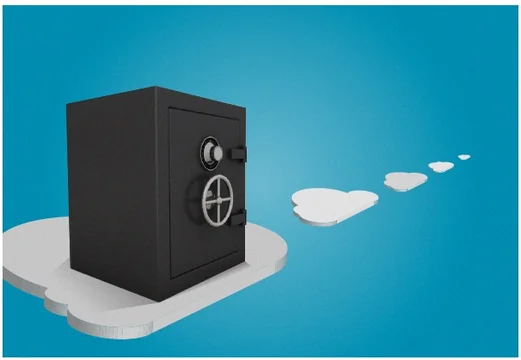
If you're like most people, your nine-to-five job requires you to use a cloud-based service to manage your workflow, contacts, or other parts of your daily routine. But, is using the cloud valuable outside of the enterprise context? You may be surprised just how effective the cloud can be for personal use.
Here are the three key ways that the cloud protects your personal data.
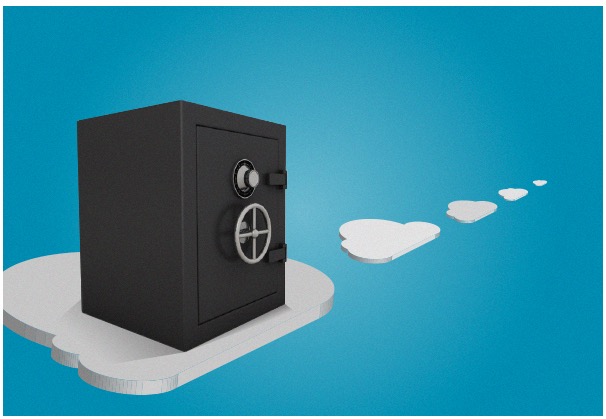 Image via Flickr by perspec_photo88
Whenever you store sensitive data online, one of the best ways to secure it is to translate that data to "ciphertext" that can only be deciphered using a secure key. These keys are sufficiently complex that they simply can't be guessed or hacked by those trying to get access to your data.
Encryption for personal storage in the cloud is nearly — but not entirely — universal. Because of the few exceptions, it remains important to educate yourself about cloud security for personal use. The single most important thing is that you learn to investigate the companies you work with and decide which ones are worthy of your trust.
Since using encryption can be fairly expensive, there are disreputable providers who either skimp on encryption or go without it entirely. Other providers use less secure but more cost-effective methods, like data obfuscation or automated data redaction. These methods can have varied success depending on how exactly they are deployed, so educating yourself remains key.
Image via Flickr by perspec_photo88
Whenever you store sensitive data online, one of the best ways to secure it is to translate that data to "ciphertext" that can only be deciphered using a secure key. These keys are sufficiently complex that they simply can't be guessed or hacked by those trying to get access to your data.
Encryption for personal storage in the cloud is nearly — but not entirely — universal. Because of the few exceptions, it remains important to educate yourself about cloud security for personal use. The single most important thing is that you learn to investigate the companies you work with and decide which ones are worthy of your trust.
Since using encryption can be fairly expensive, there are disreputable providers who either skimp on encryption or go without it entirely. Other providers use less secure but more cost-effective methods, like data obfuscation or automated data redaction. These methods can have varied success depending on how exactly they are deployed, so educating yourself remains key.
1. Data Encryption
Image via Flickr by perspec_photo88
Whenever you store sensitive data online, one of the best ways to secure it is to translate that data to "ciphertext" that can only be deciphered using a secure key. These keys are sufficiently complex that they simply can't be guessed or hacked by those trying to get access to your data.
Encryption for personal storage in the cloud is nearly — but not entirely — universal. Because of the few exceptions, it remains important to educate yourself about cloud security for personal use. The single most important thing is that you learn to investigate the companies you work with and decide which ones are worthy of your trust.
Since using encryption can be fairly expensive, there are disreputable providers who either skimp on encryption or go without it entirely. Other providers use less secure but more cost-effective methods, like data obfuscation or automated data redaction. These methods can have varied success depending on how exactly they are deployed, so educating yourself remains key.