Waymo Robotaxi Blackout Incident Raises Key Safety Questions
Waymo Robotaxi Service Returns After San Francisco Blackout: What It Really Means
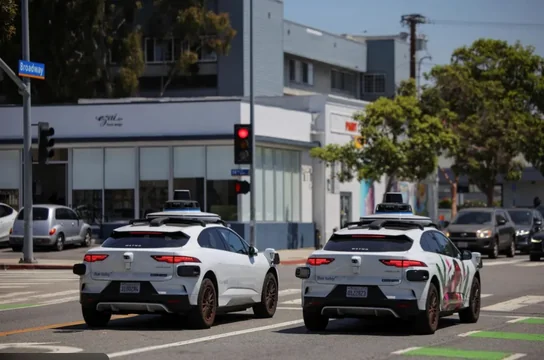
Waymo has resumed its Waymo robotaxi service in San Francisco after a sudden citywide blackout caused several autonomous vehicles to stall in traffic. While the incident was resolved within a day, it sparked a much bigger conversation about how self-driving cars respond when real-world infrastructure fails.
This wasn’t just a temporary service pause. It was a live stress test for autonomous transportation in one of the most complex urban environments in the world.
Key Facts: What Happened in San Francisco
On Saturday evening, a major power outage swept across parts of San Francisco following a fire at a Pacific Gas & Electric substation. Roughly 120,000 customers lost power, including traffic signals and public transit systems.
During the blackout:
-
Multiple Waymo robotaxis stopped at intersections.
-
Traffic lights across the city went dark.
-
Waymo temporarily suspended its San Francisco operations.
-
Most active rides still reached their destinations.
-
Service fully resumed by Sunday afternoon.
Waymo later explained that while its vehicles are programmed to treat dark traffic lights as four-way stops, the scale of the outage created unusually complex conditions that required longer decision-making times.
Why This Matters for Autonomous Vehicles in San Francisco
At first glance, this looks like a minor operational hiccup. But for anyone tracking autonomous vehicles in San Francisco, the incident highlights a deeper issue: self-driving cars don’t operate in isolation. They depend on city infrastructure that isn’t always reliable.
Human drivers often improvise during blackouts—making eye contact, inching forward, or following informal cues. Autonomous systems, by contrast, prioritize caution and rules-based logic. That’s good for safety, but it can lead to gridlock when uncertainty spikes.
This moment matters because it shows where autonomy still needs refinement—not in perfect conditions, but in chaotic, imperfect ones.
Infrastructure Is the Hidden Weak Point
The blackout exposed a truth the industry doesn’t always emphasize: autonomous vehicles are only as resilient as the systems around them.
Key challenges revealed include:
-
Non-functioning traffic signals at scale
-
Conflicting human driving behavior
-
Limited real-time infrastructure feedback
-
High-density urban intersections
Waymo acknowledged the issue, noting it is “focused on rapidly integrating the lessons learned from this event.” That response signals an important shift—from testing autonomy in controlled scenarios to adapting it for widespread infrastructure failures.
What Comes Next for the Waymo Robotaxi Service
Despite the disruption, Waymo’s broader trajectory remains strong. A leaked Tiger Global Management letter revealed the company now delivers around 450,000 robotaxi rides per week, nearly double earlier figures.
Short-term, expect Waymo to:
-
Improve blackout and signal-failure handling
-
Refine intersection decision models
-
Coordinate more closely with city agencies
Long-term, this could accelerate smarter infrastructure—such as vehicle-to-infrastructure (V2I) communication—where traffic systems and autonomous cars share real-time data.
In other words, the future of self-driving cars safety may depend as much on cities upgrading their systems as on companies upgrading their algorithms.
Practical Takeaways for Cities and Riders
For city planners, the lesson is clear: autonomy-ready cities need redundancy. Backup power for traffic signals and better emergency coordination could prevent similar gridlock.
For riders, this incident reinforces a key reality: robotaxis are cautious by design. Delays may happen, but that caution is also what keeps passengers safe during unpredictable events.
For the industry as a whole, the blackout wasn’t a failure—it was feedback.
The Bigger Picture
The return of the Waymo robotaxi service after the San Francisco blackout shows that autonomous vehicles are moving from novelty to normalcy. With that shift comes accountability, transparency, and the need to perform under pressure.
Moments like this don’t slow the autonomous future—they shape it. The companies that learn fastest from real-world friction will be the ones that ultimately earn public trust.
FAQ SECTION
Q: Why did Waymo robotaxis stop during the blackout?
A: Waymo robotaxis paused because many traffic lights were non-functional citywide. While the cars treat dark signals as four-way stops, the unusually large number of affected intersections caused longer decision times.
Q: Is the Waymo robotaxi service safe after this incident?
A: Yes. Waymo stated that most trips were completed successfully and no injuries were reported. The company is using the event to improve how its vehicles handle large-scale infrastructure failures.
Q: Will future blackouts cause the same problem?
A: Less likely. Waymo has indicated it is integrating lessons from the blackout, which should improve vehicle behavior during similar events.