Waymo Robotaxi Accident Raises School Zone Safety Questions
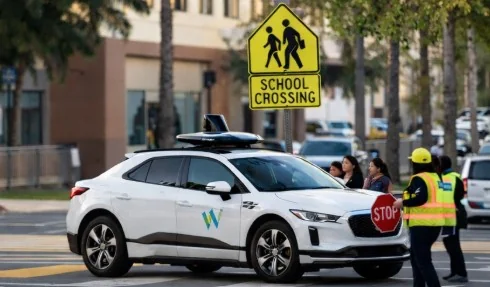
Waymo Robotaxi Accident: Why a Single Incident Matters More Than It Seems
A Waymo robotaxi struck a child near an elementary school in Santa Monica earlier this month. While the injuries were thankfully described as minor, the incident has sparked a much larger conversation—one that goes far beyond a single crash.
This Waymo robotaxi accident arrives at a critical moment for autonomous vehicles, raising urgent questions about safety, trust, and whether self-driving systems are truly ready to operate in complex environments like school zones.
Key Facts: What Happened in Santa Monica
The incident occurred on January 23, just two blocks from an elementary school during morning drop-off hours. According to Waymo and the National Highway Traffic Safety Administration (NHTSA):
-
The robotaxi was traveling at approximately 17 mph before braking hard.
-
The vehicle made contact with the child at about 6 mph.
-
Waymo stated the child “suddenly entered the roadway” from behind a parked SUV.
-
Emergency services were called immediately, and the child was able to walk away.
The NHTSA has since opened a formal investigation to assess whether the autonomous vehicle exercised appropriate caution in a high-risk school environment.
Why This Waymo Robotaxi Accident Matters
At face value, this may appear to be a low-speed collision with limited harm. But context changes everything.
School zones are among the most unpredictable driving environments. Children move erratically, visibility is often blocked by parked cars, and traffic patterns shift rapidly. Human drivers are expected to slow down, anticipate mistakes, and err on the side of extreme caution.
The core issue isn’t just whether the robotaxi reacted quickly—it’s whether it behaved appropriately for the setting.
This accident also follows ongoing investigations into Waymo vehicles allegedly passing stopped school buses illegally in multiple cities. Together, these incidents suggest a broader challenge: teaching autonomous systems not just to follow rules, but to understand social driving norms.
Autonomous Vehicle Safety vs. Human Drivers
Waymo has emphasized that its internal models suggest a human driver would have hit the child at roughly 14 mph—more than twice the robotaxi’s speed at impact. While that comparison sounds reassuring, it raises a critical question:
Should autonomous vehicles be judged by human standards—or held to higher ones?
Unlike humans, self-driving cars don’t get distracted, tired, or emotional. The promise of autonomous vehicle safety has always been that machines can outperform people, especially in high-risk scenarios.
When incidents like this occur, they challenge that promise and invite closer regulatory scrutiny.
What Happens Next for Waymo and Robotaxis
The NHTSA’s Office of Defects Investigation is now examining whether Waymo’s systems are adequately designed for environments with vulnerable road users. Possible outcomes include:
-
Software updates to improve school-zone behavior
-
Operational restrictions in high-risk areas or specific times
-
Stricter federal guidelines for autonomous vehicles near schools
In the short term, Waymo says it will cooperate fully with investigators. In the long term, this could shape how robotaxis are deployed nationwide.
For cities, policymakers, and parents, this incident reinforces the need for clear rules around where and when autonomous vehicles can operate.
The Bigger Picture: Trust Is the Real Test
Public trust is the most fragile—and essential—component of self-driving technology. Each Waymo robotaxi accident, even a minor one, influences how communities perceive autonomous vehicles.
The technology may be improving, but acceptance depends on transparency, accountability, and demonstrable safety improvements after incidents occur.
If autonomous vehicles are to coexist with children, cyclists, and pedestrians, they must prove they can handle the most chaotic situations better than humans—not just as well.
Looking Ahead
This incident will not halt the progress of robotaxis, but it may slow it down—and that’s not necessarily a bad thing. Slower, more deliberate deployment could lead to safer outcomes and stronger public confidence.
The future of self-driving cars won’t be decided by flawless performance, but by how responsibly companies respond when things go wrong.
Frequently Asked Questions About the Waymo Robotaxi Accident
Q: What caused the Waymo robotaxi accident?
A: According to Waymo, the child entered the road suddenly from behind a parked SUV, limiting visibility. The robotaxi braked immediately but still made contact at low speed.
Q: Was the child seriously injured?
A: No. The injuries were described as minor, and the child was able to stand and walk shortly after the incident.
Q: Is the NHTSA investigating Waymo?
A: Yes. The NHTSA has opened an investigation to determine whether the vehicle exercised appropriate caution near a school during drop-off hours.
Q: Are robotaxis allowed near schools?
A: Currently, robotaxis are permitted on public roads, including near schools, but incidents like this may lead to tighter regulations or operational limits.