US Work Visa Delays: Why Tech Employees Are Staying Put
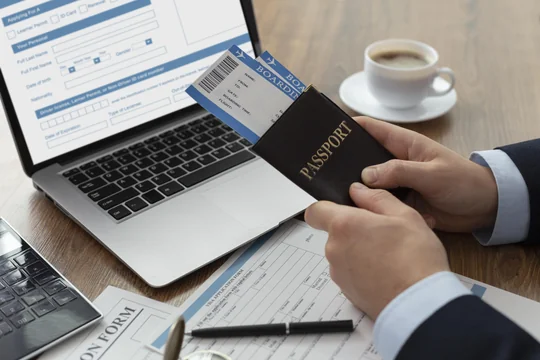
US Work Visa Delays Are Reshaping Travel Plans for Tech Workers
Global mobility has become far more complicated for tech workers on U.S. visas. In recent weeks, employees at Google and Apple have been quietly advised to avoid international travel if they need a visa stamp to re-enter the United States.
The warning is more than a temporary inconvenience. It highlights a deeper shift in how U.S. visa applications are being reviewed—and why international professionals may need to rethink travel, career planning, and even employer choice in 2025.
Key Facts: What We Know So Far
According to Business Insider, immigration law firms representing Google and Apple—BAL Immigration Law and Fragomen—circulated internal guidance urging caution. Employees without a valid H-1B visa stamp were told to delay international travel due to unpredictable and extended processing times.
A U.S. State Department spokesperson confirmed embassies are prioritizing “thoroughly vetting each visa case above all else.” Meanwhile, Salon reports that hundreds of Indian professionals had embassy appointments canceled or rescheduled after new social media screening requirements were introduced.
This isn’t the first time major tech employers have sounded the alarm. Similar warnings surfaced last fall following proposed policy changes that increased employer costs for H-1B applications.
Why US Work Visa Delays Matter to Tech Professionals
For workers on visas, travel risk is no longer theoretical. A routine trip home for a wedding, family emergency, or visa renewal can now turn into weeks—or months—of uncertainty.
The bigger issue is predictability. Highly skilled professionals plan their lives around reliable timelines. When re-entry becomes uncertain, it affects everything from housing leases to project ownership at work.
For employers, these delays disrupt global teams and weaken the U.S. advantage in attracting top international talent. When mobility slows, innovation often follows.
The Bigger Picture: A Shift Toward Stricter Scrutiny
The current wave of US work visa delays reflects a broader trend: increased scrutiny rather than outright restriction. Governments aren’t necessarily issuing fewer visas, but they are spending more time evaluating each case.
Social media vetting, additional documentation, and appointment backlogs all contribute to slower outcomes. While officials frame this as a security-first approach, the practical result is friction for law-abiding professionals who already meet strict eligibility standards.
A contrarian view worth noting: companies with robust immigration support may become even more attractive employers. In a high-friction system, guidance and legal resources are no longer perks—they’re necessities.
Practical Implications and Smart Next Steps
If you’re a tech worker on a visa, the immediate takeaway is caution. Short-term travel plans should be evaluated with immigration counsel, not assumptions based on past experience.
Here are a few practical actions professionals are already taking:
-
Delaying non-essential international travel
-
Securing visa renewals earlier than usual
-
Keeping digital and legal documentation meticulously updated
-
Choosing employers with strong immigration infrastructure
Longer term, we may see more remote-friendly roles or regional hubs outside the U.S. as companies hedge against ongoing visa processing delays in the USA.
What This Means Going Forward
US work visa delays are unlikely to disappear overnight. If anything, the system is signaling that “slow but strict” is the new normal. For tech professionals, adaptability will be key—both in career decisions and personal planning.
For policymakers, the challenge is balance. Without clearer timelines and capacity improvements, the U.S. risks losing its edge in the global competition for skilled talent. The next year will reveal whether efficiency catches up with scrutiny.
FAQ: US Work Visa Delays Explained
Q: Why are US work visa delays getting longer now?
A: Processing is slower because embassies are conducting more detailed reviews, including social media checks, while dealing with appointment backlogs and staffing limits.
Q: Can H-1B workers travel internationally right now?
A: Yes, but only with caution. If you need a new visa stamp to re-enter the U.S., travel carries a higher risk of extended delays.
Q: Are these delays affecting only tech workers?
A: No. While tech workers are highly visible, anyone on employment-based visas may experience similar processing delays.
Q: Will US work visa delays improve in 2025?
A: It’s uncertain. Unless embassy capacity increases or rules are streamlined, delays may continue in the near term.