US Plans "freedom.gov" Portal to Help Europeans Bypass Content Bans — Including Hate Speech Rules
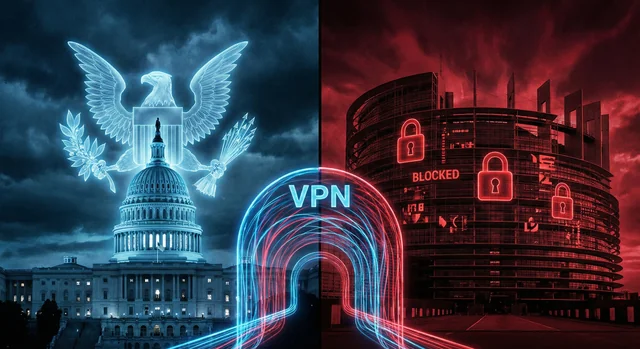
The Trump administration is building an online portal at freedom.gov that would allow people in Europe — and elsewhere — to access content their governments have banned, including alleged hate speech and terrorist propaganda. The plan was exclusively reported by Reuters and marks a dramatic new front in the growing conflict between Washington and Brussels over free speech online.
What Is freedom.gov?
According to three sources familiar with the plan, the U.S. State Department portal is being developed under Undersecretary for Public Diplomacy Sarah Rogers. Key details:
- Hosted at freedom.gov (the domain was registered on January 12)
- Officials discussed including a VPN function to make user traffic appear to originate in the U.S.
- User activity on the site will not be tracked
- Launch was planned for last week's Munich Security Conference but was delayed
- As of Wednesday, the site showed the National Design Studio's logo, the words "fly, eagle, fly" and a log-in form
DOGE Connection
Also involved in the portal effort is Edward Coristine, a former member of Elon Musk's job-slashing Department of Government Efficiency (DOGE). Coristine currently works with the National Design Studio, created by Trump to redesign government websites. Reuters was unable to reach Coristine for comment.
The Free Speech Flashpoint
The Trump administration has made challenging European content moderation a core part of its foreign policy. U.S. officials have denounced EU policies for allegedly suppressing right-wing voices, including in Romania, Germany and France. Policies in the crosshairs include:
- EU Digital Services Act — restricts availability of illegal hate speech and requires rapid removal of terrorist propaganda
- Britain's Online Safety Act
- Germany's 2024 content removal orders (482 terrorism-related removal orders; 16,771 pieces of content taken down)
The EU's approach to hate speech evolved from efforts to prevent any resurgence of extremist propaganda that fueled Nazism. The U.S. Constitution, by contrast, protects virtually all expression.
X, owned by Trump ally Elon Musk, was hit with a €120 million fine in December for noncompliance with EU content rules.
Washington vs. Brussels: A New Battlefield
Former State Department official Kenneth Propp, now at the Atlantic Council's Europe Center, called freedom.gov "a direct shot" at European rules and warned it "would be perceived in Europe as a U.S. effort to frustrate national law provisions."
The State Department, for its part, denied having a censorship-circumvention program specifically targeting Europe, but acknowledged digital freedom as a priority: "That includes the proliferation of privacy and censorship-circumvention technologies like VPNs." It also denied that lawyers had raised concerns internally — though sources told Reuters otherwise.
A Historic Parallel — With a Twist
Before Trump's second term, the U.S. government helped fund commercial VPNs and internet freedom tools for users in China, Iran, Russia, Belarus, Cuba and Myanmar — authoritarian regimes the U.S. was trying to counter. Now those same tools appear to be aimed at democratic allies in Europe, raising serious questions about the intended message.
The Bottom Line
Freedom.gov is either a principled stand for free expression or a deliberately provocative escalation of the US-Europe culture war over online speech — depending who you ask. What's not in dispute: if launched, it would put the U.S. government in the unprecedented position of appearing to encourage European citizens to bypass their own laws. The fallout from that will be significant.