US National Cyber Director Launches Major Push to Identify Critical Infrastructure Vulnerabilities
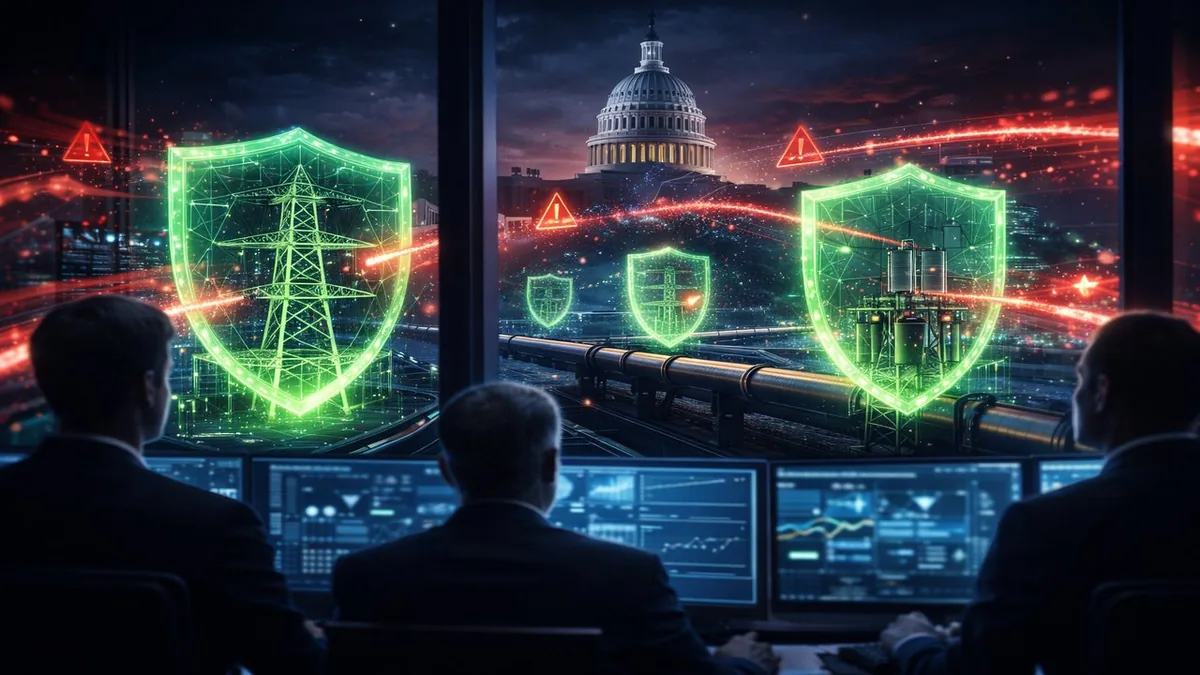
The United States National Cyber Director Sean Connors is leading a significant new effort to map and remediate security vulnerabilities across the country's critical infrastructure. The initiative targets power grids, water systems, financial networks, and communications infrastructure — sectors repeatedly flagged as dangerously exposed to sophisticated attacks. The urgency comes after recent supply chain attacks demonstrated that even leading tech companies' developer tools are not safe from sophisticated intrusions.
What the National Cyber Director Initiative Involves
The effort involves coordinated assessments across multiple federal agencies and private sector partners to identify the most critical and exploitable vulnerabilities in essential US systems. According to CISA, the Cybersecurity and Infrastructure Security Agency, proactive vulnerability identification is now a top national security priority. Officials say the focus is not just on cataloguing risks but on pushing operators to patch known weaknesses and implement stronger network segmentation and monitoring capabilities.
The program builds on previous executive orders requiring critical infrastructure operators to meet minimum cybersecurity standards, but takes a more aggressive posture — actively hunting for vulnerabilities before adversaries can exploit them. This is a significant escalation of US government cybersecurity posture.
Why Critical Infrastructure Is Under Threat Right Now
The timing reflects growing alarm inside the US government about adversary cyber capabilities. The Salt Typhoon intrusion into US telecom networks, the Volt Typhoon campaign targeting power grid infrastructure, and ransomware attacks on water utilities have all demonstrated that critical infrastructure protection remains dangerously inadequate in many sectors.
Director Connors has warned that adversaries are not just looking to steal data — they are pre-positioning inside US critical systems to potentially cause disruption during a future conflict or crisis. This pre-positioning strategy mirrors the software supply chain approach used in recent attacks, where malicious actors embed access points quietly and wait. European governments have taken similar protective stances — notably France's decision to migrate government systems to Linux to reduce dependency on potentially vulnerable foreign software.
The Challenges of Securing Aging Infrastructure
Cybersecurity experts have long noted the difficulty of securing critical infrastructure, much of which runs on legacy operational technology systems designed decades before modern threats existed. Patching these systems is expensive, technically complex, and operationally risky — shutting down a power grid segment to apply security updates, for example, carries its own real-world consequences.
There is also the coordination challenge: critical infrastructure spans both public and private sectors, and compelling private companies to prioritize security investments has historically required a combination of regulation, incentives, and incident-driven pressure. The National Cyber Director initiative is the government's most direct attempt yet to bridge that gap.
Frequently Asked Questions
Who is the US National Cyber Director?
Sean Connors serves as the US National Cyber Director, leading the federal government's cybersecurity strategy. The Office of the National Cyber Director coordinates cybersecurity policy across federal agencies and with the private sector to protect US critical infrastructure.
What is Volt Typhoon and why is it a threat?
Volt Typhoon is a Chinese state-sponsored hacking group that has been pre-positioning inside US critical infrastructure networks — particularly power grids and communications systems — to enable potential disruption during a future geopolitical crisis rather than for immediate data theft.
Which US critical infrastructure sectors are most at risk from cyberattacks?
Power grids, water treatment systems, financial networks, and telecommunications infrastructure are considered the most vulnerable sectors. Many still run legacy operational technology systems that lack modern cybersecurity controls and cannot be easily patched without operational disruption.
The Bottom Line
The National Cyber Director's initiative is a recognition that the United States cannot afford a reactive posture on critical systems security. With adversaries actively pre-positioning inside US networks, getting ahead of exploitable weaknesses has become a matter of national security — not just good IT hygiene.