US Consumer Sentiment Just Hit a Record Low and Inflation Fears Are the Reason
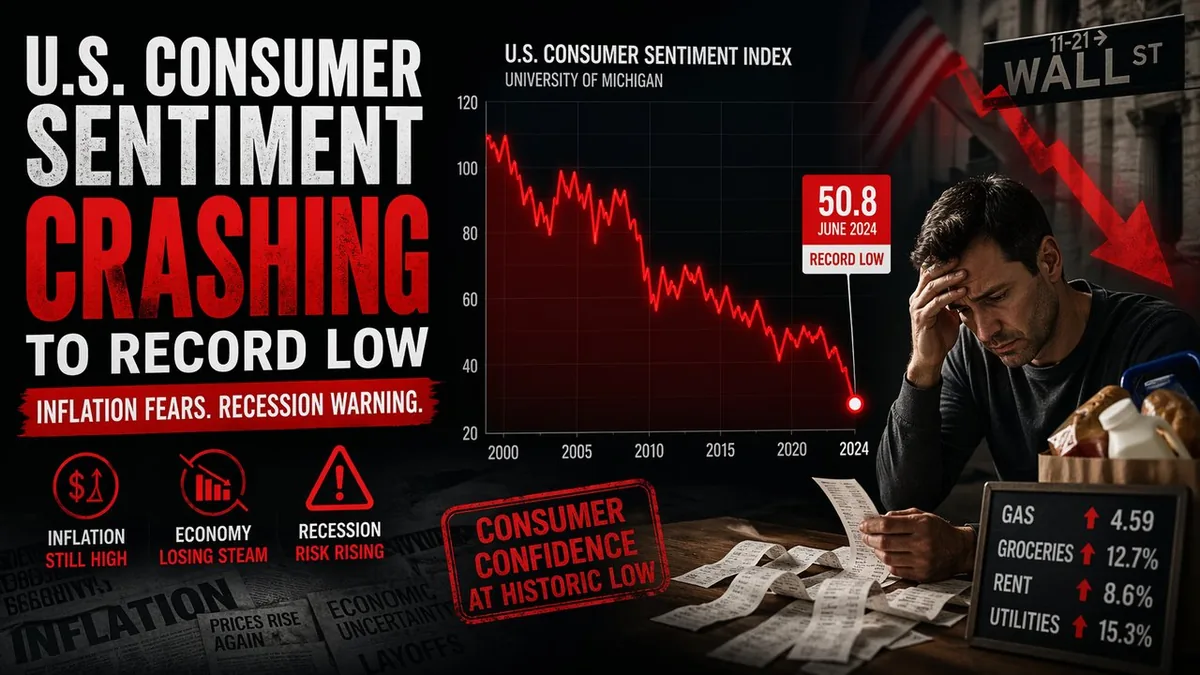
US consumer sentiment has fallen to a record low, driven by persistent inflation fears that are reshaping how Americans feel about their financial future — and sending a warning signal about the trajectory of the US economy at a moment when the Federal Reserve is already navigating a delicate policy path.
What the Data Shows
The consumer sentiment index, tracked by the University of Michigan, measures how confident American households feel about their personal finances, the broader economy, and their willingness to make major purchases. When it hits record lows, it historically precedes reduced consumer spending — which accounts for approximately 70% of US GDP. A sentiment collapse of this magnitude cannot be dismissed as a lagging indicator or statistical noise.
The primary driver cited in the survey is inflation expectations. Even as headline CPI has moderated from its 2022 peaks, the cumulative price increases of the past several years have permanently reset consumer perceptions of purchasing power. Groceries, housing, insurance, and services all cost substantially more than they did three years ago — and sentiment surveys capture the lived experience of that reality, not the Fed's preferred inflation measures.
What Record-Low Sentiment Means for the Economy
Consumer sentiment is a leading indicator of spending behavior. When sentiment falls sharply, consumers typically pull back on discretionary spending — restaurants, travel, electronics, home improvements — while maintaining essential purchases. This spending retrenchment eventually flows through to corporate revenues and, ultimately, employment figures.
The current reading is particularly concerning because it occurs against a backdrop of still-low unemployment. Normally, low unemployment sustains consumer confidence even when other economic indicators soften. The fact that sentiment has collapsed despite a relatively tight labor market suggests that price-level anxiety — not job insecurity — is the dominant psychological driver. That's a different kind of problem for policymakers to solve.
The Fed's Dilemma
The Federal Reserve monitors consumer sentiment as one input into its economic outlook. Record-low sentiment strengthens the case for rate cuts — a weakening consumer is the kind of demand destruction the Fed uses to justify easing. But the same inflation fears driving sentiment lower also give the Fed reason to pause: cutting rates aggressively when consumers already expect prices to keep rising could become self-fulfilling.
My Take
Record-low consumer sentiment is the economy telling you something that GDP and employment numbers obscure. Americans have jobs. They are still spending. But they feel terrible about money. That gap between statistical health and lived experience is a political and economic time bomb. The Fed can manage inflation data; it cannot easily manage the psychology of a population that has experienced three years of compounding price increases and no longer trusts that stability is around the corner.
Related Articles
- The DOJ Is Expected to Drop Its Criminal Probe of Fed Chair Powell
- An ECB Policymaker Just Hinted That a Rate Increase May Be Necessary
- US Dollar Posts Weekly Gain as Iran Talks Stall