US Consumer Sentiment Hits a Record Low as Americans Feel the Economic Impact of the Iran War
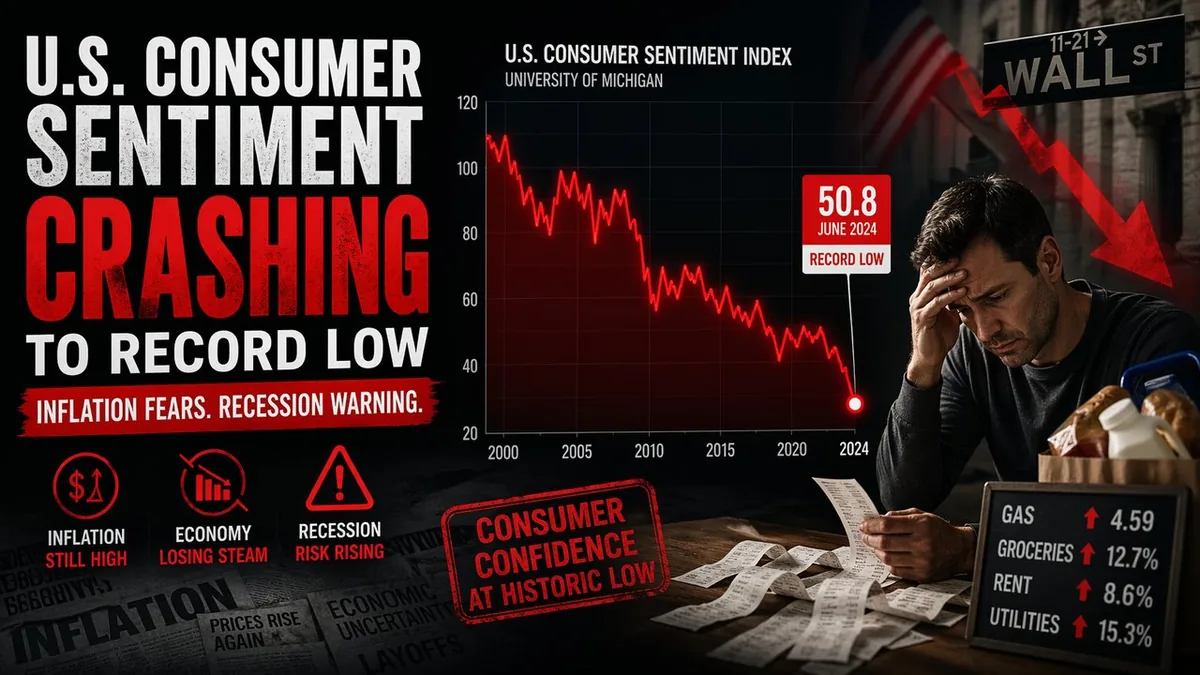
US consumer sentiment has fallen to a record low, according to the latest survey data, as the economic impact of the ongoing Iran conflict and persistent inflation fears converge on household confidence. When Americans feel this negative about the economy, it has measurable downstream effects — on spending, on savings behavior, and on how politicians and central bankers respond.
What the Data Shows
Consumer sentiment indices measure how people feel about current economic conditions and near-term expectations. A record low means more Americans than ever on record feel bad about both — right now and looking ahead. This is not just a statistical blip. It reflects a sustained period of elevated prices, geopolitical uncertainty, and the psychological weight of an active military conflict that has disrupted oil markets and global trade routes.
The Iran War's Economic Footprint
The US-Iran conflict has had several channels of economic impact: oil price volatility, insurance cost increases on shipping through the Persian Gulf, supply chain disruptions affecting goods moving through the region, and the general uncertainty premium that markets price in during active military conflicts. These are not abstract — they show up in gas prices, in grocery costs, and in the interest rates businesses pay to borrow.
What This Means for Policy
Record-low consumer sentiment creates political and monetary policy pressure. The Fed must weigh economic pessimism against still-elevated inflation — a situation where the usual tools cut in conflicting directions. For the administration, record-low sentiment is a significant electoral liability. Expect aggressive messaging around economic strength and conflict resolution progress in response.
My Take
Record sentiment lows tend to be more predictive of behavior change than polls about discrete issues. When people feel this bad economically, they spend less, invest less, and vote against incumbents more reliably. This data point matters for markets, for policy, and for anyone trying to understand where the US economy is heading in the next six months.
The Bottom Line
Consumer sentiment at a record low is a flashing indicator that economic anxiety is peaking. The Iran conflict component makes it harder to resolve with domestic policy — the path to improved sentiment runs through geopolitical developments as much as economic ones.