Ultimate Guide to Choosing The Best Waterproof Paint For Your Home
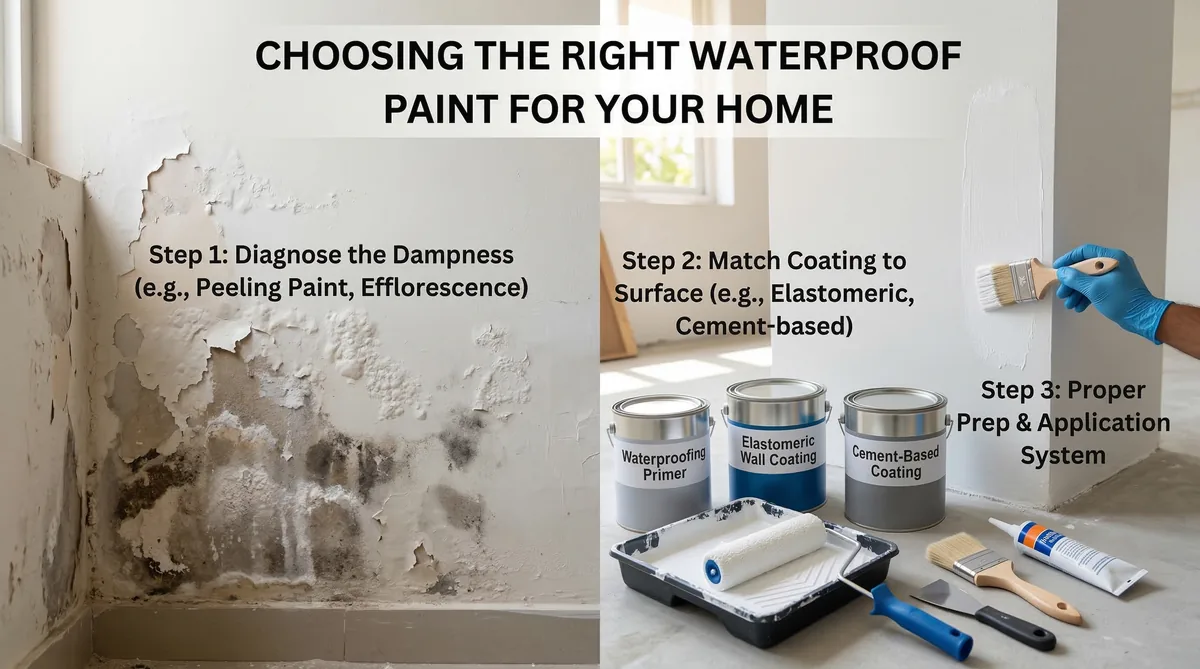
When damp patches, bubbling paint, or a persistent musty smell show up, it’s natural to start searching for the best waterproof paint. The tricky part is that “waterproof” on a pack can mean different things depending on where the moisture is coming from and what surface you’re painting.
If you choose with the surface, moisture type, and application method in mind, you’re far more likely to get a finish that holds up through Indian weather swings without unpleasant surprises. This article will explore how to choose the right waterproof paint by matching the product to the moisture source, the surface, and the correct application approach.
Identify The Moisture Issue Before You Choose a Product
Not every moisture problem calls for the same solution, so choosing the right wall paint starts with understanding what is affecting the surface. A quick diagnosis helps you avoid buying something that is not meant for your situation.
Look for visible clues that can guide your selection and prep plan:
-
Paint blisters, peeling, or flaking that return after repainting
-
White, powdery deposits on masonry or plaster
-
Dark patches that expand during wet weather
-
Hairline cracks that seem to open and close with temperature changes
-
A damp odour that lingers even after cleaning
Match The Waterproofing System to Your Surface
Different surfaces absorb, expand, and hold moisture differently, so the “best waterproof paint” for an exterior wall may not be the most suitable choice for an internal damp-prone wall. Your substrate matters as much as the product category.
You’ll typically see waterproofing options grouped into broad families in technical literature and packs:
-
Cement-based coatings aimed at mineral surfaces
-
Polymer-modified coatings that may offer improved flexibility on certain substrates
-
Elastomeric-style wall coatings that are often positioned for crack-bridging needs
-
Bituminous coatings that are commonly associated with heavy-duty waterproofing layers
-
Polyurethane or similar resin systems are often positioned for specialised applications.
Read The Label Like an Experienced Applicator
A confident label can still hide limitations in the fine print, so it helps to read like a professional. This is where you separate marketing language from product suitability.
On the pack or technical sheet, look for information that signals how the coating is designed to behave:
-
Whether it is positioned as a standalone coat or part of a system with primer and topcoat
-
Notes on vapour transmission or “breathability,” especially for damp masonry
-
Mentions of water permeability or water resistance testing language
-
Guidance on crack treatment and whether reinforcement is recommended
-
Compatibility notes for previously painted surfaces and putty layers
-
Directions for surface dryness, curing, and cleaning requirements
Prepare The Surface so The Coating Can Perform
Preparation is where many waterproof paint jobs succeed or fail. Even the best waterproof paint can underperform if it’s applied over loose material, trapped moisture, or untreated cracks.
A careful prep routine usually includes:
-
Removing loose paint, chalky layers, dust, and salt deposits
-
Repairing cracks with a compatible filler or repair compound
-
Levelling uneven patches so the coating can form a uniform film
-
Treating biological growth with an appropriate cleaning method
-
Allowing the surface to dry as recommended before coating
Apply And Maintain With Your Local Climate in Mind
Weather planning matters in India because humidity and sudden showers can interfere with drying and film formation. Even without dramatic rain, moisture in the air can affect how a coating settles and bonds.
To keep expectations realistic and results stable:
-
Follow the recommended application system rather than improvising layer combinations
-
Use the suggested primer or base where required for bonding and sealing.
-
Avoid rushing drying and curing time between applications.
-
Keep an eye on new cracks or movement lines and address them early.
-
Treat recurring dampness as a signal to review drainage, sealing, and repair quality
Conclusion
If you’re trying to choose the best waterproof paint for your home, focus on suitability over slogans. Start by identifying where the moisture is coming from, then match the coating type to your surface and exposure. Pay close attention to label guidance, surface preparation, and climate-friendly application, because these factors often decide how well the finish performs over time. If needed, professional home painting services can also help assess the surface condition and recommend a more suitable coating system.
When you approach waterproofing as a system, repairs, prep, and the right coating choice, you give your walls the best chance of staying cleaner, drier, and more stable through changing seasons.