TSMC Q1 2026 Revenue Hits $35.6 Billion, Up 35% Year-on-Year on AI Chip Demand
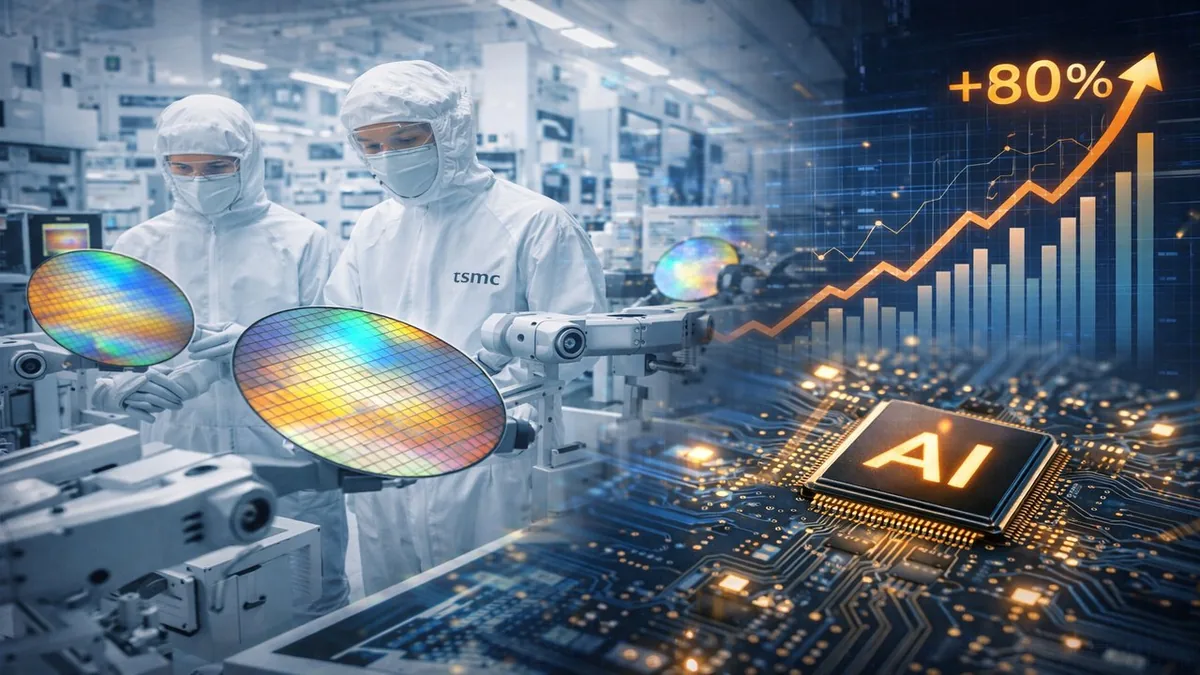
TSMC reported Q1 2026 revenue of $35.6 billion, a 35% increase year-on-year that beat analyst expectations and confirmed that AI chip demand continues to drive the world's most important semiconductor company's growth trajectory, Bloomberg reported. The result positions TSMC as one of the clearest direct beneficiaries of the AI infrastructure buildout — a company whose customers include Apple, NVIDIA, AMD, and virtually every major AI chip designer, and whose advanced process nodes are the physical foundation on which frontier AI models run. The strong Q1 follows the broader pattern of accelerating investment in AI chip supply chains and comes alongside Japan's $16.3 billion bet on building domestic alternatives to TSMC dependency.
What Is Driving TSMC's 35% Revenue Growth
TSMC's 35% year-on-year growth is almost entirely attributable to AI. The company's advanced 3nm and 2nm process nodes — which it is the only manufacturer capable of producing at volume — are the substrate on which NVIDIA's Blackwell GPUs, Apple's A-series and M-series chips, and custom AI accelerators from Google, Amazon, and Microsoft are manufactured. As AI infrastructure spending accelerates globally, every additional GPU rack deployed, every data center built, and every custom AI chip designed flows through TSMC's fabs at some point in the supply chain.
TSMC's CoWoS advanced packaging technology — which bundles multiple chips into high-bandwidth packages critical for AI accelerator performance — is growing at an 80% compound annual growth rate according to CNBC, with NVIDIA reserving the majority of available CoWoS capacity. This packaging bottleneck is as significant as wafer production for AI chip supply; TSMC's ability to scale CoWoS is a direct constraint on how fast the AI chip ecosystem can expand.
Geopolitical Exposure Remains the Core Risk
TSMC's Q1 performance comes against a persistent backdrop of geopolitical exposure. With the majority of its advanced manufacturing concentrated in Taiwan, TSMC is at the center of US-China technology competition in a way that no other company is. The US CHIPS Act, Japan's Rapidus subsidies, and the EU's semiconductor initiative all exist partly as hedges against TSMC concentration risk. TSMC has begun construction of fabs in Arizona, Japan, and Germany — but these facilities will not reach the process node capability of its Taiwan plants within this decade. For now, $35.6 billion in Q1 revenue reflects a monopoly on the world's most critical manufacturing capability — one that its customers and governments are simultaneously grateful for and anxious about.
Frequently Asked Questions
What was TSMC's Q1 2026 revenue?
TSMC reported Q1 2026 revenue of $35.6 billion, up 35% year-on-year, beating analyst expectations. AI chip demand from customers including NVIDIA, Apple, and custom AI chip designers was the primary growth driver.
Why is TSMC so important to AI development?
TSMC is the only manufacturer capable of producing advanced 3nm and 2nm chips at commercial volume — the process nodes used in NVIDIA's AI GPUs, Apple's chips, and custom AI accelerators from major cloud providers. It also produces CoWoS packaging critical for high-bandwidth AI chip performance.
What are the risks to TSMC's growth?
The primary risk is geopolitical: TSMC's advanced manufacturing is concentrated in Taiwan, making it central to US-China technology competition. Its overseas fab expansion in Arizona, Japan, and Germany will take years to reach comparable capability to its Taiwan facilities.
The Bottom Line
TSMC's $35.6 billion Q1 2026 revenue and 35% year-on-year growth are the clearest financial evidence available that AI infrastructure spending is not slowing down. Every GPU cluster, every AI data center, and every custom accelerator chip runs through TSMC's manufacturing at some point — making TSMC's results the most reliable leading indicator of where AI hardware investment is actually going. The 35% growth rate, beating expectations in a quarter when semiconductor equipment spending globally is rising, suggests the AI chip buildout has more runway ahead than the bear case assumes.