TSMC's N3 Capacity Can't Keep Up With AI Demand: The Great Silicon Shortage
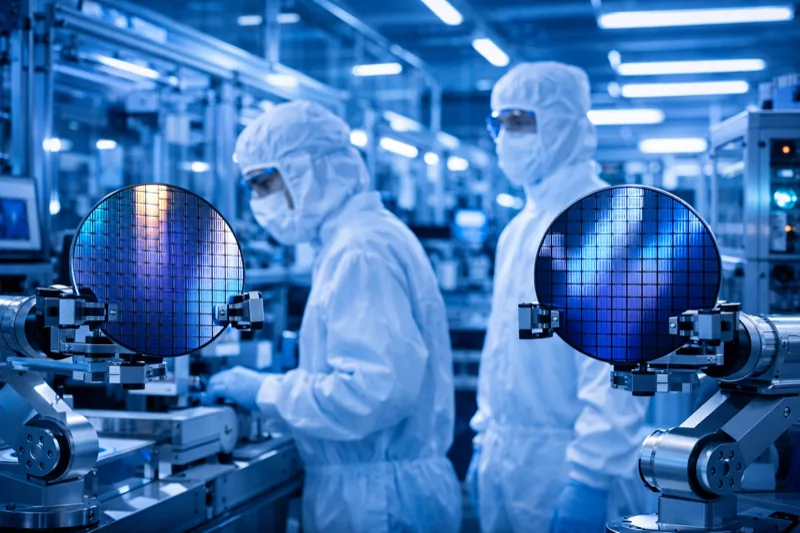
TSMC's most advanced chip manufacturing process — the N3 (3-nanometer) node — has become one of the AI industry's most critical bottlenecks. According to a detailed analysis by SemiAnalysis, AI-related demand is set to consume nearly all of TSMC's N3 capacity by late 2026, leaving smartphone makers, CPU designers, and other chip customers fighting over scraps.
AI Is Eating All the Wafers
The numbers paint a stark picture. AI-related demand — including accelerator chips, host CPUs, and networking silicon — already takes up just under 60% of N3 output in 2026. When combined with smartphone and CPU demand, N3 utilization is expected to exceed 100% in the second half of 2026. That means TSMC literally cannot make enough chips to satisfy all its customers.
By 2027, the situation gets worse. AI demand alone is projected to consume 86% of N3 wafer output, nearly entirely squeezing out smartphone and CPU customers. For product lines that remain on N3, demand simply won't be fully met.
Why TSMC Can't Just Build More Fabs
The obvious question — why doesn't TSMC just build more capacity? — has an unsatisfying answer: physics and construction timelines. TSMC is constrained by available cleanroom space. Additional usable fab area must first be built before equipment can be installed and new capacity brought online. For the next two years, TSMC will not be able to add enough capacity to fully meet demand.
Building a new semiconductor fab takes 2-3 years minimum and costs $20 billion or more. Even TSMC, the world's most profitable chipmaker, can't magic new factories into existence overnight. The company's expansion plans in Arizona, Japan, and Germany are years away from meaningful production.
The Diversification Panic
The capacity crunch is pushing customers to explore alternatives. Companies are considering Samsung Foundry and Intel's foundry services as second sources — a scenario that would have seemed unlikely just a few years ago when TSMC's technological lead was considered insurmountable. For non-AI chips in particular, customers are actively placing orders outside TSMC to secure supply.
This is a significant strategic shift. For over a decade, TSMC has been the only game in town for leading-edge chips. The AI shortage may accomplish what competition couldn't: force meaningful foundry diversification.
What This Means for AI Companies
For AI companies, the TSMC bottleneck has cascading effects. Nvidia, AMD, and every custom chip designer building AI accelerators compete for the same limited N3 capacity. Longer lead times mean slower GPU rollouts. And the companies with the biggest orders — Nvidia, Apple — get priority, leaving smaller players with even longer waits.
TSMC itself has acknowledged the problem, stating that its advanced-node capacity "falls about three times short" of AI demand. The company's wafer capacity is "still not enough" even with aggressive expansion plans.
The Bottom Line
The AI industry has hit a physical wall. No amount of software innovation, training efficiency, or model optimization can overcome the fundamental constraint: there aren't enough advanced chip factories in the world to satisfy AI demand. TSMC's N3 shortage is the clearest signal yet that AI growth is now limited not by algorithms or data, but by atoms — the physical silicon wafers that make everything else possible.