Trump Blacklists Anthropic From All Federal Agencies After Pentagon Supply Chain Risk Designation
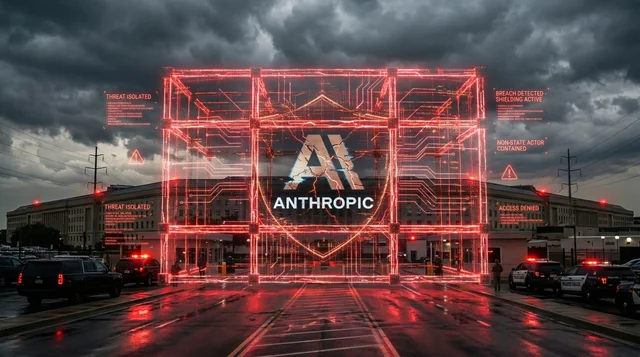
The standoff between Anthropic and the Pentagon has escalated dramatically. Defense Secretary Pete Hegseth has officially designated Anthropic as a "supply chain risk" — a classification typically reserved for companies with ties to hostile foreign governments — after the AI company refused to grant the Department of Defense unrestricted access to its Claude models for all purposes, including autonomous lethal weapons without human oversight and mass surveillance.
President Trump piled on, calling Anthropic a "radical left, woke company" on Truth Social and directing every federal agency in the United States to immediately cease using Anthropic's products. Companies that do business with Anthropic now have six months to divest themselves from Anthropic products or risk losing their Pentagon contracts.
What Actually Happened
After weeks of tense negotiations, the Pentagon gave Anthropic a Friday 5:30 PM EST deadline: agree to let the military use Claude for "all legal purposes" with no restrictions, or face consequences. Anthropic refused, citing its acceptable use policies that prohibit use in autonomous weapons systems without human oversight and mass surveillance applications.
The supply chain risk designation could immediately impact major tech companies that use Claude in their work for the Pentagon, including Palantir and AWS. It's not yet clear whether the designation extends to companies that use Anthropic products for work outside national security.
Anthropic's Response
Anthropic has said it will challenge "any supply chain risk designation in court" and emphasized that it had offered significant compromises during negotiations. The company maintains that its red lines — no autonomous weapons without human oversight, no mass surveillance — are reasonable safety guardrails that the entire AI industry should maintain.
The OpenAI Angle
In a twist that makes the whole situation even more interesting, reporting from Axios reveals that the Pentagon appears to have accepted OpenAI's safety red lines, which were similar to Anthropic's, to deploy OpenAI's tech in classified settings. Sam Altman publicly stated that OpenAI shares Anthropic's red lines and called for "de-escalation."
Sources indicate Altman told employees that the DoD is willing to let OpenAI build its own "safety stack" and won't force OpenAI to comply if its model refuses a task. So the Pentagon is apparently willing to accept the same restrictions from OpenAI that it's punishing Anthropic for insisting on.
What This Actually Means
The supply chain risk designation is an extraordinary measure. It's the kind of tool designed for companies like Huawei — entities with documented ties to adversarial foreign governments. Using it against an American AI company because it won't remove safety guardrails from its products is unprecedented.
The fact that OpenAI appears to be getting a pass for holding similar positions suggests this isn't really about policy differences — it's about making an example of a company that publicly pushed back. Anthropic drew a line, the Pentagon called their bluff, and the Trump administration decided to make it personal.
Whether you think Anthropic's safety restrictions are reasonable or overly cautious, the precedent being set here is significant: American tech companies can be blacklisted from government work — and potentially from the entire defense contractor ecosystem — for maintaining product safety policies that the government doesn't like.
This is a story worth watching closely, because its outcome will shape how every AI company in the country thinks about the relationship between product safety and government access for years to come.