Top Law Firm Sullivan & Cromwell Filed a Court Brief Containing Multiple AI Hallucinations
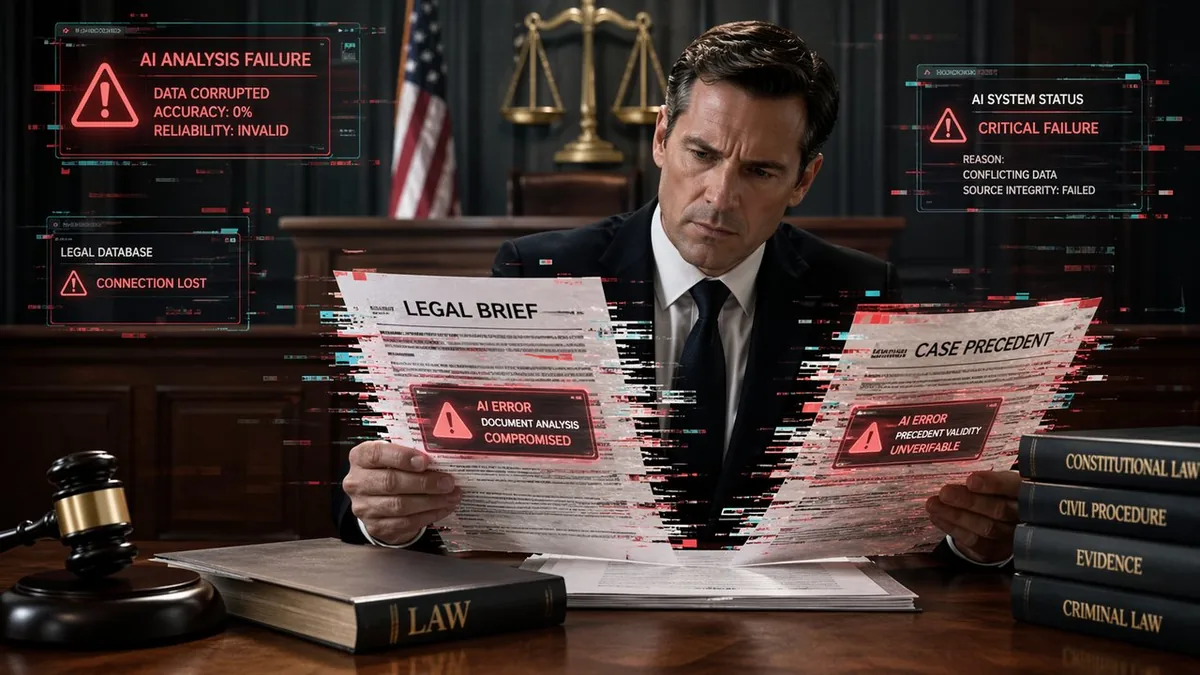
Sullivan & Cromwell, one of Wall Street's most prestigious law firms, told a US federal bankruptcy court that a major filing it submitted in a high-profile case contained multiple AI hallucinations — fabricated case citations and legal references generated by an AI tool that attorneys failed to verify before submission. The disclosure is a stark reminder that even elite professional services firms are not immune to the risks of AI-generated errors in high-stakes legal proceedings.
What Happened in the Filing
Sullivan & Cromwell attorneys disclosed to the bankruptcy court that the filing contained citations to legal cases that do not exist, as well as misrepresentations of actual case holdings — both characteristic errors of large language models that generate plausible-sounding legal text without grounding it in verified sources. The firm has not publicly identified which AI tool was used to draft or assist with the filing, but sources indicate it was a general-purpose AI assistant rather than a legal-specific platform with citation verification built in.
The court has not yet ruled on whether sanctions will be imposed. Judges have shown increasing willingness to sanction attorneys who submit AI-generated filings without verification, following a series of high-profile cases including the 2023 Mata v. Avianca case in which a New York attorney was sanctioned after submitting ChatGPT-generated fake case citations.
Why This Is Different — It's Sullivan & Cromwell
Previous AI hallucination cases in courts have generally involved solo practitioners or smaller firms. Sullivan & Cromwell is a different matter: the firm represents major financial institutions and is known for its role in landmark transactions and litigation. Its involvement in a hallucination incident signals that the AI verification problem has moved beyond inexperienced users and now affects sophisticated, well-resourced legal teams.
The incident also highlights a gap between AI adoption pace and AI verification practices. Many firms have rushed to integrate AI tools to improve drafting efficiency and reduce associate hours, but verification workflows — checking that every cited case actually exists and says what the AI claims — have not kept pace. In Sullivan & Cromwell's case, that gap led to a courtroom embarrassment that could have legal and reputational consequences.
The Broader Problem of AI in Legal Practice
The legal profession has embraced AI tools at unprecedented speed, with platforms like Harvey AI, Casetext, and major firms' internal tools now embedded in daily legal work. Law firms are already raising prices to handle the volume of AI-generated documents flowing through their practices. The irony of AI creating more work for lawyers while simultaneously causing hallucination errors that require additional damage control is not lost on legal industry observers.
Bar associations in multiple states have issued guidance requiring attorneys to verify AI-generated content before filing. Failure to do so is increasingly treated as professional negligence rather than an excusable technical error.
Frequently Asked Questions
What are AI hallucinations in legal filings?
AI hallucinations in legal filings are fabricated citations — references to cases that don't exist, or misrepresentations of what real cases actually say — generated by AI language models that produce plausible-sounding but factually incorrect text.
Can Sullivan & Cromwell be sanctioned for AI hallucinations?
Yes. Courts have sanctioned attorneys in previous AI hallucination cases. Whether sanctions are imposed typically depends on the severity of the error, whether opposing parties were harmed, and the attorney's candor with the court upon discovery.
How should law firms avoid AI hallucinations in court filings?
Legal professionals should verify every citation independently using Westlaw, LexisNexis, or official court databases before filing. AI-generated legal text should be treated as a draft requiring full human verification, not a final product.
The Bottom Line
The Sullivan & Cromwell hallucination incident is a watershed moment for AI in legal practice. When one of the most respected law firms in the world submits AI-generated errors to a federal court, it validates regulators' and bar associations' concerns about AI adoption outpacing verification discipline. Expect courts to move toward mandatory AI disclosure requirements in filings, and expect law firms to face increasing scrutiny — and liability — for AI errors that slip past human review.