Top Agtech Startups Redefining Food and Farming
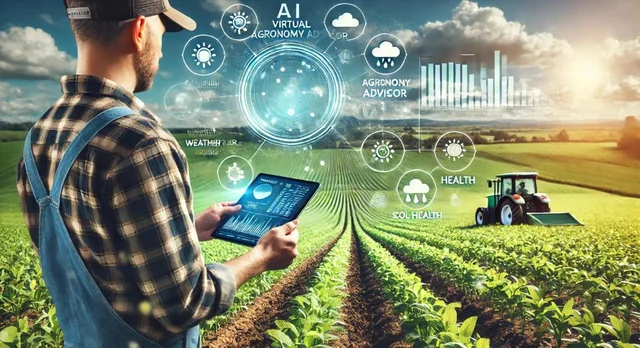
The Top Agtech Startups Redefining Food and Farming in 2025
The latest Startup Battlefield spotlighted a new generation of agtech and food tech startups tackling some of the most urgent problems in global food systems. But beyond the pitch stage and prize money, these companies reveal something bigger: agriculture is quietly becoming one of the most advanced frontiers for AI, robotics, and climate technology.
This matters because food production now sits at the intersection of sustainability, economics, and national security. The startups highlighted at TechCrunch Disrupt offer a preview of how farming, aquaculture, and food manufacturing may evolve over the next decade.
Key Facts: What Happened at TechCrunch Disrupt
Each year, TechCrunch narrows thousands of applicants down to 200 startups for its Startup Battlefield. From those, 20 compete live, but many of the remaining companies stand out for their technical depth and commercial potential.
In the agtech and food tech category, selected startups ranged from AI-powered farm monitoring platforms to precision fermentation companies and robotics startups automating food preparation. Their common thread: solving efficiency, waste, and sustainability challenges with technology that can scale.
Why the Rise of Top Agtech Startups Matters Now
The emergence of these top agtech startups signals a shift in how innovation enters agriculture. Instead of incremental improvements, founders are rethinking entire systems.
Several themes stand out:
-
AI replacing manual oversight: Tools like Aquawise and Instacrops use satellite imagery and AI agents to monitor water quality and crop health without costly sensors.
-
Biology as infrastructure: Companies such as ÄIO and Verley treat microbes and fermentation as production engines, turning waste into edible fats or dairy proteins.
-
Labor and input reduction: Tensorfield Agriculture and Shin Starr Robotics automate tasks traditionally dependent on labor, chemicals, or centralized kitchens.
For growers, food producers, and investors, this shift means better margins paired with lower environmental impact—a rare but powerful combination.
The Bigger Trend: Agriculture Becomes a Data Business
One underlying trend connecting these startups is the transformation of agriculture into a data-driven industry. Platforms like Genesis and CredoSense show how soil, plant health, and raw material data are becoming as valuable as land itself.
According to TechCrunch, one startup aims to break down siloed crop diagnostics into “one small, low-power device.” That insight captures the direction of the sector: fewer fragmented tools, more integrated intelligence.
This convergence of AI in agriculture and biological innovation also shortens feedback loops. Farmers can move from reactive decisions to predictive ones—adjusting irrigation, nutrients, or disease response before losses occur.
Practical Implications for Growers, Brands, and Investors
If these technologies scale, the impact will be tangible across the food value chain:
-
Growers gain real-time visibility into soil, water, and crop health, reducing waste and improving yields.
-
Food brands can access more consistent, sustainable ingredients, from bioidentical dairy proteins to responsibly farmed seafood.
-
Enterprises reduce environmental footprints, as seen with Kadeya’s reusable bottle systems eliminating single-use plastics at offices.
For investors and operators, the lesson is clear: agtech is no longer niche. It is infrastructure.
What Happens Next for Food Tech Innovation
The next phase will be about adoption, not invention. Many of these startups already have working products, patents, or pilot customers. The challenge is integrating them into conservative, risk-averse agricultural operations.
Expect partnerships with large agribusinesses, food distributors, and governments to accelerate. We’re also likely to see consolidation, as platforms offering “single-pane-of-glass” farm intelligence outperform point solutions.
The winners won’t just have the best algorithms—they’ll be the ones that fit seamlessly into how food is actually grown, processed, and delivered.
Looking Ahead: From Pitch Stage to Global Impact
The agtech companies featured at TechCrunch Disrupt represent more than startup success stories. They offer a blueprint for how food systems can become more resilient, efficient, and sustainable without sacrificing profitability.
As climate pressure and population growth collide, the importance of these top agtech startups will only grow. The question is no longer if agriculture will change—but who will lead that change.
FAQ SECTION
Q: What are agtech startups?
A: Agtech startups build technology to improve farming, aquaculture, and food production. They focus on areas like AI-driven crop monitoring, robotics, sustainable inputs, and data analytics to increase efficiency and reduce environmental impact.
Q: Why are top agtech startups attracting attention now?
A: They address urgent issues like food security, labor shortages, and climate change. Advances in AI, sensors, and biotechnology have made scalable solutions possible for industries that historically relied on manual processes.
Q: How do these startups impact sustainability?
A: Many reduce chemical use, water waste, and emissions. Examples include AI-guided irrigation, biodegradable agrochemical delivery, and fermentation-based proteins that lower the footprint of traditional farming.
Q: Can small farmers benefit from agtech innovation?
A: Yes. Many platforms are designed to lower costs and simplify decision-making, making advanced insights accessible even to smaller operations through mobile apps and low-power devices.