These Are the Countries Moving to Ban Social Media for Children
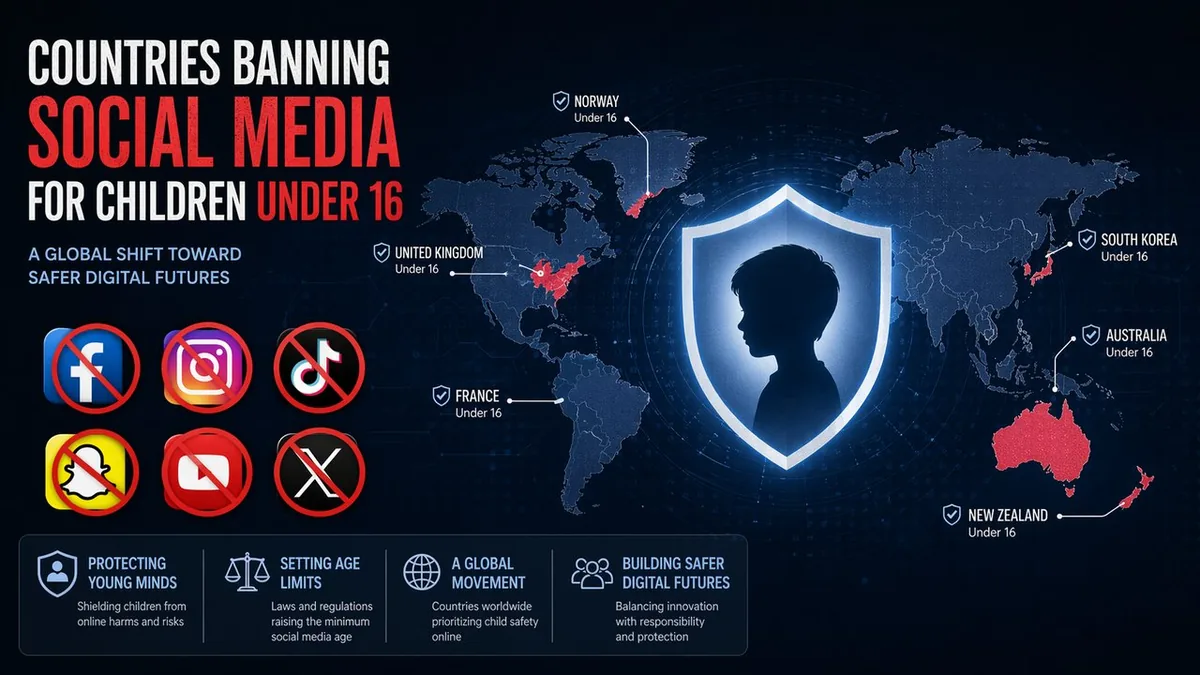
A global policy shift is accelerating. Multiple countries across four continents are now moving to restrict or outright ban social media access for minors — and the approaches, age thresholds, and enforcement mechanisms vary significantly. Here is where things stand and what it actually means for platforms like TikTok, Instagram, and Snapchat.
Australia Led the Way
Australia was the first major country to pass a binding social media age restriction law. The Online Safety Amendment Act, passed in November 2024 and effective January 2025, bans children under 16 from social media platforms. The law places compliance responsibility on platforms, not parents or children — meaning Instagram, TikTok, and Snapchat must implement age verification, not just add a terms-of-service checkbox. Platforms face fines of up to AUD $49.5 million for systemic failures.
Europe Is Moving Separately but in the Same Direction
France passed legislation requiring parental consent for under-15 users and is piloting a national age verification system. The UK's Online Safety Act (2023) requires age-appropriate design for services likely to be accessed by children — effectively forcing platforms to make their products less algorithmically aggressive for younger users. Germany's data protection framework already restricts processing of children's data under 16 without parental consent under GDPR.
The EU's Digital Services Act and GDPR create a patchwork that functions as a de facto restriction, though not a clean ban. Several EU member states are now pushing for explicit age-gating laws similar to Australia's.
The United States Is Moving at the State Level
No federal US law exists yet, but Florida's HB 3 bans under-14s from social media with parental consent required for 14-15 year olds (though it faces legal challenges). Texas, Virginia, and several other states have similar bills moving through legislatures. A federal bill has been introduced but faces platform industry lobbying and First Amendment complications.
My Take
The policy direction is now unambiguous: minors on social media is a liability, not a feature, and governments are moving to regulate it. The question for platforms is not whether regulation is coming but how fragmented it will be. A patchwork of 30 different national laws with different age thresholds, verification requirements, and enforcement mechanisms is operationally unmanageable. Platforms may end up lobbying for a single global standard just to reduce compliance overhead.
Related Articles
- Meta Now Lets Parents See What Their Kids Are Talking to AI About
- Instagram Is Testing a Disappearing Photos App Called Instants